
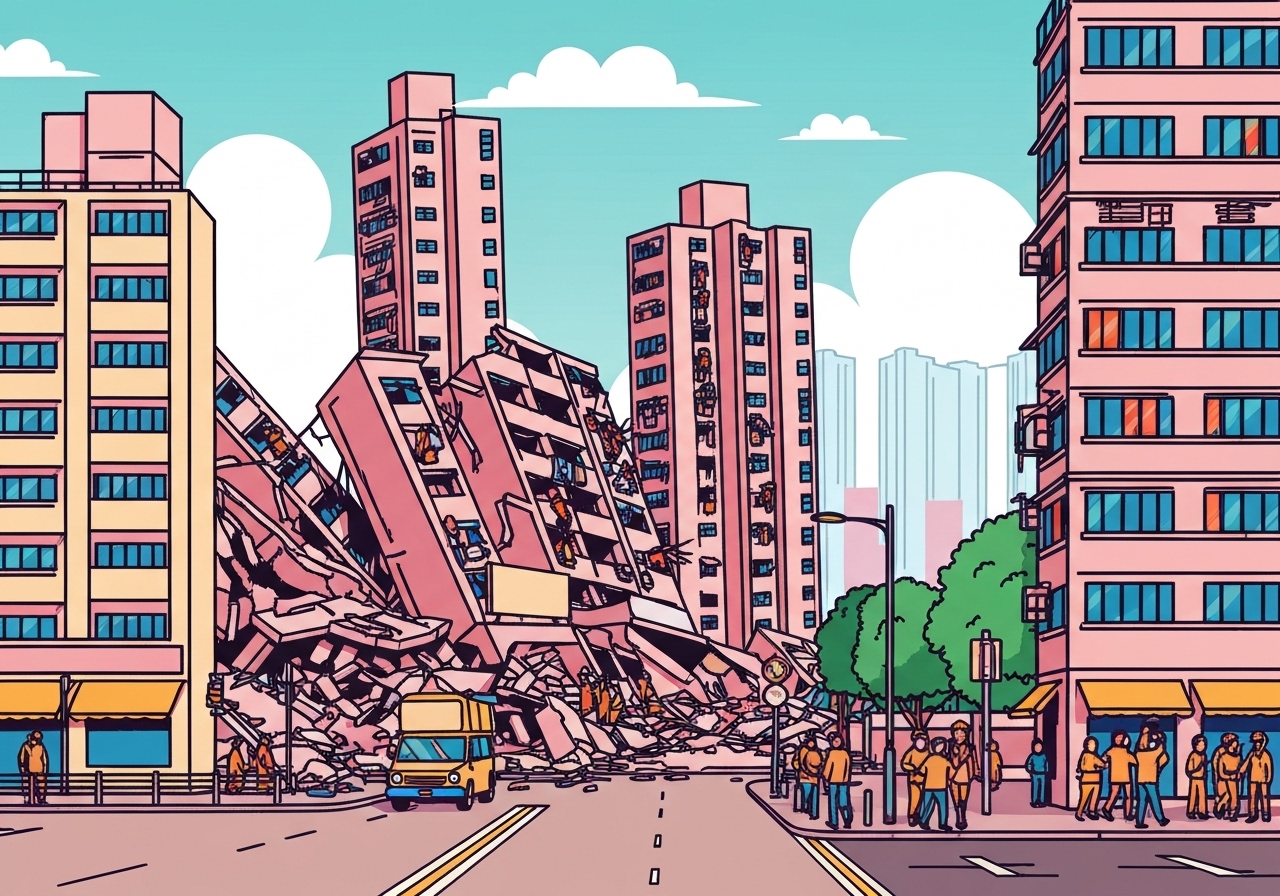
— A fast-moving blaze tore through Wang Fuk Court, a dense eight-tower residential complex in Tai Po, northern Hong Kong, beginning around 2:50 p.m. on Wednesday. By Thursday authorities said at least 55 people had died and firefighters had evacuated 123 residents, while rescue teams continued to face extreme heat, collapsing bamboo scaffolding and other obstacles. The fire has been described as Hong Kong’s deadliest since a 1957 tenement blaze that killed 59 people; officials have arrested three construction-related individuals on suspicion of gross negligence and are probing building materials and scaffolding as possible factors. The government opened temporary shelters and asked national agencies to assist, while investigations into the precise cause are ongoing.
Key Takeaways
- Fatalities: At least 55 people confirmed dead as of Nov. 27, 2025, including a firefighter; 51 were declared dead at the scene and four later died in hospital.
- Evacuations and rescues: Authorities reported 123 people removed from the towers; an unknown number may still be unaccounted for more than 24 hours after the fire began.
- Scale and site: The fire began at Wang Fuk Court in Tai Po around 2:50 p.m.; the complex comprises eight 32-storey towers with roughly 2,000 flats.
- Firefighting response: More than 1,200 firefighters were deployed; crews managed to extinguish flames in four of the eight towers by Thursday afternoon but faced limited ladder reach and extreme heat on upper floors.
- Structural and material concerns: Investigators are examining whether exterior wall materials and widespread bamboo scaffolding accelerated the spread; three construction officials were arrested on suspicion of manslaughter/gross negligence.
- Historical context: The incident is the deadliest Hong Kong fire in nearly 70 years, compared to a 1957 Kowloon tenement blaze that killed 59 people.
- Government action: Hong Kong authorities opened shelters and signaled plans to replace bamboo scaffolding with fire-resistant steel; Beijing ordered national agencies to assist, according to state media.
Background
Wang Fuk Court is a tightly packed residential estate in Tai Po, a district in northern Hong Kong that combines older public and private housing. The complex’s eight towers each rise about 32 storeys and together contain roughly 2,000 apartments, housing a dense population in vertically stacked, closely spaced units. High-density living and aging building stock have long been topics of public safety concern in Hong Kong, where land constraints produce tall, closely sited residential blocks.
Hong Kong commonly uses bamboo scaffolding for construction and repair because it is lightweight, flexible and inexpensive; however, regulators and fire officials have repeatedly warned about its vulnerability in large fires. In recent months the city moved to phase out bamboo scaffolding in favor of steel alternatives after earlier blazes were linked to scaffolding and external cladding. Safety standards for external wall materials have also been a focus of scrutiny following several high-profile fires.
Main Event
The fire reportedly began at about 2:50 p.m. on Wednesday in one section of the Wang Fuk Court complex and spread vertically and horizontally across tower exteriors. Eyewitness video circulated online showing rapid early flame growth and thick smoke; emergency crews arrived in large numbers but confronted flames that climbed beyond the reach of many ground-based ladders. Falling debris and intense heat hampered interior entry and delayed some rescue attempts.
By Thursday afternoon firefighters said they had brought the blaze under control in four of the eight towers but continued to battle hotspots and structural hazards. The Hong Kong Fire Services Department reported removing 123 people from the site; 51 were pronounced dead on scene and four more succumbed to injuries in hospital, bringing the known death toll to at least 55. One of the deceased was a firefighter engaged in search-and-rescue operations.
Police investigators announced arrests of three construction officials on suspicion of manslaughter and gross negligence, signaling a criminal probe into whether building work, materials or maintenance practices contributed to the rapid spread. Authorities have not yet released a definitive cause; they are examining exterior cladding, scaffolding and fire-stopping measures while forensics teams comb the site for evidence.
Analysis & Implications
At least three strands of concern intersect here: construction and maintenance practices, emergency access in high-rise clusters, and material choices for external façades and scaffolding. If investigators confirm that non-compliant cladding or combustible scaffolding aided the spread, the incident will intensify pressure on regulators to accelerate retrofits and stricter enforcement across Hong Kong’s tall-buildings stock. The arrests suggest authorities are pursuing accountability for oversight failures or unsafe construction practices.
Operationally, the incident highlights limits in vertical rescue capacity for very tall, closely spaced residential towers. Fire services reported ladders and hoses reaching only partway up the buildings, a constraint that complicates rescues in upper floors. This may prompt reviews of equipment, inter-agency coordination, building evacuation planning and the provision of refuge floors or other measures in older complexes.
Politically, the disaster carries domestic and cross-border dimensions. Hong Kong’s government has signaled policy responses — including moves to replace bamboo scaffolding with steel — while Beijing, via state media, urged national support. That combination could speed regulatory change but may also trigger public debate over enforcement, inspection transparency and responsibility for legacy building defects.
Comparison & Data
| Year | Location | Reported Deaths |
|---|---|---|
| 1957 | Kowloon tenement | 59 |
| 2025 | Wang Fuk Court, Tai Po | 55 (confirmed) |
The 1957 incident remains the deadliest recorded urban fire in Hong Kong’s modern history; the current toll of at least 55 makes this the most lethal event in nearly seven decades. Comparing the two episodes underscores persistent vulnerabilities in densely populated urban housing and the importance of building-material standards, fire compartmentation and escape routes. Officials and researchers will likely compile more detailed casualty and building-failure data as investigations proceed.
Reactions & Quotes
Officials in Hong Kong and Beijing emphasized rescue and investigation efforts, while police described the arrests as part of a criminal probe into possible negligence.
“All-out rescue efforts are underway to minimize loss,”
Xinhua (state news agency, quoting Xi Jinping)
The police superintendent leading parts of the local investigation framed the arrests as an early step in establishing responsibility.
“We believe there was gross negligence on the part of those responsible for the construction,”
Lai Yee Chung (Senior Police Superintendent, Hong Kong Police)
Fire services described operational challenges that constrained access to upper floors and complicated search-and-rescue operations.
“High temperatures and falling debris limited our ability to enter certain towers safely,”
Hong Kong Fire Services Department (official statement)
Unconfirmed
- The precise ignition source of the Nov. 26 fire has not been publicly confirmed; investigators have not released a final cause.
- The exact number of residents still unaccounted for more than 24 hours after the fire began remains unclear pending a full manifest and family reports.
- Whether specific exterior wall materials failed to meet fire-safety standards in all affected towers is under investigation and not yet verified.
Bottom Line
The Wang Fuk Court blaze is a major urban disaster that combines human tragedy with questions about construction standards, materials and emergency preparedness in high-density housing. Immediate priorities for authorities are completing search-and-rescue, accounting for all residents, and establishing a transparent timeline of the fire’s origin and spread.
Longer term, the incident is likely to accelerate regulatory and operational reforms: faster replacement of combustible scaffolding, stricter enforcement of façade-material rules, reviews of vertical rescue capacity and stronger inspection regimes for aging residential blocks. Families, policymakers and safety officials will look for clear findings from the criminal and technical investigations to guide those changes.
Sources
- The New York Times — news report (media)
- Hong Kong Fire Services Department — official emergency services site (government)
- The Government of the Hong Kong Special Administrative Region — official press and public information (government)