
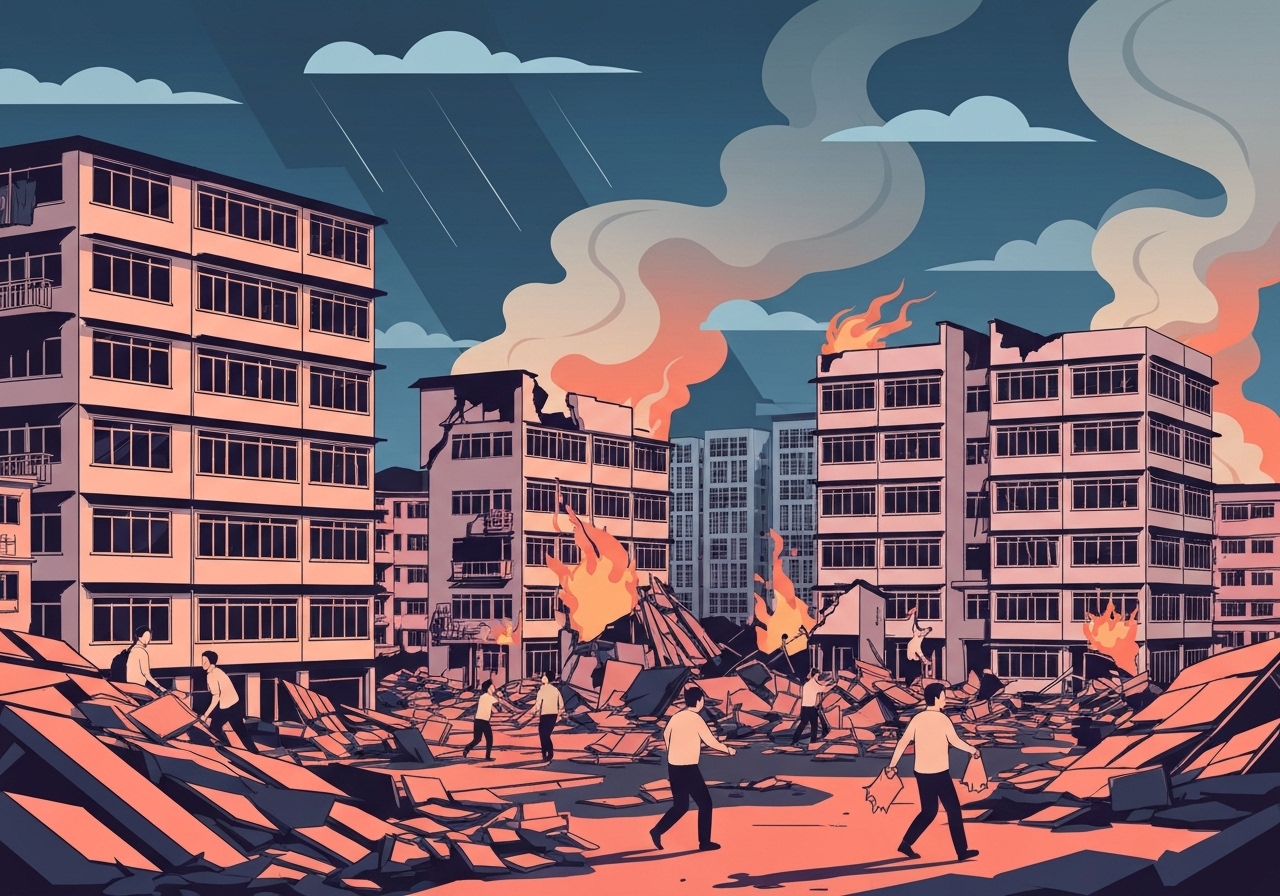
More than a week after a blaze ripped through Wang Fuk Court in Tai Po on Dec. 6, 2025, leaving 159 people dead and thousands displaced, survivors face urgent housing and recovery questions. The towers had been home to over 4,900 residents, many working-class families who purchased subsidized flats decades earlier. With more than 3,800 residents moved into temporary quarters — former quarantine sites, hostels and scattered housing projects — many people are living apart from schools, jobs and support networks. The city government, already under scrutiny for its response to the worst peacetime disaster in seven decades, must now outline longer-term rehousing and financial help.
Key Takeaways
- Death toll: 159 confirmed fatalities from the Wang Fuk Court fire; investigators continue to examine the sequence of events.
- Population affected: The complex housed more than 4,900 residents; authorities say over 3,800 have been relocated to temporary accommodation.
- Immediate shelter: Displaced residents are living in former Covid-19 quarantine facilities, youth hostels and disparate public housing projects across Hong Kong.
- Demographics: Many households were working-class buyers of subsidized flats, with long-term residency—some occupants had lived in their units for decades.
- Livelihood disruption: Families have been separated from schools, workplaces and medical care, complicating children’s schooling and chronic care needs.
- Housing market constraints: Hong Kong’s high housing costs and limited space—average living area smaller than a one-car garage—sharpen the challenge of finding permanent homes.
Background
Wang Fuk Court is a subsidized-home estate in Tai Po, part of a program intended to help lower- and middle-income families secure long-term housing. Over many years the estate developed a tightly knit community of multigenerational households; several residents had lived in their flats for decades. Hong Kong’s chronic shortage of affordable housing, steep property prices and small average unit sizes have long strained social safety nets and intensified public concern after any major housing shock.
Authorities and social-service groups have historically relied on temporary relocation options for short-term displacement, including community halls and emergency shelters. Those stopgap measures are ill-suited to hundreds or thousands of people needing months or longer of stable housing, especially when families require proximity to schools, clinics and workplaces. The scale of this event—more than 3,800 people moved into make-do apartments—has stretched the capacity of municipal services and charitable providers.
Main Event
The fire erupted late in the previous month at Wang Fuk Court’s residential towers, rapidly spreading through multiple units and overwhelming residents’ attempts to escape. Emergency crews responded, but the blaze resulted in 159 confirmed deaths and widespread structural and interior damage. Survivors describe scenes of panic, loss and chaotic evacuation; many lost virtually all personal possessions in moments as flames and smoke swept through corridors and apartments.
In the immediate aftermath, the government arranged emergency lodging in converted quarantine centers, youth hostels and government housing projects to avoid leaving people on the street. Officials prioritized placements for the most vulnerable—elderly residents, families with young children and those with urgent medical needs—but many placements are remote from residents’ daily support systems. Some displaced people have sought temporary shelter with friends and family to remain near schools or jobs.
Survivors such as Diana Yu, 71, who had lived in a two-bedroom flat for roughly four decades with her 43-year-old son, lost almost everything in the blaze; she is now staying in a small room in a former Covid-19 quarantine facility and is uncertain how long that arrangement will last. Local social workers report rising demand for counseling, medical follow-up and help replacing identity documents, pensions records and medical equipment. Meanwhile, municipal leaders face immediate logistical questions: which residents should receive priority for permanent rehousing, what compensation or subsidies will be offered, and how to coordinate reconstruction or demolition decisions at the site.
Analysis & Implications
The scale of displacement underscores long-standing structural issues in Hong Kong’s housing system. Decades of limited land supply, high property values and a reliance on subsidized-but-compact flats mean that when disaster strikes, families with limited resources have fewer relocation options. Rehousing several thousand residents will require either reallocation within the public-housing pipeline or sizable short-term budgetary measures to subsidize rentals in a tight private market.
Politically, the government’s handling of rehousing and compensation will be closely watched. This disaster is the city’s deadliest in peacetime in roughly 70 years, and public trust in institutions is sensitive after prolonged social and economic pressures. Clear timelines, transparent criteria for rehousing and swift financial support would reduce harm; delays risk escalating public anger and long-term dislocation for affected households.
Economically, costs will mount beyond immediate shelter: social services, mental-health support, school transfers and potential loss of income for displaced workers all carry measurable fiscal implications. If a large fraction of households cannot return to nearby neighborhoods, the redistribution of students and workers could ripple through local schools and employers, increasing commuting burdens and straining transport links.
Comparison & Data
| Metric | Number |
|---|---|
| Residents in Wang Fuk Court (pre-fire) | More than 4,900 |
| Confirmed fatalities | 159 |
| Residents placed in temporary accommodation | More than 3,800 |
The numbers above show the disproportion between the estate’s total population and those already placed in temporary housing; a substantial remainder remain with family or in informal arrangements. For context, Hong Kong’s average living area per person is among the smallest in major global cities, which magnifies the difficulty of securing similarly sized replacement units quickly. Any permanent rehousing program will need to reconcile housing-unit size expectations with available supply and the timelines of public-housing construction.
Reactions & Quotes
Survivors and community groups have described urgent emotional and material needs, from replacing personal documents to securing long-term housing. Social-service volunteers say many displaced residents are elderly or have chronic illnesses that require continuity of care.
I lost nearly everything in minutes; the room I have now is temporary and I do not know how long I can stay.
Diana Yu, Wang Fuk Court survivor
Local advocacy groups have called for transparent rehousing criteria and immediate cash assistance to cover rent and daily needs while families wait for durable solutions. Some residents stressed the psychological toll of separation from neighbors and local support networks.
Rehousing thousands in Hong Kong’s tight market will be a major logistical and fiscal test for any administration.
Housing policy researcher, University of Hong Kong (paraphrased)
Housing experts warned that patchwork temporary placements can turn short-term displacement into chronic instability if not paired with clear timelines and adequate funding. Officials have said they are examining options but have not yet published a firm schedule for permanent relocations.
Unconfirmed
- Precise fire origin and full sequence of spread remain under investigation and have not been publicly confirmed.
- The final tally of personal property losses and insured claims has yet to be compiled and verified.
- Long-term plans for the Wang Fuk Court site (repair, partial demolition or full redevelopment) have not been finalized.
Bottom Line
The Wang Fuk Court fire has produced an immediate humanitarian challenge—thousands displaced, hundreds bereaved and many households severed from local support systems. Hong Kong’s limited affordable housing stock and high costs make rapid, adequate rehousing difficult without explicit, funded interventions by the government and coordinated support from charities and private landlords.
What follows will matter politically and socially: clear, transparent criteria for rehousing, prompt financial relief to cover rent and basic needs, and a publicly communicated timeline for permanent placements will reduce further harm. Absent decisive action, many survivors risk prolonged instability in a city where alternative housing options are scarce.
Sources
- The New York Times — news report with survivor interviews and official briefings
- Associated Press — photo coverage and wire reporting (news agency)
- Hong Kong Government — official statements and public notices (government)