
Lead
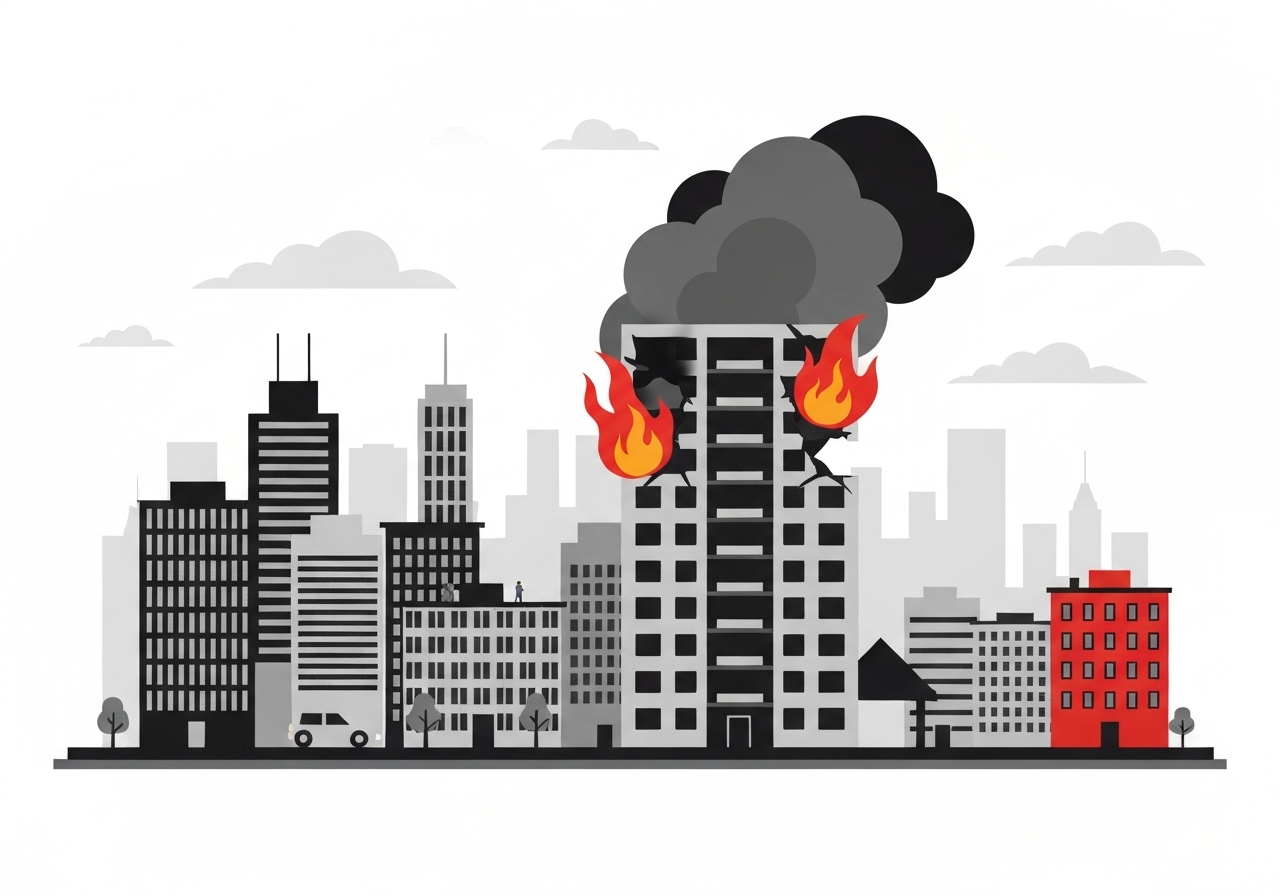
On Nov. 26, 2025, a fast-moving fire tore through Wang Fuk Court, a residential high-rise complex in Hong Kong’s Tai Po district, killing at least 44 people and leaving 279 listed as missing. The blaze began in the mid-afternoon and spread across seven of the estate’s eight blocks, prompting a level 5 alarm and the deployment of more than 140 fire trucks and 60 ambulances. Officials say 62 people were injured, many with burns and inhalation injuries, and about 900 residents were evacuated to temporary shelters. Police have arrested three men tied to the renovation company on suspicion of manslaughter as investigators probe exterior materials and scaffolding practices.
Key Takeaways
- Fatalities: At least 44 confirmed dead; 279 people reported missing following the Nov. 26 fire at Wang Fuk Court in Tai Po.
- Injuries and response: 62 people injured; emergency services mobilized over 140 fire engines and 60 ambulances to the scene.
- Scope of damage: Fire spread across seven of eight residential blocks in a complex of nearly 2,000 apartments housing about 4,800 people; four towers were reported under control by morning.
- Cause and materials: Flames started at external bamboo scaffolding on a 32-story tower and investigators found flammable Styrofoam-like material near elevator lobbies of an unaffected block.
- Arrests: Three men aged 52 to 68—directors and an engineering consultant linked to the renovation firm—were arrested on suspicion of manslaughter and gross negligence.
- Firefighter casualty: A 37-year-old firefighter with nine years’ service was confirmed among the dead, according to Fire Services Department Director Andy Yeung.
- Historical context: The incident is the deadliest building fire in Hong Kong in decades; a 1996 Kowloon blaze killed 41 people.
Background
Wang Fuk Court was built in the 1980s and consists of eight residential blocks. The estate had been undergoing a major renovation at the time of the fire, with external bamboo scaffolding in place on several towers. Renovation work on older public and private housing in Hong Kong frequently involves retrofitting exteriors and common areas, which introduces contractors, materials and temporary structures to densely occupied towers.
Hong Kong’s fire-safety regime includes building codes, material standards and a permit system for construction works, but enforcement and compliance have drawn scrutiny after recent incidents. The presence of non-compliant or highly combustible cladding or insulation has been a recurring concern in other major urban fires worldwide. Stakeholders include the Fire Services Department, local police, the Housing Authority and private owners and contractors responsible for maintenance and renovation.
Main Event
The blaze was first reported mid-afternoon on Wednesday, Nov. 26, and was escalated to a level 5 alarm, the highest category, by nightfall. Eyewitness and live footage showed flames racing up bamboo scaffolding around a 32-story tower, with embers and heavy smoke falling into adjacent streets as firefighters worked from ladder trucks. High temperatures and wind complicated rescue efforts and forced crews to concentrate on containment and external water application in some sectors.
By morning, firefighters said the fire had affected seven of the estate’s eight blocks and that four towers were under control. Emergency teams reported receiving multiple calls from residents trapped inside units; approximately 900 people were moved to temporary shelters. Medical teams treated dozens for burns and smoke inhalation, while hospitals received the more seriously injured.
Police investigators and fire officials noted the unusually rapid external spread and reported finding highly flammable foam-like material placed outside apartment windows near elevator lobbies in an otherwise unaffected tower. Authorities said that material appeared to have been installed during recent renovation work. The discovery prompted three arrests: two company directors and an engineering consultant, all aged between 52 and 68, detained on suspicion of manslaughter and gross negligence.
Fire Services Department Director Andy Yeung confirmed one of the deceased was a 37-year-old firefighter with nine years’ service. Officials, including city leaders, expressed condolences to the families of victims and the fallen firefighter as criminal and safety inquiries continued.
Analysis & Implications
The scale and speed of the Wang Fuk Court fire expose vulnerabilities in managing renovation projects on aging, densely populated high-rises. Temporary works such as bamboo scaffolding are common in Hong Kong, but when combined with combustible external materials the risk of vertical fire spread increases sharply. If investigators confirm that non-fire-resistant cladding or insulation contributed to the spread, that would mirror patterns seen in other post-renovation urban fires globally.
Regulatory implications are significant. A finding of gross negligence by contractors could prompt faster revision of material approvals and tighter oversight of renovation permits. Authorities may face pressure to accelerate safety audits across similar estates, especially those housing large numbers of elderly residents—local council members indicated many of the trapped residents were older adults.
Politically, the incident places administrative agencies and private contractors under intense scrutiny and could become a focal point in debates about enforcement capacity and accountability. Cross-border supply chains for construction materials—given Tai Po’s proximity to Shenzhen—may also be examined to determine origin and certification of any flammable products found.
Operationally, the response will be reviewed for lessons on urban firefighting in confined, high-density estates: ladder access, evacuation coordination, sheltering capacity and medical surge plans. Authorities are likely to publish after-action findings that could influence building safety policy in Hong Kong and offer case study material for other cities with similar building stocks.
Comparison & Data
| Metric | Wang Fuk Court (2025) | Kowloon (1996) |
|---|---|---|
| Confirmed deaths | 44 | 41 |
| Missing / unaccounted | 279 | Not comparable |
| Blocks affected | 7 of 8 | Commercial building |
| Emergency vehicles | 140+ fire trucks, 60+ ambulances | Large mobilization (20-hour blaze) |
The table highlights that the 2025 Wang Fuk Court fire has higher confirmed deaths than the 1996 Kowloon commercial fire and involves a large residential population in multi-block housing. While the 1996 incident was a prolonged commercial-building conflagration, the 2025 event’s rapid vertical spread across residential towers suggests different hazard dynamics tied to exterior works and materials.
Reactions & Quotes
Officials provided brief public statements as the investigation opened. The Fire Services Department confirmed casualty figures and described operational challenges on scene, focusing on rescues and containment under difficult conditions.
“All of our colleagues are deeply saddened by the loss of such a devoted comrade.”
Andy Yeung, Fire Services Department Director
Yeung’s comment followed official confirmation that a 37-year-old firefighter who had served nine years died in the operation; the department emphasized the risks faced by frontline crews during high-temperature, wind-driven exterior fires. Authorities also warned residents to avoid affected areas and to shelter as instructed.
Police described preliminary findings linking highly flammable materials to the fire’s rapid spread and explained the basis for arrests of renovation company principals.
“We have reason to believe that those in charge of the construction company were grossly negligent.”
Eileen Chung, Senior Superintendent of Police
Chung summarized investigators’ early assessment that flammable materials and installation practices may have played a central role; the arrests of two directors and an engineering consultant followed those findings and will be subject to judicial process. Investigators caution that arrests reflect suspicion, not final legal determinations.
Unconfirmed
- Exact ignition source: Authorities have not publicly confirmed the initial ignition point or the presence of specific accelerants at the fire’s origin.
- Material certification: It remains under investigation whether the foam-like materials found were certified for fire resistance or smuggled from other jurisdictions.
- Occupant counts per unit: Detailed occupancy lists for each affected apartment block have not been released, so the precise number of residents present at the time is still being verified.
Bottom Line
The Nov. 26 Wang Fuk Court fire in Tai Po is one of Hong Kong’s deadliest residential fires in decades and underscores the hazards introduced during large-scale renovation work on aging high-rises. Early evidence pointing to combustible exterior materials combined with scaffolding raises urgent questions about material controls, permit enforcement and contractor accountability. The arrests of three company figures signal a criminal investigation focused on negligence, but legal outcomes will depend on forensic findings and judicial review.
For residents, policymakers and emergency services, the event will likely prompt accelerated safety audits, renewed emphasis on certified materials and changes to oversight of renovation projects in densely populated estates. The human toll—including elderly residents reportedly trapped and the loss of a frontline firefighter—adds urgency to swift, transparent investigation and corrective action to reduce recurrence.
Sources
- CBS News — news report summarizing incident and official statements.
- Hong Kong Fire Services Department — official agency (press releases and operational updates).
- Reuters — international news agency coverage and on-scene reporting.
- CCTV — state broadcaster report on leader condolences (official statements).