
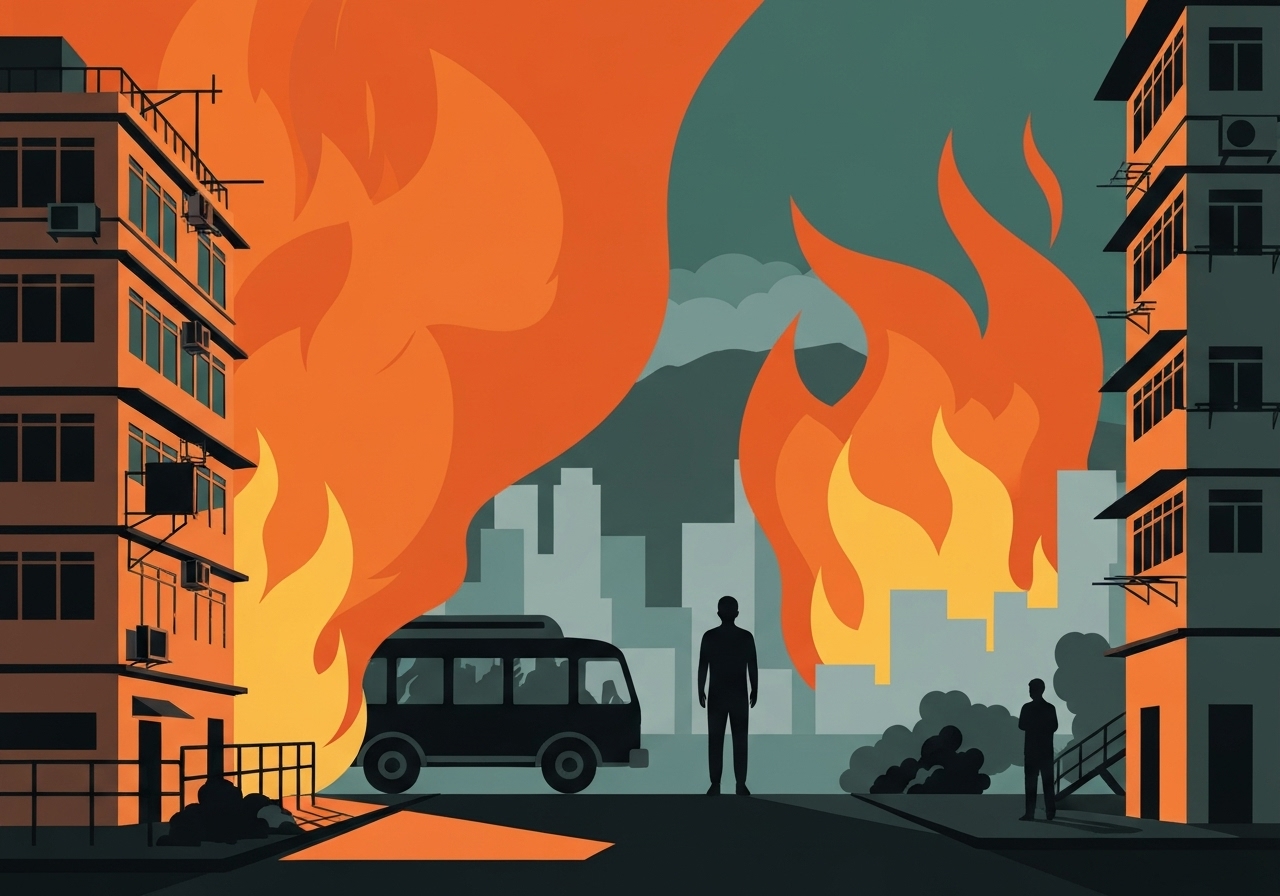
Lead: On Nov. 27, 2025, a fast-moving fire tore through Wang Fuk Court, a high‑rise housing complex in Hong Kong, killing at least 55 people and leaving dozens unaccounted for. Survivors said flames climbed the exterior of the towers and leapt across gaps between buildings, aided by renovation materials that authorities now suspect were flammable. One 78‑year‑old resident who noticed the blaze from a bathroom window said there were no warnings or alarms as he and his wife fled down many flights of stairs. The incident is being treated as the city’s deadliest residential fire in more than half a century.
Key Takeaways
- Death toll: At least 55 confirmed dead as of Nov. 27, 2025; dozens remain missing and unaccounted for.
- Rapid spread: Survivors described flames climbing exterior walls and jumping gaps between adjacent towers within minutes.
- Renovation materials implicated: Authorities say protective netting, sheeting and foam boards installed during renovation likely did not meet fire-safety standards.
- Specific hazards: Foam boards were reported outside elevator‑lobby windows on every floor of one building, a configuration officials flagged as highly flammable.
- Alarm failure: Multiple residents reported no building alarms or formal evacuation notices before fleeing on their own.
- Emergency response: Fire crews used tall ladders and high‑pressure jets; smoke and smoldering remained visible a day after the blaze began.
- Investigations: Police and safety authorities have opened inquiries and described possible gross negligence by those responsible for construction and renovation work.
Background
Wang Fuk Court is a cluster of closely spaced residential towers typical of Hong Kong’s dense urban housing. Many buildings in the area have recent renovation work involving external protective nets and sheeting to contain debris during repairs. That practice has raised questions about combustible materials on facades in other cities globally, especially where scaffolding and coverings sit close to occupied windows.
Hong Kong has not seen a residential fire with comparable fatalities in more than 50 years, and the scale of this event has highlighted long‑standing concerns over building maintenance, enforcement of construction standards, and emergency evacuation procedures in older high‑density estates. Stakeholders include residents, property managers, renovation contractors, and government departments charged with fire and building safety.
Main Event
According to multiple survivor accounts and on‑scene reporting, the fire began in one tower and moved vertically along the exterior before spreading laterally to neighboring blocks. Lau Yu Hung, 78, said most windows in his 19th‑floor unit were covered with thin foam as part of renovation work; he spotted flames from a bathroom window and rushed down stairwells with his wife. He said, in short, that there was no alarm and they escaped by themselves.
Firefighters arrived and set up ladders to attack the blaze from outside while crews worked inside where possible. Smoke continued to pour from upper floors into the following day. Volunteers gathered nearby to organize donated clothing and food for displaced residents, and police established a cordon as recovery and rescue operations continued.
Senior police superintendent Lai Yee Chung told investigators that materials used on building exteriors—protective netting, sheeting and installed foam boards—did not appear to meet safety requirements. She said officials believe there was “gross negligence” by those responsible for elements of the construction and renovation, which accelerated the fire’s rapid spread and contributed to the high casualty count.
Analysis & Implications
The speed at which this fire climbed exterior facades underscores a well‑known risk: combustible cladding, coverings and temporary protective materials can turn an external surface into a rapid conduit for flames. In tightly packed high‑rises, vertical and horizontal pathways allow fire to move between units and structures faster than interior suppression systems can respond.
For residents, the incident exposes gaps in life‑safety measures. Several survivors reported no audible building alarms, and reliance on stairwell evacuation in smoke‑filled conditions places elderly or mobility‑impaired occupants at extreme risk. If alarms or evacuation protocols failed or were absent, that points to systemic vulnerabilities beyond the materials themselves.
Economically and politically, the fire will likely prompt urgent reviews of renovation approvals, contractor licensing, and enforcement of facade and cladding standards. Insurance, property management, and construction sectors may face scrutiny and potential liability claims; regulators could move to tighten permitted materials and inspection regimes for ongoing refurbishment projects.
Comparison & Data
| Metric | Current Incident |
|---|---|
| Date | |
| Location | Wang Fuk Court, Hong Kong |
| Confirmed deaths | At least 55 |
| Missing / unaccounted | Dozens |
The simple tally above shows the confirmed human cost as of the morning after the blaze. Comparing this incident to past fires in Hong Kong demonstrates its exceptional scale in recent decades; investigators will trace timelines of spread, materials used, alarm and evacuation performance, and emergency response actions to assign causes and responsibility.
Reactions & Quotes
Many family members and neighbors gathered behind police cordons awaiting word about loved ones. The emotional toll was evident as relatives described frantic calls from people trapped by smoke and flames.
“Nobody warned us. No alarm went off. We escaped by ourselves.”
Lau Yu Hung, 78, survivor
Police officials and investigators framed the incident as potentially linked to construction and renovation choices. Their early public statements emphasized material failures and possible negligence as proximate causes of the rapid spread.
“There appears to have been gross negligence leading to this accident and the rapid spread of the fire.”
Lai Yee Chung, Senior Police Superintendent
Family members waiting at the scene reported failed calls and diminishing hope as night fell. One relative said his last conversation with a trapped family member ended when the building filled with smoke.
“There is not much hope now.”
Lau Wan King, 79, relative of a missing resident
Unconfirmed
- Exact ignition source: Investigators have not publicly confirmed the initial cause or the item that first ignited the blaze.
- Final casualty total: The confirmed death toll stood at 55 on Nov. 27, 2025; totals may rise as missing residents are accounted for.
- Responsibility for materials: While officials cited likely noncompliant materials and possible negligence, legal responsibility and specific contractor culpability remain under inquiry.
Bottom Line
This fire exposed intersecting failures: combustible exterior materials, possible lapses in alarm and evacuation systems, and the vulnerabilities inherent in dense, aging high‑rise neighborhoods undergoing renovation. The human cost is immediate and profound, but the event also constitutes a warning for regulators and property owners worldwide about facade safety.
Expect swift regulatory and legal actions: investigators will seek to establish cause and accountability, while policymakers are likely to revisit permitted materials and enforcement practices. For residents and managers of similar estates, the practical takeaway is to prioritize verified, fire‑resistant materials, clear alarm systems, and rehearsed evacuation plans to reduce the odds of a repeat tragedy.
Sources
- The New York Times (news report)
- Hong Kong Police (official agency homepage)
- Hong Kong Fire Services Department (official agency homepage)