
Lead
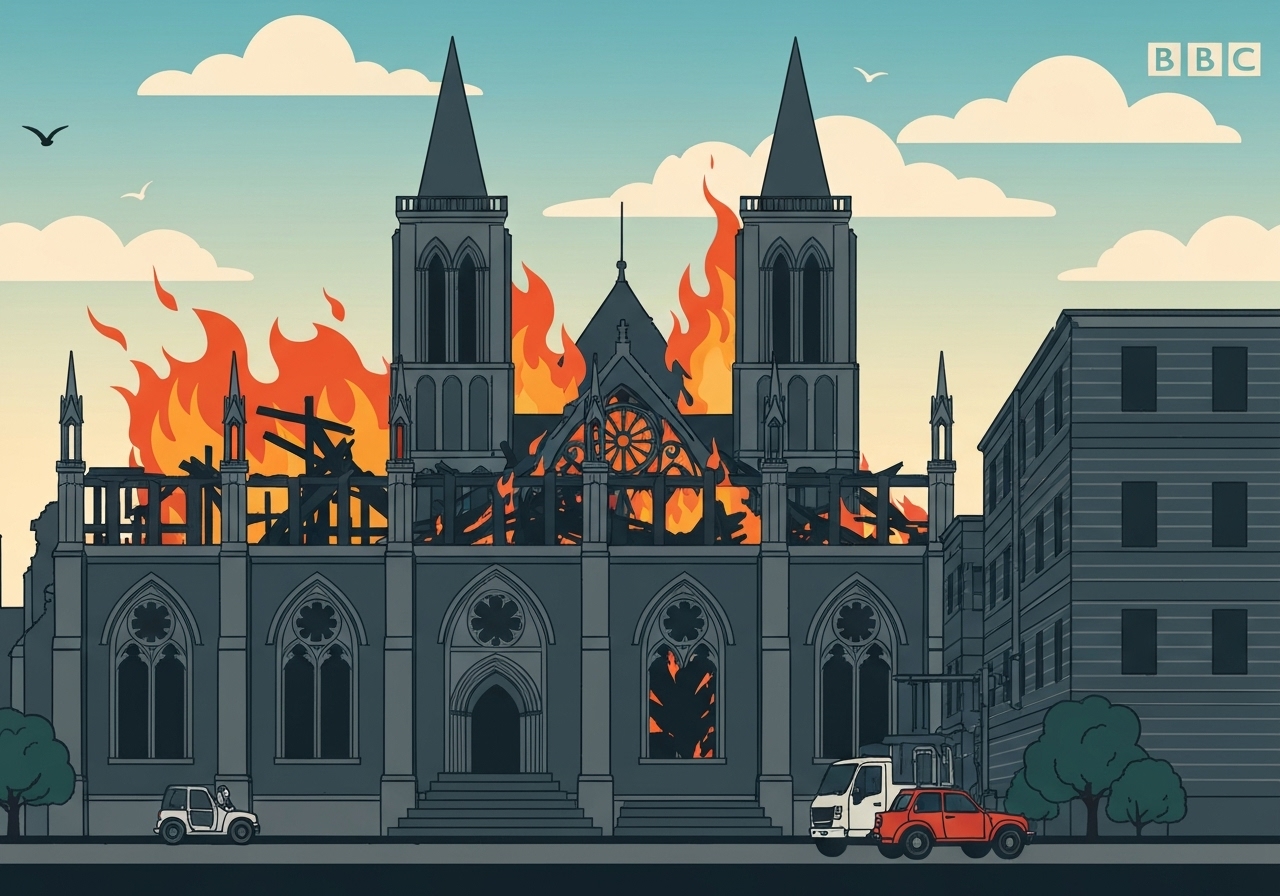
At least 13 people have died and 15 were reported injured after a major fire tore through Wang Fuk Court, a large public housing estate in Tai Po, Hong Kong, on Wednesday. The blaze began at 14:51 local time (06:51 GMT) and spread rapidly along external bamboo scaffolding on buildings undergoing renovation. More than 700 firefighters — officials later said 767 were deployed — worked through the night to contain what remains a level 5 (most serious) fire. One firefighter, Ho Wai-ho, 37, died after being taken to Prince of Wales Hospital.
Key Takeaways
- Fatalities: At least 13 people confirmed dead; nine were declared dead at the scene and others died after hospital admission.
- Injuries and response: Authorities revised the injured count to 15; 767 firefighters and dozens of engines were mobilised to the site.
- Location and scale: Wang Fuk Court in Tai Po comprises eight 31-storey blocks with 1,984 flats housing about 4,600 residents (2021 census).
- Cause and spread: The estate was covered in bamboo scaffolding for renovation; video and witness accounts show flames moving quickly along the external scaffold.
- Evacuations and sheltering: Councillors report over 1,000 people at nearby shelters and estimate roughly 95% of residents evacuated, though some families remain separated.
- Public impact: Several local schools in Tai Po will stay closed; political parties suspended election campaigning in solidarity with affected residents.
- Official response: Hong Kong’s chief executive convened an emergency meeting and government departments activated assistance and emergency medical responses.
- Fatality among responders: Firefighter Ho Wai-ho — a nine-year member of the Fire Services Department — died after sustaining injuries at the scene.
Background
Wang Fuk Court is a long-standing public housing estate in the Tai Po district, built in 1983. The complex of eight tower blocks, each 31 storeys high, has been undergoing major external renovation work this year. Hong Kong’s standard renovation practice often uses bamboo scaffolding, which contractors and officials say remains common for certain works despite concerns about combustibility under intense fire conditions.
Hong Kong’s high-density housing and tower-block construction have produced recurring fire-safety challenges, especially when scaffolding and external cladding are present. Past incidents and international cases show that fire spread on building exteriors can accelerate upward and laterally, complicating access for search and rescue teams. Local councillors, emergency services and the Education Bureau are among the agencies routinely involved in large housing estate emergencies.
Main Event
The fire broke out on Wednesday at 14:51 local time (06:51 GMT) in one of Wang Fuk Court’s blocks, officials said. Footage from the scene showed flames tracking across bamboo scaffolding enveloping multiple blocks; seven of the eight blocks were affected by external blaze spread, according to district councillors. Residents reported loud noises before flames became visible and said many people evacuated immediately, while some remained unaccounted for during the initial hours.
Fire crews established multiple pump lines and aerial operations and were reported to have positioned dozens of engines around the estate. Hong Kong’s Fire Services Department gave frequent briefings as teams attempted to contain the level 5 fire — the top category under their scale — and conduct search-and-rescue where safe entry was possible. Firefighters were hindered at times by heavy smoke, heat and unstable scaffolding.
By late evening the operation continued into the night: temporary shelters were opened at community halls and schools, and the Home Affairs Department arranged assistance stations. A peak deployment figure of 767 firefighters was repeatedly cited in press briefings. Officials said nine victims were declared dead at the scene and others were transported to hospitals; six were initially reported in serious condition.
Analysis & Implications
The scale of the response — hundreds of firefighters and dozens of appliances — underscores the challenges of high-rise firefighting in dense urban environments. External scaffoldings, especially those of combustible materials like bamboo combined with aging façades, can enable rapid exterior flame spread and impede ladder and hose deployment. That dynamic likely contributed to the speed at which multiple blocks were engulfed and complicated interior search access.
Beyond immediate rescue operations, the incident raises questions about renovation oversight, scaffold material risk assessment and temporary occupant protection during works. Regulators and building managers will face scrutiny over permit procedures, contractor practices and whether additional temporary fire-stopping measures should be mandated for occupied estates undergoing external works.
The death of a frontline firefighter will intensify calls for stronger occupational safety measures, including real-time structural monitoring and enhanced communications during extreme incidents. For residents, the loss of homes and the trauma of separation and missing relatives will place demands on social services, mental-health support and temporary housing resources in the coming weeks.
Comparison & Data
| Metric | Wang Fuk Court (this incident) | Recent comparable HK estate fires |
|---|---|---|
| Confirmed deaths | 13 | Varied (typically 0–10) |
| Injured | 15 (revised) | Varied |
| Firefighters deployed | 767 | Hundreds in large incidents |
| Blocks affected | 7 of 8 | Typically 1–3 |
| Residents housed | ~4,600 estate-wide | Depends on estate size |
The table places the Tai Po blaze in context: the reported 767 firefighters and multi-block involvement mark it as one of the larger recent domestic responses. Comparing past incidents suggests that exterior renovation work and scaffolding often correlate with larger-scale surface spread and higher operational complexity. Emergency planners will likely review resource staging and mutual-aid procedures following this event.
Reactions & Quotes
Government and community responses arrived rapidly as the scale of the incident became clear. Hong Kong’s secretary for security issued a tribute to the fallen firefighter and the chief executive convened an emergency meeting to coordinate support.
I am profoundly grieved at the passing of Mr Ho, who lost his life in the course of an operation.
Tang Ping-keung, Hong Kong Secretary for Security (official statement)
The statement from the security secretary highlighted the human cost among responders and conveyed condolences to victims’ families; it followed an official update that Ho died at Prince of Wales Hospital after sustaining injuries on scene.
We think about 95% of residents have already been evacuated; several nearby public housing blocks were also cleared.
Mui Siu-fung, Tai Po District Councillor (local official)
Local councillors described mass evacuations and the use of community halls and schools as temporary shelters, while warning that some residents still reported relatives unaccounted for. Political parties paused campaign activities and schools in the Tai Po area announced closures for the next day as precautionary measures.
Unconfirmed
- The precise number of people who remained trapped inside the buildings during the initial hours is not yet confirmed; local reports cite unaccounted-for relatives but official tallies are pending.
- The formal cause of ignition has not been determined; investigators have not released a conclusive origin or ignition source as of the latest briefings.
- Reports of structural damage severity and long-term habitability of affected blocks are preliminary and require formal engineering assessment.
Bottom Line
This is a major fatal fire in a dense public-housing estate that combined active renovation works and combustible external scaffolding, producing rapid fire spread and a complex rescue environment. The confirmed loss of 13 lives and the death of a career firefighter make this both a human tragedy and an operational stress test for Hong Kong’s emergency services.
In the coming days investigators will need to establish the ignition source, document the role of scaffolding and renovation practices, and identify any regulatory or procedural gaps. For residents, the immediate priorities are shelter, family reunification and medical and psychological support; for authorities, it will be a review of prevention and response measures to reduce the chance of repetition.