
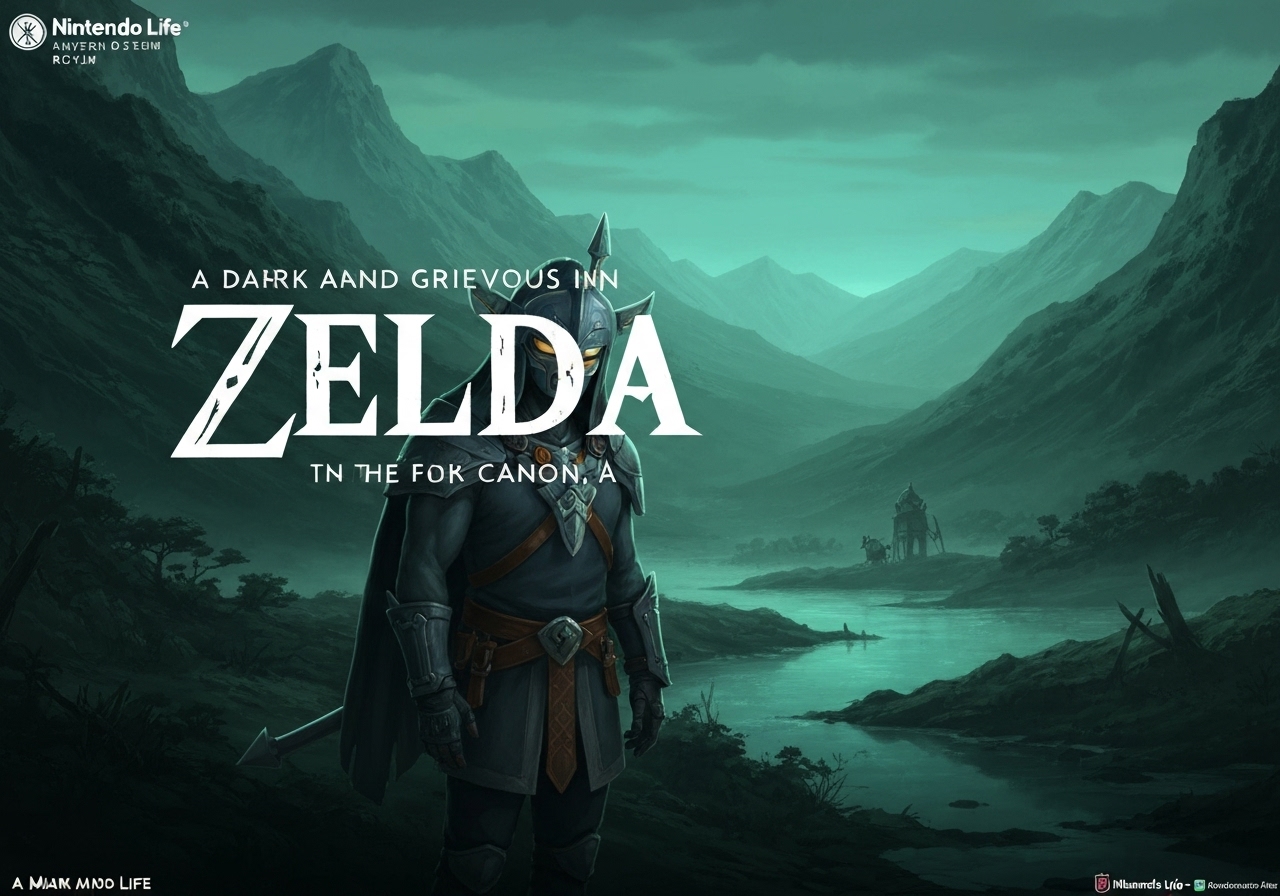
Lead: Hyrule Warriors: Age of Imprisonment on Nintendo Switch 2 delivers a canon Zelda prequel that blends high-octane musou combat with a story rooted in Hyrule’s early history. Captured on Switch 2 in both docked and handheld modes, the game targets a smooth 60fps in single-player and 30fps for two-player co-op. The developers at Koei Tecmo’s AAA Games Studio marry polished presentation, English voice work and a score that elevates spectacle to match mainline Zelda production values. The result is a spin-off that feels legitimately part of the series while still serving the crowd‑clearing pleasures musou fans seek.
Key Takeaways
- Platform and performance: Switch 2 builds show 60fps in solo campaign and 30fps for co-op, with consistent rendering and minimal frame-drop reports during review sessions.
- Canonical story: The narrative is an officially sanctioned prequel, placing Princess Zelda in the Imprisonment Wars via a time-travel stone and matching established franchise lore.
- Combat depth: Musou fundamentals are enhanced with new mechanics like Sync Strikes, character-specific Zonai device integration, and enemy types that require varied approaches.
- Presentation: Menus, UI and world-map styling mirror Tears of the Kingdom/Breath of the Wild motifs; voice acting (English) and soundtrack receive high marks.
- Map design: Levels are visually impressive but adhere to traditional musou layouts—corridors and open arenas—leading to some repetitive routing.
- Replayability: Post-campaign content, harder difficulties and unlockable systems encourage repeated runs and mastery of character synergies.
- Developer pedigree: Created by Koei Tecmo’s AAA Games Studio, the title refines lessons from Hyrule Warriors (2014) and Age of Calamity.
Background
The Hyrule Warriors spin-off line began on Wii U with 2014’s Hyrule Warriors, offering Dynasty Warriors-style crowd combat in a Zelda shell. That original entry found an audience who wanted unfiltered brawling framed by familiar locations and characters, and it carved out a long-term niche for musou crossovers. In 2020, Age of Calamity tightened narrative focus and introduced systems that deepened combat without alienating players who favor simple, cathartic button‑mashing.
Age of Imprisonment builds on that lineage and benefits from the current Zelda franchise momentum: worldbuilding from Breath of the Wild and Tears of the Kingdom provides a rich backdrop developers can reference and expand. Because this game is officially integrated into series continuity, it carries greater scrutiny from fans and a responsibility to honor franchise touchstones. Koei Tecmo’s new AAA Games Studio appears to have responded by prioritizing fidelity to established lore alongside modern musou design.
Main Event
Age of Imprisonment opens in Hyrule’s formative era, where a misused time-stone thrusts Princess Zelda into the Imprisonment Wars. Players traverse an early Hyrule rendered with meticulous detail—landmarks, camps and kingdom vistas appear in period form while the map fills with missions and challenges. Story missions deliver the cinematic beats expected of a mainline Zelda title: production values, character moments and set-piece confrontations are front and centre.
On the combat front, the game keeps the series’ core loop—move to an objective, clear waves, secure bases—while layering new systems. Sync Strikes let nearby allies combine for flashy, high-damage team attacks triggered when a shared gauge fills. Zonai devices are reusable gadgets that slot into character kits, alter combo endings or provide environmental traps, adding tactical variety beyond simple combos.
Enemy variety and encounters require more than indiscriminate button presses: shielded foes, aerial threats and strongholds demand positioning, counters and the smart use of character pairings. Boss fights and tougher stages reward learned strategies rather than pure stat-bashing. Co-op retains the spectacle but runs at 30fps, which keeps play smooth though noticeably less fluid than single-player performance.
Where the game falters is map architecture. Despite superb art direction and the novelty of exploring early-era locales, mission spaces are largely conventional musou zones—linear paths and broad arenas—so the underlying structure can feel repetitive after extended play. Still, the campaign compensates with pacing, unlockable content and cameo surprises that keep momentum high.
Analysis & Implications
By tying this entry directly into Zelda canon, the developers have shifted expectations for spin-offs: narrative weight matters now as much as combat fidelity. That alignment strengthens the franchise’s internal continuity and gives fans additional context for lore questions, but it also raises the bar for future crossovers to be both mechanically satisfying and narratively coherent. For Nintendo, a canon musou title that performs well on Switch 2 is a proof point for the platform’s capacity to host large-scale, cinematic spin-offs.
Mechanically, Sync Strikes and Zonai device integration represent a maturation of musou design, nudging the genre toward more deliberate team synergy and equipment customization. That blend of spectacle and strategy can expand the appeal beyond the traditional musou audience to players who prioritize tactical depth and character systems. Developers at Koei Tecmo and Omega Force have demonstrated that these titles can be both accessible and mechanically rich.
Economically, strong reception could cement Hyrule Warriors as an enduring sub-series, encouraging further investment and content updates. The game’s high production values make it a showcase product for Switch 2, highlighting the hardware’s frame-rate headroom and visual capabilities. Internationally, the title’s faithfulness to Zelda lore will likely reduce friction with core franchise fans, improving cross-market uptake and critical acceptance.
Comparison & Data
| Aspect | Age of Imprisonment (Switch 2) | Age of Calamity / Hyrule Warriors |
|---|---|---|
| Single-player framerate | 60fps target | Typically 30–60fps depending on mode |
| Co-op framerate | 30fps | Varied; older entries often lower |
| Story status | Official canon / prequel | Calamity: canonical; original HW: spin-off |
| New mechanics | Sync Strikes, Zonai device slots | More limited device integration |
Context: single-player 60fps is a meaningful step up for smooth musou spectacle on Switch 2, while co-op at 30fps preserves functionality with a performance trade-off. Compared to earlier entries, the stronger narrative integration and device customization broaden the game’s ambition beyond pure crowd-clearing.
Reactions & Quotes
“A canonical prequel that manages to feel at home within the broader Zelda mythos while delivering satisfying musou combat.”
Nintendo Life review (media)
“Sync Strikes add a strategic rhythm, rewarding positioning and teamwork rather than button repetition.”
Koei Tecmo / AAA Games Studio (developer comment)
“The Switch 2 presentation finally lets crowd density and animation shine without frequent performance compromises.”
Technical impressions (review testing)
Unconfirmed
- Community performance benchmarks across hundreds of systems are still pending; broader testing may reveal edge-case frame drops not seen in review sessions.
- Full roster details, including potential post-launch character additions, have not been exhaustively confirmed at time of writing.
Bottom Line
Hyrule Warriors: Age of Imprisonment is the best expression of the franchise’s musou ambitions to date, pairing polished, large-scale combat with a story that genuinely earns its place in Zelda continuity. The Switch 2 performance and audio-visual package make encounters feel impressive and immediate, and new systems like Sync Strikes and Zonai devices add strategic depth while preserving core musou thrills.
Map layout repetition and a 30fps co-op cap are minor blemishes on an otherwise robust package; for fans of hack-and-slash action or Zelda lore, this is a high-reward experience with plenty of replayability. If you value a canonical narrative wrapped in expertly executed crowd combat, Age of Imprisonment is likely worth your time on Switch 2.
Sources
- Nintendo Life — Editorial review (media review)
- Koei Tecmo — Official developer (developer site)
- Nintendo — Platform holder (official)