
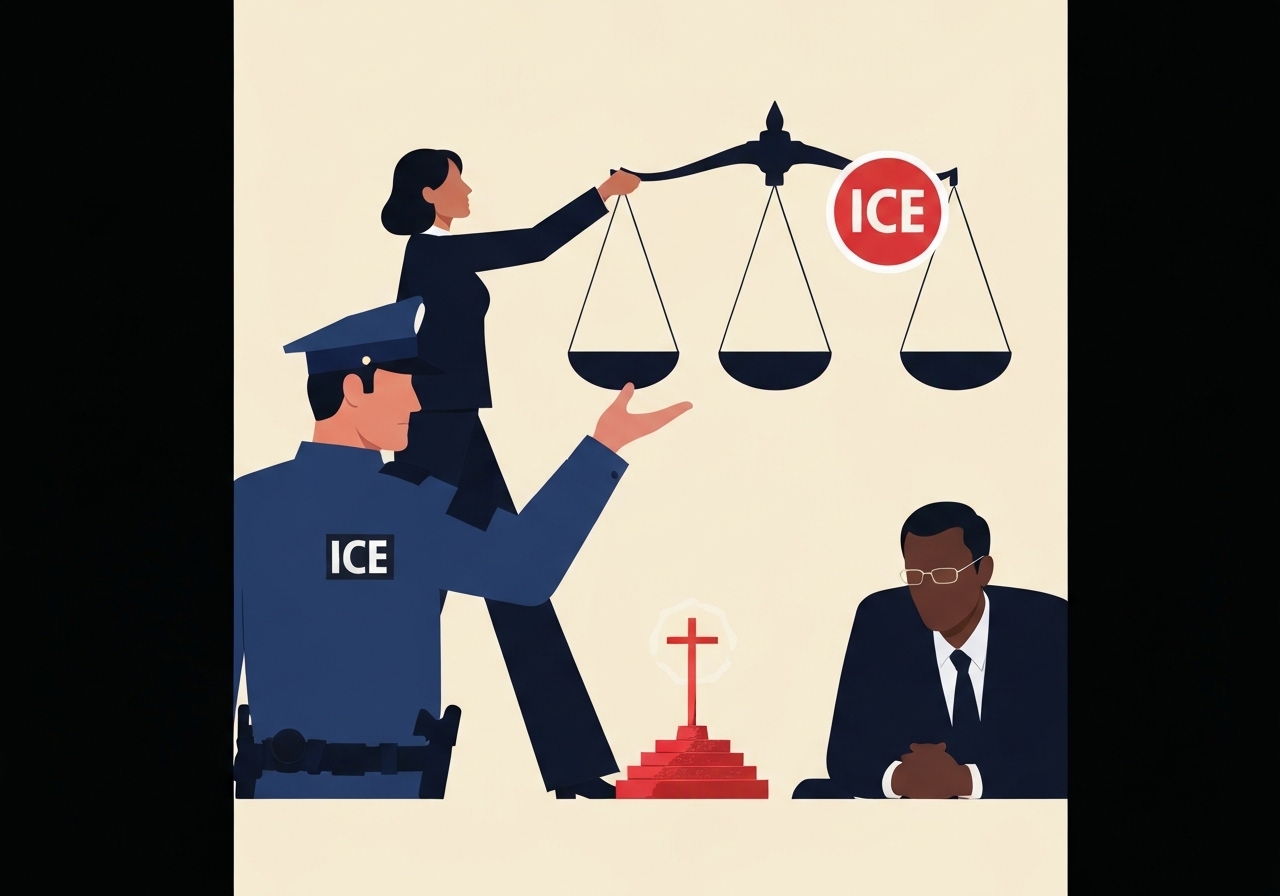
Lead: In early January 2026 an Immigration and Customs Enforcement (ICE) agent shot and killed Renee Nicole Good in Minneapolis, touching off a local outcry and an impromptu memorial at the scene. Federal prosecutors under the Trump administration are seen as unlikely to bring charges, and the administration has withheld evidence from Minnesota authorities. State prosecutors say prosecution faces steep constitutional and practical obstacles but have not ruled it out. Minneapolis’s top prosecutor, Mary Moriarty, said limited federal cooperation is “not a complete barrier” to moving forward.
Key Takeaways
- An ICE agent shot and killed Renee Nicole Good in Minneapolis in early January 2026; a makeshift memorial appeared at the site.
- The Trump administration is unlikely to pursue a federal prosecution and has declined to share investigative materials with Minnesota officials.
- State prosecution faces constitutional hurdles: federal-officer protections and potential removal to federal court can complicate local charges.
- Mary Moriarty, Minneapolis’s chief prosecutor, says lack of access to federal evidence is serious but “not a complete barrier.” She is exploring legal means to compel evidence transfer.
- Convicting law enforcement officers in shootings is historically difficult; prosecutors must overcome evidentiary, procedural and immunity defenses.
- Criminal charges remain possible, depending on state evidence, witness cooperation, grand jury decisions, and legal strategies to surmount federal immunity claims.
Background
The legal and political context matters for any decision to charge a federal officer. Under the Constitution and federal statutes, actions taken by federal employees in the course of their duties can trigger doctrines that protect them from state prosecution or allow transfer of cases to federal court. That framework aims to prevent state interference with federal functions but has complicated efforts to hold federal officers to state criminal standards.
Minneapolis has been the focal point for heightened scrutiny of law enforcement conduct in recent years, and this incident renewed local tensions around policing and federal involvement in local policing matters. The Trump administration’s posture toward accountability in officer-involved shootings has influenced whether federal authorities open parallel criminal investigations or release evidence to state and local prosecutors.
Main Event
Early in January 2026 an ICE agent shot Renee Nicole Good in Minneapolis; witnesses and onlookers later established a spontaneous memorial at the site. Local officials quickly began an investigation while federal authorities also opened inquiries. The two tracks—the federal review and municipal scrutiny—have proceeded with limited sharing of evidence between jurisdictions.
Officials in the Trump administration have signaled they are unlikely to pursue a federal criminal case, and federal agents have not fully cooperated with Minnesota investigators, according to public statements and local prosecutors. Mary Moriarty told reporters she was examining ways to obtain federal materials, including court orders to compel disclosure from the F.B.I. or other agencies involved in the federal review.
The state faces immediate procedural questions: whether it can maintain jurisdiction over a federal agent for actions taken while on duty, how to confront claims of federal immunity, and whether available evidence—video, forensic analysis, witness statements—suffices to meet the high burden required for a criminal conviction. Local leaders have sought to reassure the public while stressing the legal limits prosecutors face.
Analysis & Implications
Legal scholars say prosecutions of federal officers by state authorities are rare and legally complex. The Supremacy Clause and federal statutes can provide avenues for federal officers to seek removal of a state prosecution to federal court, and courts have sometimes recognized defenses tied to the officer’s federal duties. That makes the threshold for initiating charges higher than in many state-only cases.
Even when jurisdictional questions are resolved, police and federal officers benefit from procedural and substantive protections—such as qualified immunity doctrines and high standards for proving criminal intent in use-of-force cases. Prosecutors must assemble evidence that not only rebuts an officer’s account but also satisfies a jury beyond a reasonable doubt that the officer committed a state crime.
The administration’s refusal to share evidence raises tactical and constitutional questions. If federal investigators retain key materials, state prosecutors may need subpoenas, grand jury subpoenas, or judicial orders to gain access. Those legal routes can be slow and contested, and they may result in partial disclosure rather than full transfer of investigative files.
Comparison & Data
| Prosecution Path | Typical Advantages | Typical Hurdles |
|---|---|---|
| Federal prosecution | Access to federal investigative resources; control over federal immunity questions | Requires federal criminal statute violation; politically driven decisions by DOJ |
| State prosecution | Closer to local witnesses and juries; state statutes may be better suited to certain charges | Constitutional defenses for federal officers; potential removal to federal court; limited access to federal files |
This comparison highlights why prosecutors and legal experts describe prosecutions of federal agents as legally delicate: advantages on one side are counterbalanced by procedural and jurisdictional barriers on the other. Local prosecutors often weigh the likelihood of conviction against the political and social importance of pursuing charges.
Reactions & Quotes
Public reaction in Minneapolis included vigils and calls for accountability as community members gathered at an impromptu memorial. Officials and advocates expressed frustration about the pace and transparency of investigations.
“This isn’t a whodunit,”
Mary Moriarty, Minneapolis chief prosecutor
Moriarty used that phrase to emphasize that prosecutorial decisions hinge on evidence beyond establishing who fired a weapon; she stressed that procedural and legal strategies would be needed to pursue charges without full federal cooperation.
“Prosecuting federal officers raises complicated jurisdictional questions that go beyond ordinary state cases,”
constitutional law scholar
Legal experts summarized the core difficulty: the interplay between federal authority and state criminal law often produces protracted litigation over whether charges can proceed and in what forum.
Unconfirmed
- Whether the Trump administration will definitively decline any federal criminal case in this matter remains unresolved.
- The full scope and contents of federal investigative files and why they have not been shared with Minnesota authorities have not been publicly disclosed.
- Details about the precise timeline of events on the day of the shooting, including some witness statements, remain under investigation and have not been independently verified.
Bottom Line
The killing of Renee Nicole Good in Minneapolis has put prosecutors at the intersection of law and politics. While federal prosecution appears unlikely under the current administration, state charges are legally possible but face significant constitutional and evidentiary hurdles—particularly when federal agencies limit cooperation.
Mary Moriarty and her team have signaled they will explore legal avenues to obtain evidence and evaluate criminal options, but any path to indictment and conviction is uncertain and likely to be contested in court. For the community and policymakers, the case underscores persistent challenges in holding federal officers accountable at the state level and may prompt discussions about statutory reforms or protocols for evidence sharing in intergovernmental investigations.