
Lead
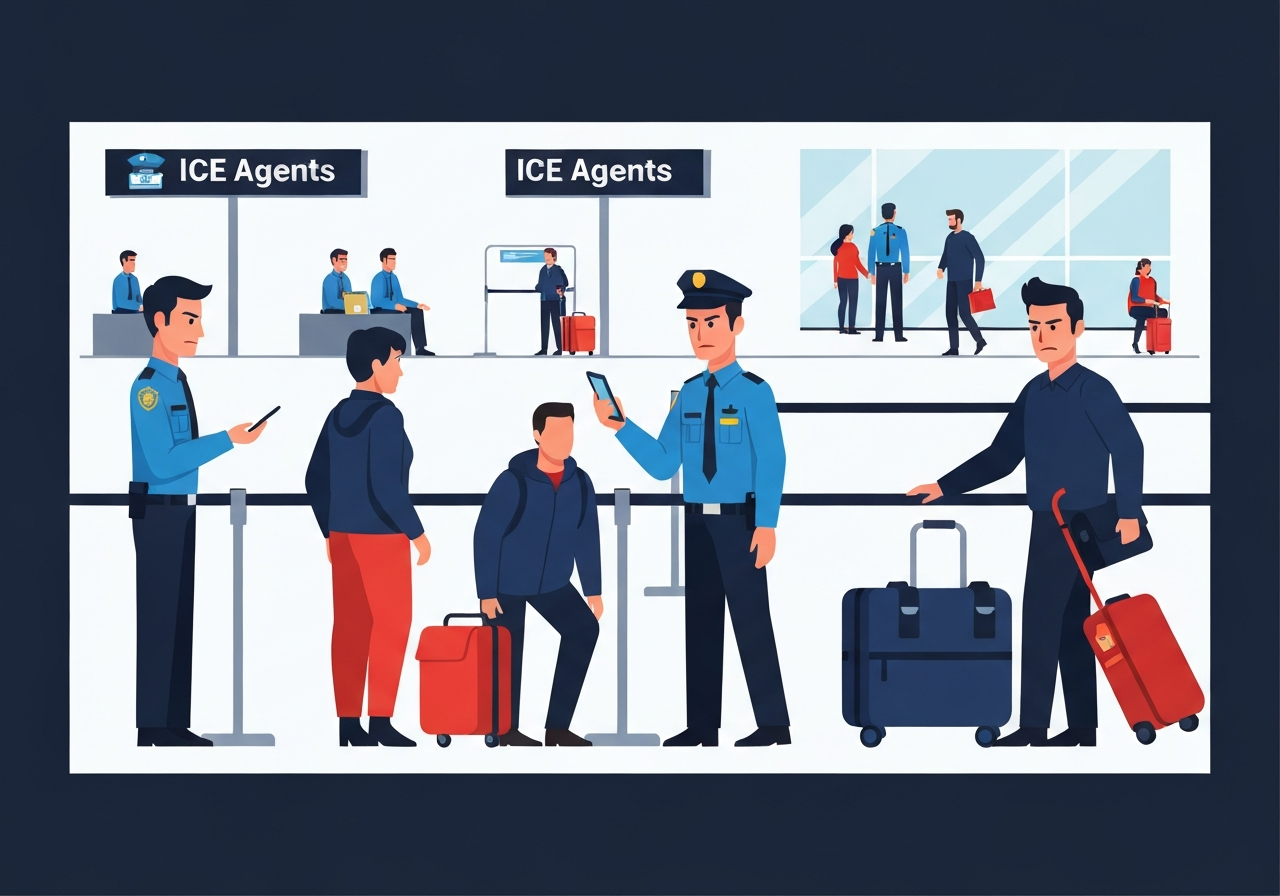
On March 25, 2026, U.S. Immigration and Customs Enforcement (ICE) agents were observed conducting identification checks and assisting with passenger screening at several major airports, including Hartsfield‑Jackson Atlanta, Phoenix Sky Harbor and LaGuardia. The deployment follows agents being sent to airports earlier in the week amid a persistent shortage of Transportation Security Administration (TSA) staff and reports of hours‑long security lines. At some locations ICE officers used TSA card‑readers and worked beside TSA staff; at others they primarily patrolled public areas. It remained unclear whether the presence of ICE personnel materially reduced wait times or how broadly the new screening duties had been assigned.
Key Takeaways
- On March 25, 2026, ICE officers were seen checking IDs and assisting screening at Hartsfield‑Jackson Atlanta, Phoenix Sky Harbor and New York’s LaGuardia Airport.
- The agents’ assignment expanded from earlier deployments this week, when many officers reportedly patrolled terminals and monitored crowds rather than working screening lanes.
- The Department of Homeland Security confirmed that, after completing TSA training, ICE officers used TSA equipment for identity verification and performed crowd control and entry/exit security.
- At Phoenix, armed ICE officers in ballistic vests were observed examining passenger documents and helping manage baggage on conveyor belts.
- A traveler at LaGuardia reported that an ICE officer checked his ID while he used TSA PreCheck, illustrating the blended presence at screening points.
- TSA has been coping with staffing shortages that have produced multi‑hour waits at some checkpoints, the stated rationale for additional personnel.
- Officials did not disclose how many airports had ICE officers performing screening duties or whether the shift in duties was intended as a long‑term fix.
Background
The Pentagon‑style division of responsibilities places the Transportation Security Administration in charge of passenger and baggage screening at commercial airports, while ICE typically focuses on immigration enforcement and investigations. Since Monday of the same week this article was reported, ICE officers were deployed to major airports in various capacities; initial reports noted many agents spent time patrolling terminals and observing passenger flows rather than standing in security lanes. The deployments occurred against a backdrop of staffing shortages at TSA and recurring travelers’ complaints about extended wait times, which agencies have struggled to fully resolve.
Airport security operations are governed by federal procedures and technical systems—ID readers, credential scanners and watch‑list protocols—that historically have been operated by TSA personnel. Inviting officers from another federal law‑enforcement agency to use that equipment raises operational, training and civil‑liberties questions that activists, union representatives and some lawmakers have flagged. DHS officials wrote that ICE officers completed a standard TSA training curriculum before using screening tools, but details on the length and scope of that instruction were not disclosed.
Main Event
At Hartsfield‑Jackson Atlanta International Airport on March 25, ICE officers were observed instructing passengers to insert IDs into card readers, confirming identities on computer displays and directing travelers toward X‑ray and body‑scanner lanes while nearby TSA officers provided guidance. Visual reporting from the terminals showed ICE personnel performing tasks that, earlier in the week, they had not been assigned at that scale. The presence of ICE at screening lanes stood in contrast to reports from Monday, when many agents mainly monitored public areas and provided visible patrols rather than handling credential‑check equipment.
In Phoenix Sky Harbor, observers reported armed ICE officers wearing ballistic vests checking IDs and assisting with baggage flow at security conveyors, at times handling documents directly. At New York’s LaGuardia Airport, a passenger said an ICE agent checked his ID while he used the TSA PreCheck lane, indicating that the blended duties extended into expedited screening areas. Agency statements from the Department of Homeland Security confirmed ICE personnel were using TSA devices and following standard operating procedures after completing assigned training modules.
Despite these site‑level accounts, officials did not provide a comprehensive list of airports where ICE personnel had taken on screening duties, nor did they quantify the number of agents involved. Airport spokespeople and TSA representatives provided limited, site‑specific comments; some emphasized coordination and safety, while others noted that staffing gaps continued to hamper consistent checkpoint performance. Travelers encountered a mix of reactions—some welcomed any help that moved lines faster, while others expressed concern about immigration agents working at points that interact closely with domestic travel credentials.
Analysis & Implications
The operational shift has several potential implications. Short term, having additional trained personnel at checkpoints could ease bottlenecks if ICE officers are integrated effectively with TSA teams; the immediate effect will depend on how many agents are assigned to active lanes and how quickly they adapt to TSA software and procedures. However, mixing immigration enforcement officers into visible screening roles risks blurring mission boundaries and could affect passenger trust, especially among immigrant communities who may avoid travel or encounter anxiety at checkpoints.
From a legal and policy perspective, the arrangement raises questions about data access and roles: TSA systems interface with watchlists and identity‑verification databases, and expanding access to staff outside TSA warrants careful auditing and oversight to prevent misuse or confusion. Labor relations are also implicated—TSA unions have argued for sustained hiring and retention solutions rather than temporary reassignments, and airport operators will weigh the optics of law‑enforcement visibility versus operational necessity.
Politically, the deployment could become a flashpoint. Supporters may portray the move as pragmatic emergency staffing; critics may view it as an expansion of immigration‑agency footprint into everyday travel infrastructure. Internationally, passengers from abroad who observe immigration agents at domestic screening points may question where immigration checks begin and end, complicating messaging about traveler rights and the separation between customs/immigration processing and security screening.
Comparison & Data
| Airport | Observed ICE Duties (March 25) | Reported Prior Week Duties |
|---|---|---|
| Hartsfield‑Jackson (Atlanta) | ID card‑reader checks; directing to scanners | Patrols; hallway monitoring |
| Phoenix Sky Harbor | Document checks; managing baggage conveyors; armed presence | Patrols; crowd observation |
| LaGuardia (New York) | ID checked at a TSA PreCheck lane (passenger report) | Patrols; entry/exit observation |
The table above summarizes reported on‑site duties for ICE officers on March 25, 2026, compared with their activities earlier in the week. These accounts are drawn from site observations and official statements and do not represent a comprehensive inventory of all airports or agents involved.
Reactions & Quotes
Department of Homeland Security officials framed the activity as coordinated and trained support for TSA operations while underscoring security responsibilities. They emphasized that officers completed training and were operating equipment under established procedures.
“ICE officers have completed required TSA training and are verifying identification using TSA equipment,”
Lauren Bis, Acting Assistant Secretary, Department of Homeland Security
Some travelers welcomed any help that might shorten lines, while others felt uneasy about immigration agents working at screening checkpoints. Reports from passengers described surprise and mixed feelings when ICE appeared at lanes normally staffed only by TSA.
“An ICE agent checked my ID when I went through PreCheck,”
Passenger at LaGuardia Airport
Unconfirmed
- How many airports beyond Atlanta, Phoenix and LaGuardia had ICE officers performing ID checks remains unclear; official tallies have not been released.
- It is not publicly confirmed whether the primary goal of the expanded duties was to shorten wait times or to have a visible law‑enforcement presence for other security objectives.
- Details about the duration and exact scope of the TSA training provided to ICE officers—such as hours or classroom versus on‑the‑job components—have not been disclosed.
Bottom Line
The presence of ICE officers using TSA equipment at airport security checkpoints on March 25, 2026, reflects an operational response to staffing pressures but raises operational, legal and public‑trust questions. Short‑term relief for lines is possible where agents are integrated effectively, yet measurable improvements will depend on scale, training quality and coordination with TSA teams.
Policymakers and airport officials must balance immediate operational needs against longer‑term concerns about role clarity, oversight and traveler confidence—particularly for communities sensitive to immigration enforcement. Observers should watch for official data on wait‑time impacts, the number of sites involved and published protocols that define what ICE officers may and may not do at screening checkpoints.
Sources
- The New York Times (news report) — site reporting on on‑the‑ground observations and agency statements.
- Department of Homeland Security (official) — agency statements on ICE activities and training requirements.
- Transportation Security Administration (federal agency) — background on TSA screening responsibilities and traveler procedures.