
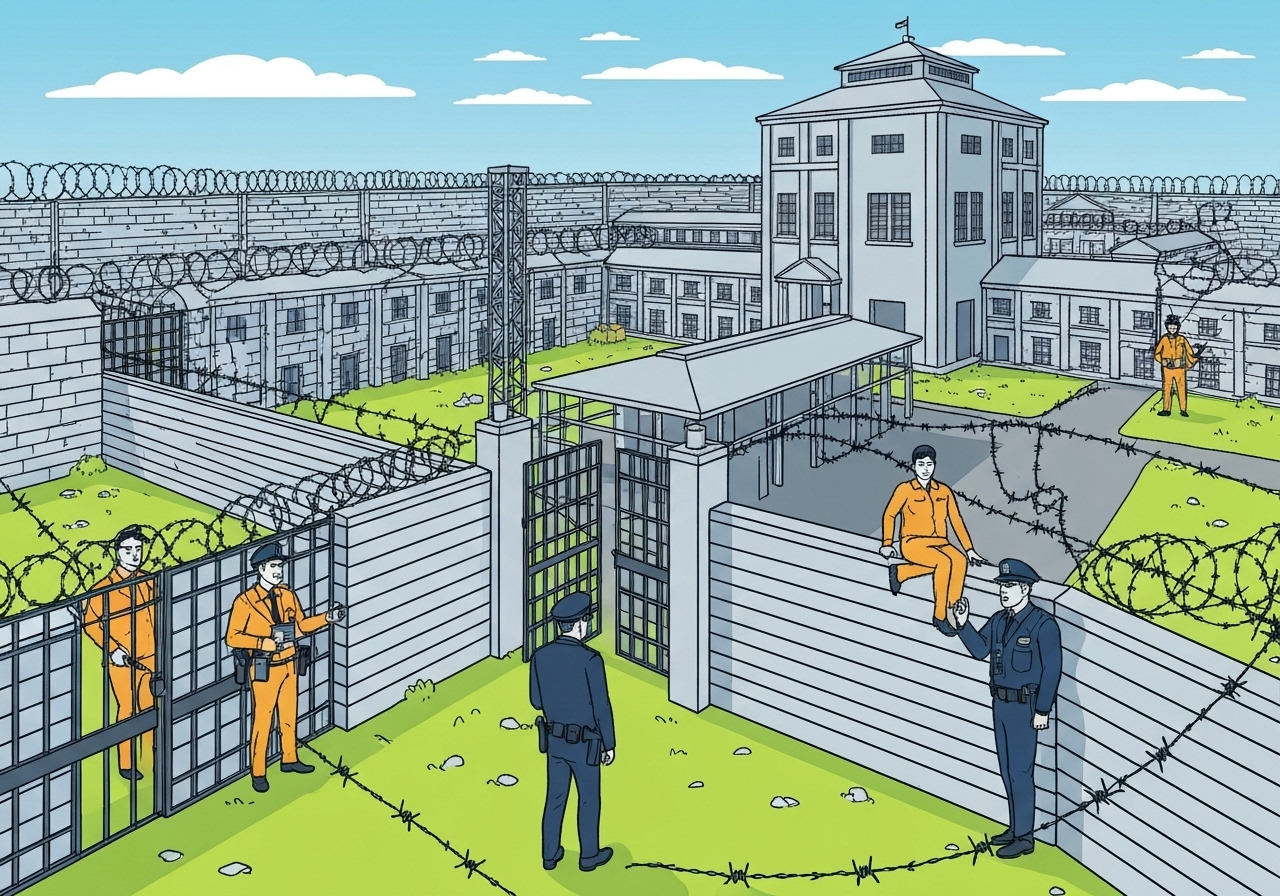
On Sept. 3, 2025, federal and Louisiana officials announced that U.S. Immigration and Customs Enforcement has opened a new immigration detention center inside the Louisiana State Penitentiary — known as Angola — moving 51 male detainees and planning to hold more than 200 by the end of the month in a site with roughly 400 beds.
Key Takeaways
- ICE has converted part of Angola (the former “Camp J”) into an immigration detention center the state calls “Louisiana Lockup.”
- Officials said 51 male detainees were moved in as of Sept. 3; the site is expected to hold over 200 detainees later this month, with capacity near 400.
- State officials say detainees will be isolated from the prison population and the center will be run by ICE contractors.
- Homeland Security Secretary Kristi Noem described the individuals as “high risk,” citing convictions including murder, sexual assault and possession of child sexual abuse material.
- Civil‑rights and immigrant‑rights groups warned Angola’s violent history and past use of extreme isolation raise constitutional and humanitarian concerns.
- Louisiana is part of a broader, multi‑state effort to expand detention capacity amid an intensified deportation campaign.
- Data cited by critics indicates many recent ICE arrests nationwide involve people with no criminal convictions.
Verified Facts
Federal and state officials confirmed on Sept. 3, 2025, that ICE is operating a detention center inside the Louisiana State Penitentiary at Angola. The first reported transfers moved 51 adult men into the facility; state officials said the site will house more than 200 detainees by later in September and that its full capacity is about 400 beds.
The converted area occupies what was long called Camp J, a restrictive unit previously used for near‑continuous solitary confinement. Camp J was closed in 2018 because officials cited safety and deterioration concerns. State officials say repairs and an emergency declaration issued by Gov. Jeff Landry in July accelerated the reopening and conversion.
Officials have emphasized that immigration detainees will be separated from the prison’s general population and that ICE contractors, rather than state corrections staff, will operate the center. Homeland Security Secretary Kristi Noem told reporters the detainees designated for Angola are considered “high risk,” and listed offenses that include murder, sexual assault, battery and possession of large caches of child sexual abuse material.
Angola is the nation’s largest maximum‑security prison, sprawling across land larger than Manhattan and located about an hour by road from Baton Rouge. Established in 1901 on former plantation land — including a plantation called Angola — the facility has a long record of violence and harsh conditions and has drawn recurring legal and advocacy scrutiny.
Context & Impact
The move places Angola at the center of a federal push to increase deportations and expand detention capacity. Louisiana has hosted several large ICE detention sites and an adjacent regional airfield in Alexandria has become a major hub for domestic deportation flights.
Other states have similarly repurposed remote facilities this year, including a recent Florida site in the Everglades nicknamed “Alligator Alcatraz,” as well as new or expanded centers in Nebraska and Indiana. Advocates say the rapid expansion strains legal safeguards and raises questions about access to counsel, medical care and oversight.
- Potential effects include increased legal challenges alleging constitutional violations and heightened scrutiny from human‑rights monitors.
- Officials say the site may deter some undocumented residents from remaining, while critics argue it will further isolate and endanger already vulnerable people.
“If you don’t think that they belong in somewhere like this, you’ve got a problem,”
Gov. Jeff Landry
“It’s legendary,”
Homeland Security Secretary Kristi Noem
Unconfirmed
- Whether every individual transferred to Angola meets the “high risk” criteria announced by officials; public arrest data shows many recent ICE detainees nationally have no criminal convictions.
- The precise timeline and final headcount for detainees at the Angola center beyond officials’ statements remain projections subject to change.
- Full details of oversight arrangements, medical and legal access, and the contractor operations model have not been published in full at the time of this report.
Bottom Line
The opening of an ICE detention center inside Angola marks a significant escalation in the federal push to expand detention and deportation capacity, placing immigrants inside a prison with a fraught history. Expect legal challenges, increased advocacy attention, and close scrutiny of whether constitutional and humanitarian standards are met as the facility begins operations.