
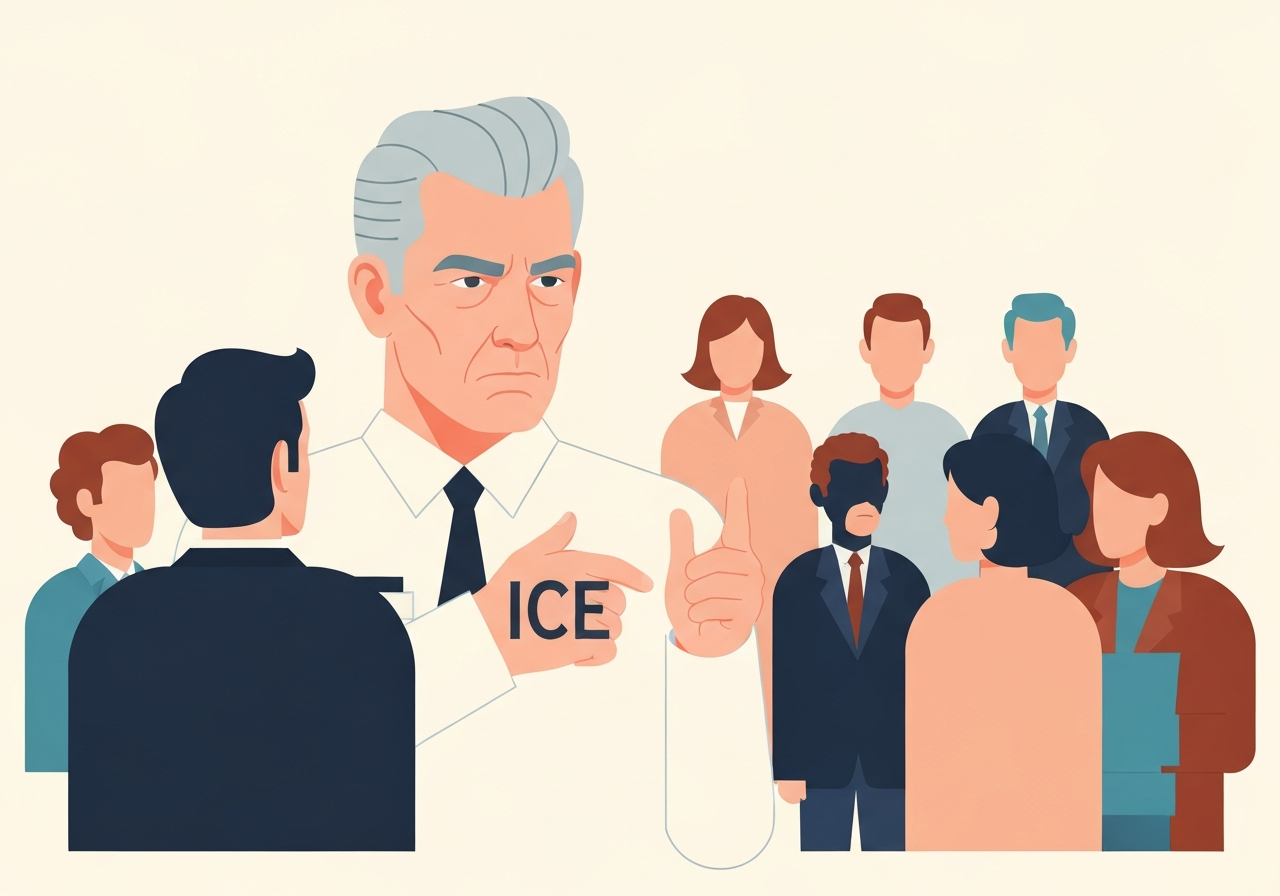
Lead: Acting ICE director Todd Lyons told the House Homeland Security Committee on Tuesday that his officers would not be intimidated as they carry out the administration’s expanded deportation operations, defending enforcement tactics after the fatal shootings of two Americans. Lyons testified alongside U.S. Customs and Border Protection chief Rodney Scott and U.S. Citizenship and Immigration Services director Joseph Edlow during a roughly three-and-a-half-hour hearing in Washington. The proceedings followed the January shootings of Alex Pretti and Renee Good and intensified debate about enforcement inside U.S. cities and the Department of Homeland Security’s upcoming funding decisions. Republican members largely backed agency leaders while Democrats pressed for accountability and tighter restraints.
Key Takeaways
- Two Americans, Alex Pretti and Renee Good, were fatally shot in incidents that triggered a congressional hearing into federal immigration enforcement tactics.
- Three agency heads—Todd Lyons (ICE), Rodney Scott (CBP) and Joseph Edlow (USCIS)—testified for about 3.5 hours before the House Committee on Homeland Security.
- Lyons defended officers’ tactics and refused a demand to require removal of masks from enforcement personnel, saying officers will not be deterred.
- Officials said standard operating procedures are part of the ongoing investigations into the January shootings and pointed to expanded use of body cameras, which were being issued in Minneapolis and rolled out further as funding allows.
- The testimony arrived as DHS faces a potential funding lapse at the end of the week and after a large infusion of congressional funding last summer that enabled a hiring surge and intensified operations.
- Lawmakers clashed sharply: Democrats warned of civil-rights harms and called for oversight, while most Republicans defended the agencies’ efforts to arrest and remove people the administration regards as threats.
Background
After a substantial congressional appropriation last summer, the Department of Homeland Security and its component agencies increased staffing and domestic enforcement activity as part of the administration’s broader deportation strategy. ICE and CBP have shifted resources toward interior arrests and targeted operations inside major cities, a departure from CBP’s traditional focus on border protection. The changes have produced both a rise in enforcement operations and heightened political controversy, including protests and criticism from civil-rights groups and many Democrats.
The January shootings of Alex Pretti and Renee Good became focal points for scrutiny of federal tactics and rules of engagement. Those fatalities led to calls for congressional hearings and renewed demands for transparency about detention conditions, use of force, and oversight of operations conducted in American communities. At the same time, Republican lawmakers stressed public-safety arguments, accusing prior policies of enabling unlawful entries and framing the current enforcement surge as restoring order.
Main Event
On Tuesday, Lyons, Scott and Edlow appeared before the House Committee on Homeland Security and faced pointed questioning for roughly three and a half hours. Lyons repeatedly defended his officers, arguing they followed procedures and that rhetoric from elected officials and protesters had escalated threats to enforcement personnel. At points Lyons declined to directly address some details of the shootings but insisted the agencies would continue their operations.
Committee exchanges turned heated. Democrats criticized enforcement tactics and, in some instances, used stark historical comparisons to underscore their concerns; the chairman intermittently called members to order as debate intensified. Ranking member Rep. Bennie Thompson called the hearing the “start of a reckoning” and urged accountability from DHS leadership, including Secretary Kristi Noem.
Republicans redirected scrutiny to prior administration policies and sought to justify the current enforcement approach as necessary to public safety. Rep. Michael McCaul and other GOP members defended redeployments and praised moves like placing Tom Homan in charge of Minneapolis operations after the Pretti shooting. A small number of Republicans, however, signaled discomfort with how some field commands had been executed.
Lawmakers also debated operational details, including whether officers should be required to remove masks during domestic enforcement. Lyons refused to commit to removing masks for officers, saying he would not issue that directive. Agency leaders said body-camera programs were being expanded and that thousands of officers already wear cameras, with broader distribution tied to funding availability.
Analysis & Implications
The hearing underscores the political tensions surrounding interior immigration enforcement in a midterm environment where DHS funding and oversight are leverage points for members of Congress. If appropriations lapse at week’s end, agency leaders warned about public-safety consequences, framing funding as essential to continued operations. That claim will be weighed against Democratic calls for constraints and transparency tied to budget negotiations.
Operational shifts at CBP and ICE—moving from border-centric roles toward more aggressive interior enforcement—have legal and administrative implications. Expanding arrests and deportations requires not only personnel but tighter oversight to address civil-rights and due-process concerns raised by critics. Failure to produce timely, transparent investigative findings after deadly encounters risks deepening public distrust and fueling further political backlash.
Procedural questions about use of force, mask policies, and the pace of body-camera rollouts may become central in both committee oversight and possible litigation. Agencies’ insistence that they are following standard operating procedures will be tested against forensic evidence and independent investigations. Politically, the hearing may harden partisanship: Republicans generally support continued enforcement increases, while Democrats are likely to press for legislative and funding conditions tied to reforms.
Comparison & Data
| Metric | Detail |
|---|---|
| Fatal shootings discussed | 2 (Alex Pretti; Renee Good) |
| Agency leaders testifying | 3 (ICE, CBP, USCIS) |
| Hearing length | Approximately 3.5 hours |
| Funding context | Large congressional infusion last summer; DHS faces funding lapse at week’s end |
The table above summarizes the concrete facts raised during the hearing and the immediate budget context. Those datapoints frame several live policy debates—how many resources to allocate for interior enforcement, what oversight is required, and whether operational practices (masks, cameras, uses of force) should be restricted by statute or appropriations riders.
Reactions & Quotes
“Let me send a message to anyone who thinks they can intimidate us. You will fail,” Lyons said, urging that officers not be deterred from carrying out enforcement duties.
Todd Lyons, Acting ICE Director
“This is the start of a reckoning,” Rep. Bennie Thompson said, pressing for accountability and answers about detention access and use-of-force reviews.
Rep. Bennie Thompson (Ranking Member, House Homeland Security Committee)
Rodney Scott described what he called escalating interference with federal officers and characterized some incidents as coordinated attempts to impede operations.
Rodney Scott, CBP Chief
Unconfirmed
- Claims that protests and attacks on officers are “coordinated and well funded” have been asserted by officials but lack independently verified public evidence in the hearing record.
- Specific internal determinations about whether every procedural checklist was followed in the Pretti and Good shootings remain under investigation and have not been publicly released in full.
- Details about who exactly fired which rounds in the Pretti incident have been described in summary form; full forensic findings have not been made public.
Bottom Line
The hearing amplified an already polarized debate over how the U.S. enforces immigration laws inside its cities. Agency leaders framed robust interior operations as necessary for public safety and warned that funding cuts would hamper enforcement, while many lawmakers and civil-rights advocates view the same tactics as overreach that require tighter limits and oversight.
Key immediate items to watch are the results of the investigations into the Pretti and Good shootings, any legislative riders or conditions attached to DHS funding, and whether the committees secure greater access to detention facilities and operation records. Those developments will shape whether enforcement continues at current intensity or is constrained by oversight, litigation or appropriations decisions.
Sources
- Associated Press (news/press)