
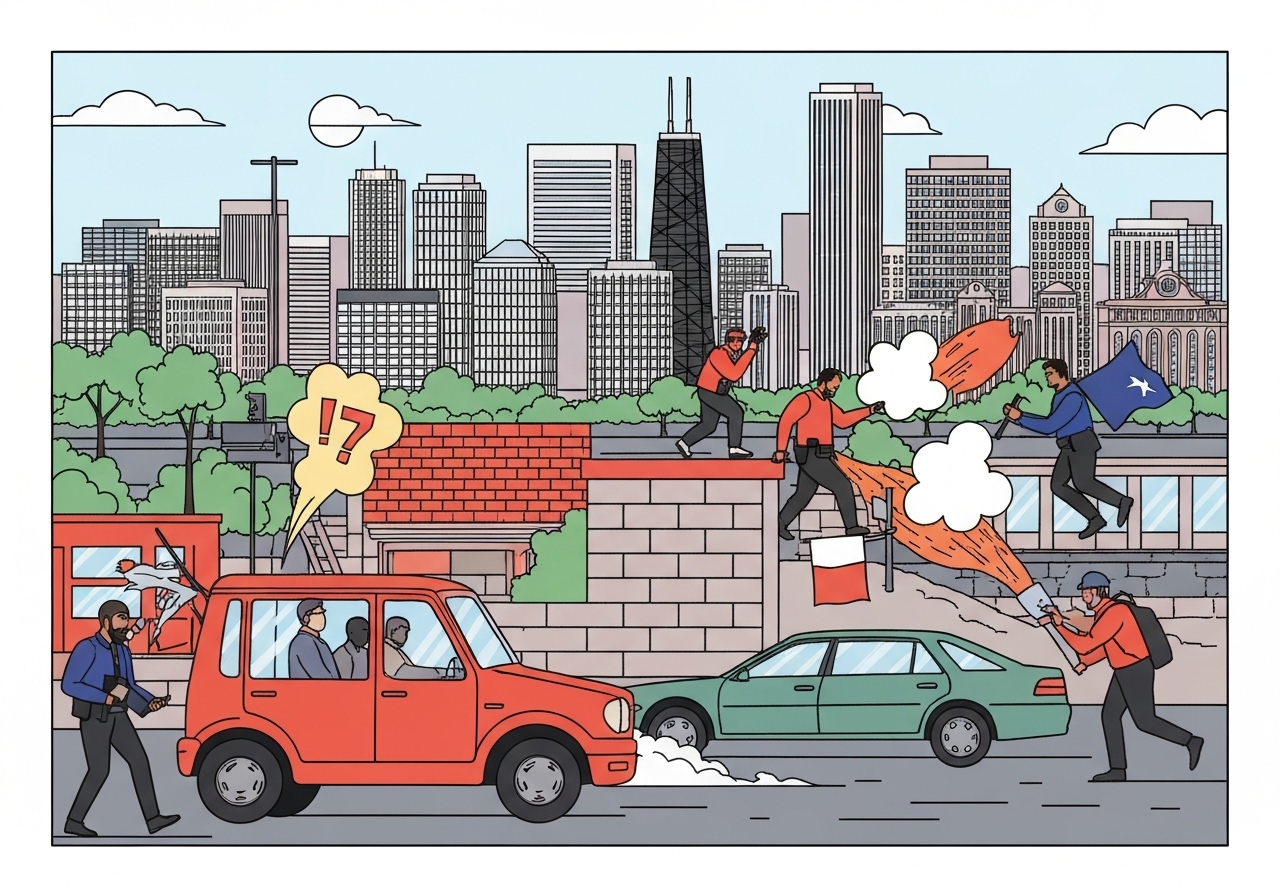
— Federal immigration agents carried out coordinated ICE operations across Boston and nearby communities over the weekend, detaining dozens, while the Justice Department filed suit against the city and its mayor. President Trump signaled that similar actions could follow in Chicago.
Key Takeaways
- ICE and other federal agents executed raids across Boston and adjacent towns on Sept. 6–7, 2025.
- Authorities say the operations led to the arrest of dozens of people; precise totals and individual charges remain being compiled.
- The Justice Department simultaneously filed a lawsuit against the city and its mayor, escalating a dispute over local sanctuary policies.
- Boston city officials labeled the raids unnecessary and an overreach of federal power.
- President Trump publicly suggested Chicago might be targeted next, heightening concerns in other sanctuary jurisdictions.
- Federal agencies cite immigration enforcement priorities; local leaders emphasize public-safety and community-trust risks.
Verified Facts
Federal officials, speaking through a Department of Homeland Security spokesperson, confirmed that ICE-led teams carried out multi-site operations in Boston and surrounding communities over the weekend of September 6–7, 2025. The agencies reported that the raids produced “dozens” of arrests; agency statements did not provide a complete tally or detailed charges for each detainee.
At the same time, the U.S. Department of Justice filed a civil suit against the city and its mayor challenging local policies that federal officials say hinder immigration enforcement. The suit formalizes a legal confrontation that federal leaders have been pursuing with several cities described as sanctuary jurisdictions.
Local government representatives rejected the federal actions. City officials said the operations undermined trust between immigrant communities and local authorities and described the tactics as heavy-handed. Local law enforcement leaders have not been reported as participating in the federal sweep.
President Trump, speaking publicly after the Boston operations, indicated Chicago could face similar federal enforcement efforts. Officials in Chicago have said they are monitoring the situation and consulting legal and public-safety advisers.
Context & Impact
The raids come amid a broader federal push to challenge sanctuary policies and assert immigration enforcement authority in municipalities that limit cooperation with federal immigration authorities. The DOJ lawsuit signals a willingness to use litigation in addition to enforcement actions to change local practices.
Advocates for immigrant communities warn that large-scale federal operations can discourage victims and witnesses from interacting with local police, potentially complicating public-safety efforts. Municipal leaders argue that trust and community policing depend on predictable local policies.
Political fallout is likely: federal officials frame the operations as law enforcement priorities, while local officials and civil-rights groups frame them as politically motivated interventions. If federal agencies proceed with similar actions in Chicago, the confrontations could spread to other large sanctuary cities.
Official Statements
“Federal teams conducted operations across Boston and nearby communities, resulting in dozens of arrests,”
Department of Homeland Security (spokesperson)
“Local officials have rejected the federal operations as unnecessary and authoritarian overreach,”
Boston city officials
Unconfirmed
- Exact number of people arrested and their current locations or charges are still being compiled by federal authorities.
- Specific neighborhoods targeted in the Boston-area sweep have not been fully disclosed.
- Any timetable or formal plan for operations in Chicago beyond public statements by President Trump has not been publicly released.
Bottom Line
The weekend raids in Boston and the concurrent DOJ lawsuit mark an escalation in the federal-local clash over immigration enforcement. Immediate effects include detained individuals and heightened tensions between federal and municipal authorities; the longer-term consequences will depend on legal outcomes and whether similar operations are carried out in Chicago or other sanctuary cities.