
Lead
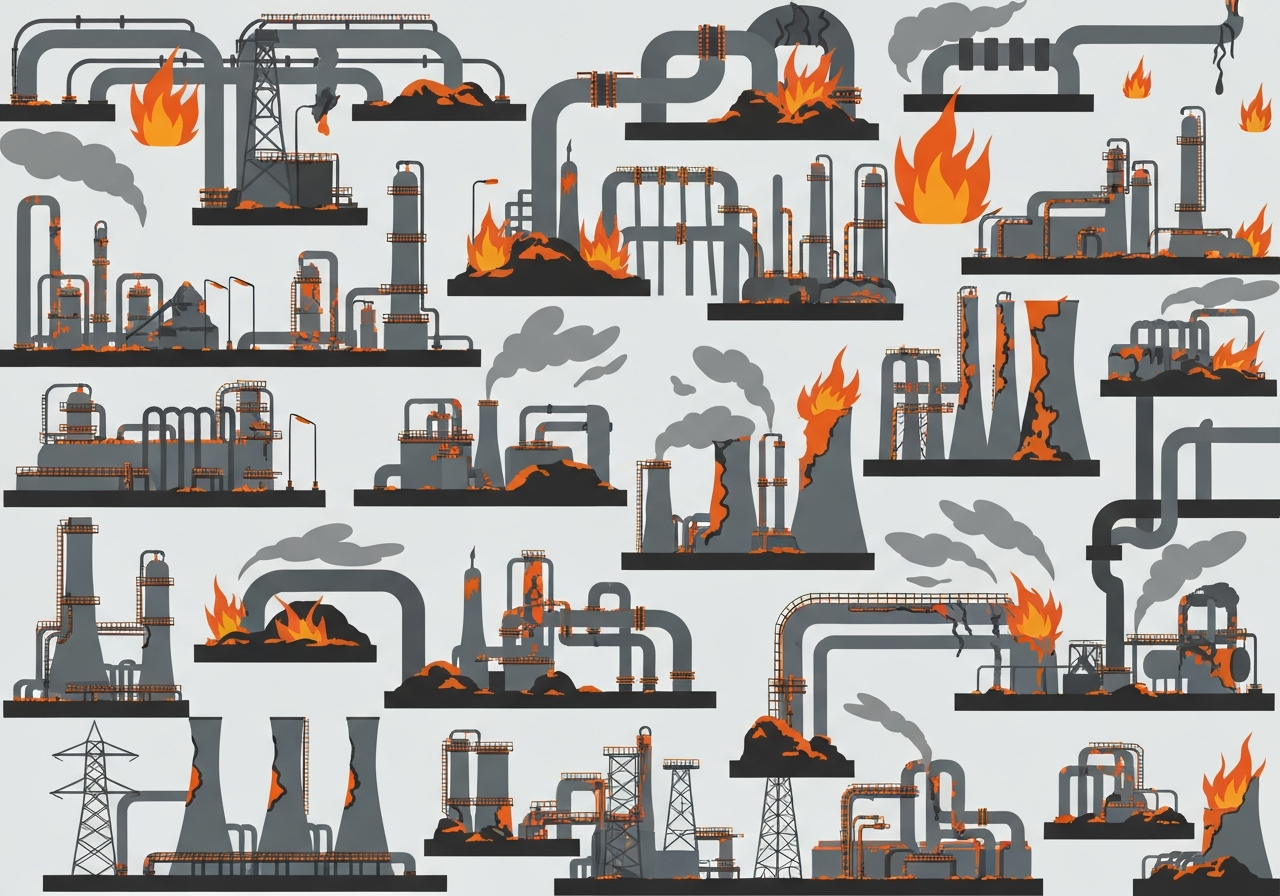
At a March 23, 2026 press appearance in Canberra, International Energy Agency Executive Director Fatih Birol warned that more than 40 oil and gas facilities across nine Middle Eastern countries have been “severely or very severely” damaged since the Iran war began on Feb. 28, 2026. He said the damage to fields, refineries and pipelines threatens prolonged disruptions to global energy supplies and has already tightened markets. Birol described the current shock as comparable to the combined impact of the 1970s oil crises and the 2022 gas disruption. He identified the reopening of the Strait of Hormuz as the “single most important” step to stabilise flows.
Key Takeaways
- At least 40 energy assets in nine Middle Eastern countries have sustained severe or very severe damage, IEA assessment announced March 23, 2026.
- The conflict that began Feb. 28, 2026 has cut liquefied natural gas (LNG) supplies by roughly 20% globally, according to the IEA.
- The IEA released 400 million barrels into markets on March 11, 2026 to ease shortages; further releases are possible if needed.
- The Strait of Hormuz, through which about 20% of global oil and gas normally transits, has seen near-total shipping disruption since the conflict began.
- Damage spans oil and gas production, refining, pipelines and related petrochemical and fertilizer supply chains, threatening secondary global economic effects.
- Market participants are closely monitoring threats from the U.S. and Iran toward energy infrastructure, raising risk of further escalation and knock-on supply losses.
Background
The confrontation between Iran and U.S.-aligned partners escalated into wide regional conflict starting Feb. 28, 2026, quickly affecting shipping and onshore energy infrastructure across the Persian Gulf. The Strait of Hormuz is a strategic chokepoint linking the Persian Gulf to the Gulf of Oman; historically roughly 20% of seaborne oil and gas trade passes through it. Attacks and countermeasures around the strait have forced shipping to halt or reroute, disrupting both crude and LNG flows.
Before the current crisis, the global market had already been sensitive following the 2022 gas shock; those strains reduced buffer capacity and made rapid response more difficult. Many Gulf producers and transit states host complex, interdependent infrastructures—pipelines feeding refineries, export terminals tied to petrochemical plants—so physical damage in one location can cascade through supply chains. The IEA, national governments and producers have limited immediate options other than strategic stock releases and diplomatic pressure to reopen shipping lanes.
Main Event
Speaking at the National Press Club in Canberra on March 23, 2026, Fatih Birol outlined the IEA’s field assessments: at least 40 assets across nine countries have been hit hard enough to require substantial repair time. Birol said damage affects upstream production sites, midstream pipelines and downstream refineries and conversion facilities, which together will delay a rapid restoration of pre-conflict output.
Birol warned that the interruption goes beyond crude and LNG; trade in petrochemicals, fertilizers, sulfur and helium has also been disrupted, amplifying risks to agriculture and certain industrial supply chains. He characterised the combined impact as equivalent to major past energy shocks and signalled that coordinated international measures may be necessary to prevent wider economic fallout.
The IEA’s March 11 emergency release of 400 million barrels was described as historic, and Birol said the agency stands ready to consider additional coordinated releases if markets demand it. Market participants are weighing the potential for further hits to facilities amid public threats from both U.S. and Iranian officials, creating heightened price volatility and insurance and shipping dislocation.
Analysis & Implications
The scale of physical damage—40-plus assets across nine states—implies multi-month, possibly multi-year repair timetables for some sites, especially where pipelines or export terminals are damaged. Restoring output depends not only on physical reconstruction but also on security assurances, skilled labour access and insurance cover; these factors can delay investment and restart. For global refiners and LNG buyers, reduced availability will sustain tight markets and higher prices until capacity is reliably restored or demand is curtailed.
Asia is particularly exposed: many Asian economies rely heavily on Middle Eastern crude and LNG, and Birol singled out the region as being at the forefront of the shock. Prolonged tightness in energy supplies would raise input costs for manufacturing and agriculture—via fertilizer shortages—potentially adding to inflationary pressures and slowing growth in import-dependent economies.
Geopolitically, the damage increases the leverage of actors who can threaten chokepoints and critical infrastructure, incentivising military posturing and complicating diplomatic pathways to de-escalation. If damage accumulation continues, insurers may reduce coverage or raise premiums for regional shipping and energy projects, raising transport and project development costs that could persist after hostilities end.
Comparison & Data
| Indicator | Pre-conflict/Normal | Post-Feb. 28, 2026 |
|---|---|---|
| Damaged energy assets | — | 40+ assets across 9 countries |
| LNG supply change | 100% baseline | ~80% (roughly 20% reduction) |
| IEA emergency release | — | 400 million barrels (Mar 11, 2026) |
| Strait of Hormuz transit | ~20% of global oil & gas | Shipping virtually halted since conflict began |
The table summarises key metrics cited by the IEA and market observers. The roughly 20% drop in LNG and the multi-asset damage figure together explain the severity of market responses, while the 400 million-barrel coordinated release was an exceptional policy tool aimed at cushioning immediate supply shocks. Restoration of normal flows depends on both repairs and the resumption of secure shipping through Hormuz.
Reactions & Quotes
Governments and markets reacted quickly to the IEA statement. Below are representative official and expert responses with brief context.
“This is the largest supply disruption in the history of the global oil market,”
Fatih Birol, IEA Executive Director
Birol framed the current disruption as historically severe, comparing it to multiple past energy crises combined and emphasising the broad set of commodities affected beyond oil and gas.
“If Tehran did not fully reopen the Strait of Hormuz within 48 hours, we would obliterate Iran’s power plants,”
U.S. President (statement reported March 21–22, 2026)
The reported U.S. threat prompted immediate concern among regional states and shipping firms; such rhetoric further raises the risk that military escalation could extend damage to civilian energy infrastructure.
“Critical infrastructure and energy facilities could be irreversibly destroyed”
Mohammad Baqer Qalibaf, Iran Parliament spokesperson
Iran’s parliamentary response signalled that attacks on Iranian power assets could prompt retaliatory or preemptive strikes affecting regional infrastructure, increasing uncertainty over repair timelines and the safety of personnel on-site.
Unconfirmed
- Precise timelines for repairing each of the 40+ damaged assets are not yet public; IEA assessments indicate significant variation by site and country.
- The total volume of permanently lost production versus temporarily curtailed output remains under verification pending on-site inspections.
- Reports of specific additional facilities targeted in recent days are still being corroborated; independent confirmations are incomplete.
Bottom Line
The IEA’s March 23, 2026 assessment signals a major, tangible hit to global energy infrastructure with implications beyond immediate fuel markets—potentially affecting petrochemicals, fertilizers and other critical industrial inputs. The damage tally (40+ assets across nine countries) and the roughly 20% LNG shortfall together underpin a severe supply shock that will not be reversed quickly without both physical repairs and a durable reduction in regional hostilities.
For markets and policymakers, the most actionable lever remains the reopening and secure operation of the Strait of Hormuz; additional coordinated releases of strategic stocks or diplomatic de-escalation could ease short-term volatility. Observers should track repair confirmations, insurance decisions and any further official threats or strikes, as these will determine whether disruptions unwind over months or persist into a protracted global energy squeeze.
Sources
- CNBC — media report of IEA briefing and related statements (journalism)
- International Energy Agency (IEA) — official international energy organisation (official assessment and market analysis)
- National Press Club — event hosting body where the IEA briefing took place (event organiser)