
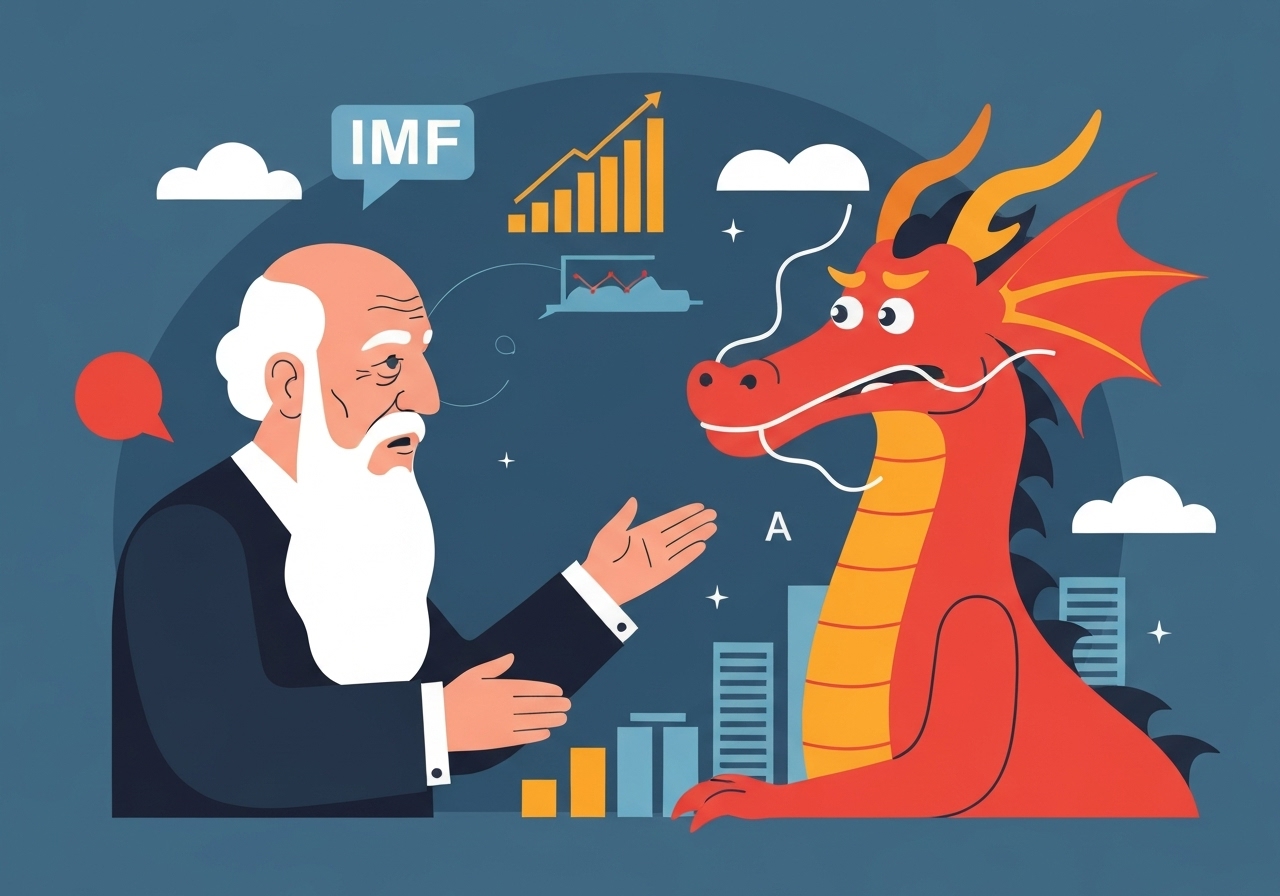
The International Monetary Fund has urged China to address persistent economic “imbalances” that it says are hampering a stronger and more sustainable recovery. In a recent staff assessment, the IMF recommended policy shifts to reduce reliance on investment and the property sector while boosting household consumption and managing local government borrowing. The call comes as Beijing navigates a sluggish post‑pandemic recovery and mounting structural headwinds. IMF officials warned that without reform, risks to domestic stability and global growth could rise.
Key takeaways
- The IMF’s latest assessment highlights China’s heavy dependence on investment and real estate as the primary engines of growth, urging a rebalancing toward consumption and services.
- The fund recommends fiscal and regulatory measures to tackle local government debt and opaque financing vehicles that have expanded since 2014.
- Monetary policy should remain supportive but tailored to guard against financial stability risks tied to property and bank off‑balance‑sheet exposures.
- Greater social and tax reforms, including measures to strengthen the social safety net, are urged to raise household incomes and consumption propensity.
- The IMF cautioned that failure to rebalance could slow China’s potential growth and reduce its contribution to global demand over the medium term.
Background
China’s economy has shifted over decades from export‑led, manufacturing‑driven expansion to a mixed model heavily reliant on fixed investment and property development. Authorities have repeatedly used infrastructure spending and credit expansion to stabilise output during slowdowns, a pattern intensified after the 2020 pandemic shock. That stimulus approach helped avoid a pronounced contraction but left the economy exposed to overcapacity and high indebtedness in some sectors.
Since 2020 the property sector has experienced a series of stress events involving major developers, which exposed links between developer financing, banks, and local government funding vehicles. Local governments in turn have leaned on off‑budget entities to deliver investment and meet fiscal commitments, growing contingent liabilities. Those structural features — elevated leverage in property and local public finance complexity — are central to the IMF’s concern about persistent imbalances.
Main event
In its recent staff evaluation, the IMF outlined a set of policy adjustments aimed at lowering macroeconomic vulnerabilities while supporting a gradual increase in private consumption. The fund described a multi‑pronged strategy: better targeting of fiscal support, stronger income‑support measures, clearer management of local government financing, and financial sector safeguards to limit systemic spillovers. The assessment stressed sequencing: near‑term support where needed, coupled with medium‑term reforms to shift growth composition.
The IMF also noted that monetary settings should remain accommodative to help the recovery, but that authorities must be vigilant about credit allocation and property lending standards. It warned that relying indefinitely on credit‑fuelled investment could amplify downside risks, especially if property markets deteriorate further. The staff urged transparency and stronger data on local government liabilities to help markets and policymakers assess risks accurately.
Beijing’s official response to similar international advice historically has been pragmatic: authorities often calibrate stimulus to stabilise output while gradually experimenting with structural changes. The IMF’s recommendations follow past engagements that highlighted the need for deeper social safety nets and tax‑policy adjustments to support domestic demand — themes that have resurfaced in the latest report.
Analysis & implications
Domestically, a successful rebalancing toward consumption would require sustained improvements in household incomes and confidence. That implies not only short‑term demand support but also long‑term steps to reduce precautionary saving, such as bolstering pension, health and unemployment protection. Those changes could lift the share of household spending in GDP, making growth less credit‑intensive and more resilient to shocks in investment cycles.
Financially, clarifying and reducing contingent liabilities tied to local governments could lower systemic risk in the banking sector and shadow finance channels. Tougher oversight of shadow banking, stricter property lending standards and clearer resolution frameworks for distressed developers would reduce the chance of contagion. However, such measures may weigh on growth in the near term and need careful sequencing to avoid triggering disorderly defaults.
For the global economy, slower Chinese demand driven by unresolved imbalances would dampen commodity prices and weigh on export‑oriented producers, especially in emerging markets. Conversely, a smooth transition to more consumption‑led growth would rebalance global demand patterns, benefiting services and consumer‑goods exporters. International investors will watch policy credibility and data transparency as key signals of China’s adjustment path.
Comparison & data
| Policy lever | Short‑term effect | Medium‑term outcome |
|---|---|---|
| Fiscal stimulus (infrastructure) | Quick output boost | Higher debt risks if prolonged |
| Social spending & tax reforms | Modest immediate boost to consumption | Raises household income share, durable demand |
| Financial tightening on property | Slower property activity | Lower systemic financial risk |
The table summarises trade‑offs policymakers face. Short‑term stimulus can stabilise growth but may exacerbate leverage; social spending reforms are costlier politically but support a sustainable demand base; stronger financial rules reduce fragility but can slow sectors reliant on credit.
Reactions & quotes
Officials and analysts quickly weighed in after the IMF assessment, highlighting the balance between stabilisation and reform. Domestic policymakers have historically prioritized steady growth and social stability, while many international economists emphasise medium‑term structural adjustments.
“Addressing imbalances requires both carefully timed support and reforms to raise domestic demand,”
IMF staff report (paraphrase)
“Local government financing practices remain a key vulnerability that must be made more transparent,”
Independent economist (paraphrase)
“A durable shift toward consumption would change the profile of China’s imports and global spillovers over time,”
Trade analyst (paraphrase)
Unconfirmed
- Exact timing and scale of any coordinated fiscal package from Beijing following the IMF report remain unconfirmed.
- Precise assessments of total contingent liabilities tied to local government financing vehicles are incomplete and subject to revision.
- Whether Beijing will adopt the full sequencing of measures recommended by the IMF has not been officially announced.
Bottom line
The IMF’s counsel to China underscores a familiar policy dilemma: short‑term stabilization through investment and credit can mask deeper structural weaknesses that, if unaddressed, constrain long‑term growth and raise systemic risks. Policymakers face difficult trade‑offs in sequencing support, reforming local government finance, and strengthening social safety nets to lift consumption.
How Beijing responds will shape not only China’s medium‑term growth trajectory but also global demand patterns and financial risk perceptions. Observers should watch policy statements, budget choices, and data on household income and local government liabilities for clues about the direction and credibility of any rebalancing effort.
Sources
- Financial Times — news report and analysis