
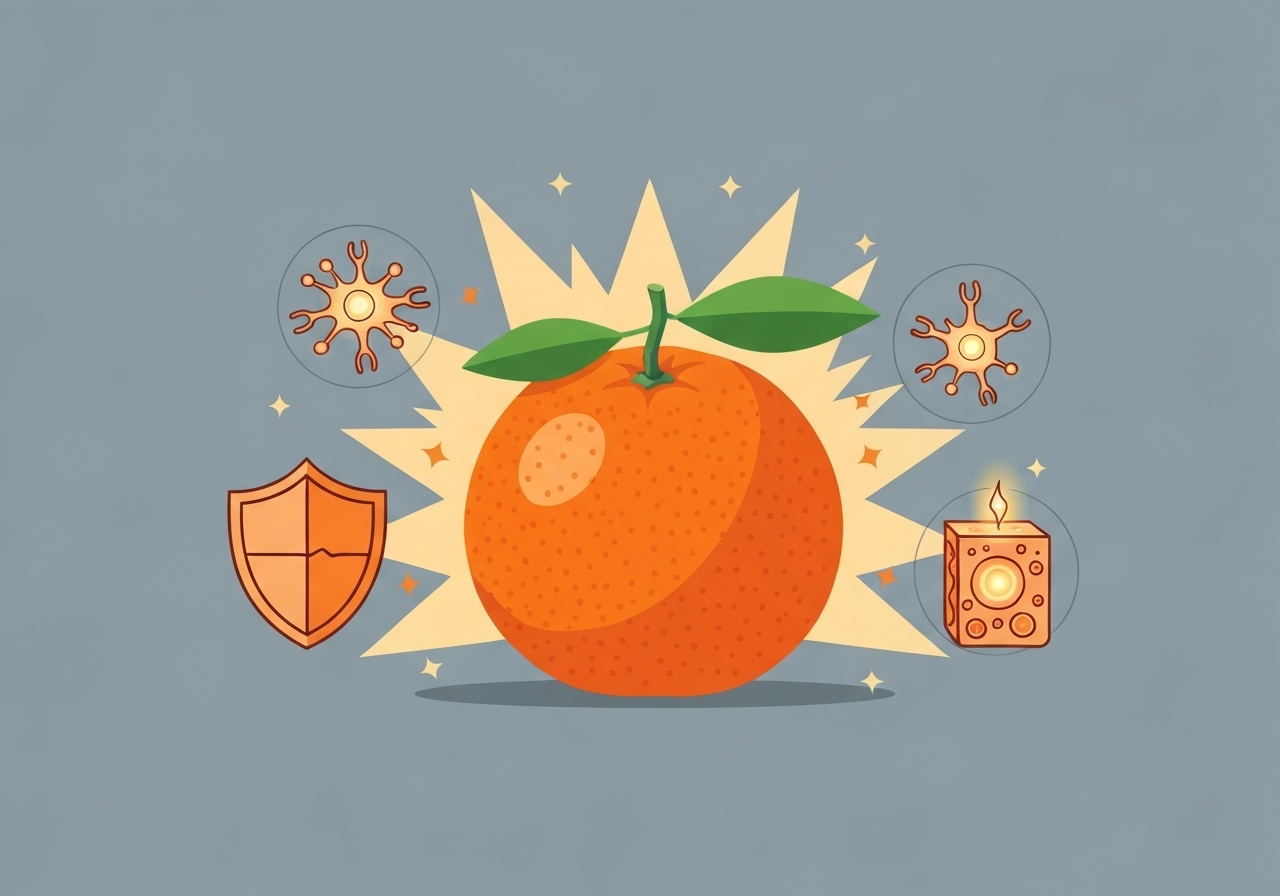
This winter’s short, sweet citrus — the clementine — is in season from October through January and packs a surprising nutritional punch. At roughly 35 calories each, a single clementine supplies about 36.1 mg of vitamin C, close to 40% of the recommended daily intake, along with water, fiber and bioactive flavonoids. Nutrition and lab research tie these nutrients to stronger immune responses, collagen support for skin, and compounds that may protect cognitive function. The fruit is widely available in the U.S., with most commercial supplies coming from California and Florida.
Key Takeaways
- One clementine contains about 35 calories and 36.1 mg of vitamin C, providing nearly 40% of the daily recommended amount.
- Clementines are in peak season October–January and are commonly sold under brands such as Cuties or Halos, largely grown in California and Florida.
- Vitamin C supports immune defenses and regular intake is linked to shorter, less severe cold and flu episodes; a single-dose vitamin C treatment after illness shows little proven benefit.
- Vitamin C is essential for collagen synthesis; regular consumption can support skin firmness, hydration and wound healing.
- Clementines supply flavonoids and hesperidin, antioxidants associated with reduced inflammation and potential cognitive benefits.
- Observational studies link daily citrus intake with an approximately 15% lower dementia risk and roughly 20% lower risk of depression diagnosis, though these are associative findings.
- Some clementines contain furanocoumarins, compounds that can interact with certain medications (notably some statins); clinicians advise checking for interactions before large daily intake.
Background
As northern-hemisphere cold and flu activity rises in late autumn and winter, consumers often turn to fruits high in vitamin C for immune support. Clementines — a small, sweet citrus hybrid often sold seedless and easy to peel — have become a popular seasonal snack because they combine convenience with a concentrated nutrient profile. Commercial branding in the U.S. (Cuties, Halos) made clementines a pantry staple for children and adults alike, increasing year-round market visibility despite their defined seasonal peak.
From an agricultural perspective, most U.S. clementine production is centered in California and Florida, where climate conditions favor citrus cultivation. The fruit’s portability and single-serve size fit modern snacking habits and school lunch programs, contributing to steady consumer demand. Public-health messaging around simple dietary steps for supporting immunity during respiratory-virus seasons often highlights fruits high in vitamin C; clementines meet that criteria while remaining low in calories.
Main Event
Nutritionally, clementines concentrate water, sugars, fiber and micronutrients in a small portion. A single fruit delivers about 36.1 mg of vitamin C and roughly 1 gram of fiber while contributing hydration because of its high water content. Those features explain why dietitians recommend them as a low-calorie way to raise vitamin and fluid intake during winter, when dry indoor air can exacerbate skin dryness and mucosal vulnerability.
Vitamin C’s role is well described: it is an essential nutrient the body cannot synthesize, needed for collagen production, antioxidant protection and certain immune processes. Regular, adequate vitamin C intake has been associated with reduced duration and severity of colds in several studies; however, most evidence shows limited benefit from beginning high-dose vitamin C only once symptoms start. That distinction underscores the value of dietary consistency rather than episodic supplementation.
Clementines also contain flavonoids, including hesperidin, which laboratory and animal research links to anti-inflammatory and vascular benefits. Hesperidin and related polyphenols may support cerebral blood flow and protect neurons from oxidative stress, mechanisms that could plausibly translate into cognitive benefit over time. Observational human studies report modest associations between habitual citrus consumption and lower dementia risk, although causation remains unproven.
On the caution side, clementines can contain furanocoumarins, a class of plant chemicals known to interfere with certain drug-metabolizing enzymes. That interaction is best documented for grapefruit; some evidence suggests related compounds in other citrus can produce clinically relevant effects with certain medications, including some cholesterol-lowering drugs. Health professionals advise patients on interacting medicines to consult a clinician or pharmacist before adopting a high-citrus daily routine.
Analysis & Implications
For individuals and public-health planners, clementines represent a low-cost, low-calorie option to raise population-level vitamin C intake during respiratory-virus seasons. Their ease of portion control and broad retail availability make them practical for school, workplace and home settings. Encouraging modest daily consumption could help people reach recommended vitamin C levels without resorting to supplements, especially where dietary variety is otherwise limited.
Skin-health claims are supported by the biology of collagen and antioxidant protection: vitamin C is a cofactor for enzymes that stabilize collagen cross-links, and flavonoids lower oxidative stress that contributes to aging and inflammation. While topical and systemic factors both influence skin outcomes, including clementines as part of a balanced diet provides relevant substrates for collagen maintenance and skin hydration, particularly in colder months when xerosis (dry skin) is common.
The cognitive and mood associations reported in observational studies are promising but should be interpreted cautiously. The proposed mechanisms — reduced neuroinflammation, improved microvascular blood flow and antioxidant protection — are biologically plausible. Yet observational designs are vulnerable to confounding (healthier overall diets, socioeconomic factors, exercise) and cannot by themselves establish that clementines prevent dementia or depression.
Clinically, the drug-interaction issue affects a smaller subset of consumers but requires attention because of potential safety implications. Patients on medications metabolized by the cytochrome P450 system or on certain statins should verify whether frequent citrus intake could alter drug levels. That intersection of nutrition and pharmacology illustrates why dietary advice sometimes needs to be individualized rather than uniformly applied.
| Snapshot | Per clementine |
|---|---|
| Calories | ~35 kcal |
| Vitamin C | 36.1 mg (~40% DV) |
| Fiber | ~1 g |
| Peak season | October–January |
| Main U.S. producers | California, Florida |
The table above summarizes key, verifiable metrics for a single clementine: low energy density, substantial vitamin C contribution and modest fiber. These attributes explain why dietitians include clementines in fruit-serving recommendations, particularly for people aiming to increase micronutrient density without large calorie increases.
Reactions & Quotes
Experts underline the potential cognitive and memory benefits seen in preclinical and observational work while noting the need for more rigorous trials.
Dietary citrus appears to improve certain memory measures in animal models, and flavonoids in these fruits may help protect brain function as we age.
Dr. David Vauzour, Norwich Medical School (research fellow), cited in industry coverage
Population researchers emphasize that the link between citrus intake and mood appears specific and warrants further study to determine mechanisms and causal direction.
Analysis of large cohort data found a lower depression diagnosis risk among daily citrus consumers compared with non-consumers, a pattern not seen for other fruits.
Raaj Mehta, study lead, cited in university news report
Unconfirmed
- The precise degree to which daily clementine consumption reduces dementia risk (reported ~15%) comes from observational analyses and may reflect other lifestyle factors rather than a direct protective effect.
- The roughly 20% lower depression risk tied to daily citrus is associative; causality, minimum effective intake and mechanisms remain unconfirmed.
- The prevalence and clinical magnitude of furanocoumarin-mediated interactions specifically from clementines (versus grapefruit) across different medications need clearer, drug-by-drug clinical assessment.
Bottom Line
Clementines are an accessible, low-calorie way to boost vitamin C intake and add antioxidative flavonoids to the diet during peak respiratory-virus months. Their nutrient profile supports immune function and collagen maintenance, which can help with both systemic defenses and skin health when consumed regularly rather than only after illness begins. For individuals interested in brain health, the flavonoids and hesperidin in clementines provide plausible protective mechanisms, but stronger clinical evidence is needed before claiming prevention of dementia or depression.
Before adopting a high-citrus daily regimen, people taking certain prescription medicines — particularly some statins and drugs metabolized by CYP3A4 — should check with a clinician or pharmacist about potential interactions. As with any single food, clementines are most effective as part of a varied, balanced diet combined with established preventive measures like vaccination, sleep, physical activity and chronic-condition management.
Sources
- New York Post — (news report summarizing nutrition and research findings)
- FoodNavigator — (industry news reporting, source of expert commentary)
- The Harvard Gazette — (university news article summarizing population study on citrus and mood)
- USDA FoodData Central — (official nutrient database for food composition)
- U.S. Food and Drug Administration (FDA) — (official information on drug–food interactions such as grapefruit-related effects)