
Lead
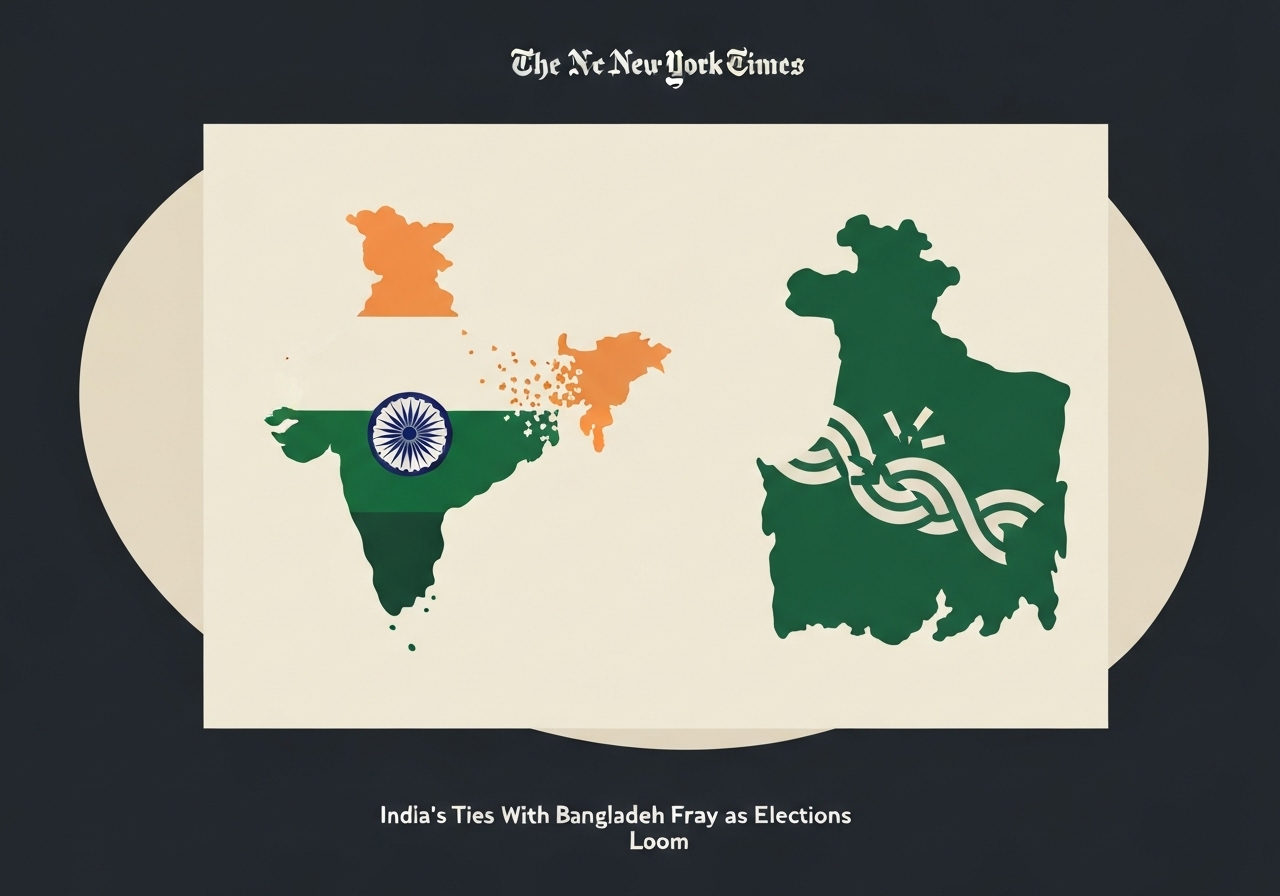
On Jan. 11, 2026, diplomatic relations between India and Bangladesh deteriorated sharply, turning into reciprocal visa suspensions and a near sports boycott. The rupture traces to the 2024 overthrow of Sheikh Hasina, who fled to India and remains there, a point of sustained anger for Bangladesh’s interim authorities and protest leaders. Over the past month tensions have escalated: mobs targeted India’s mission in Chattogram, New Delhi suspended visa services there, and Bangladesh later paused Indian visa operations after protests at its New Delhi mission. The dispute has spilled into cricket, with player exclusions in the Indian Premier League and Bangladesh declining to tour for the World Cup next month.
Key Takeaways
- Sheikh Hasina was removed from power in 2024 and sought refuge in India; Dhaka’s interim government and protest groups criticize New Delhi for not returning her.
- On Jan. 11, 2026, the diplomatic row had produced two reciprocal visa suspensions: India halted visa services in Chattogram in December 2025; Bangladesh later paused services for Indians in Dhaka.
- Violence against Bangladesh’s Hindu minority and public protests in both countries have amplified nationalist rhetoric on both sides of the border.
- The Indian Premier League barred a Bangladeshi player from participating amid protests in India linked to the Bangladesh events; Bangladesh then withdrew from a scheduled visit for the cricket World Cup next month.
- Bangladesh has requested the international governing body to move its World Cup matches to neutral venues, raising logistical and commercial questions for organizers.
- Domestic politics and imminent elections in both capitals have made diplomatic de-escalation politically costly for leaders on each side.
- Shared border management, trade flows, and cultural ties are at risk as bilateral trust erodes after more than a year of tensions.
Background
The current rupture follows the overthrow of Sheikh Hasina in 2024. Ms. Hasina, who had a long-standing and controversial relationship with New Delhi, left Bangladesh and took refuge in India. Her departure and India’s refusal to return her to face proceedings at home have become potent symbols for Bangladesh’s interim government and the street movement that ousted her.
India and Bangladesh share one of the world’s longest land borders and deep historical, cultural and economic links. Over recent decades New Delhi has played an influential role in Dhaka’s politics and development projects, while trade, labor migration and family ties bound communities across the frontier. That interdependence has made recent disputes more destabilizing: bilateral frictions quickly spill into commercial, consular and people-to-people channels.
Main Event
The diplomatic argument accelerated in late 2025 when reports of attacks on Bangladesh’s Hindu minority and inflammatory rhetoric from political actors in Dhaka provoked angry responses in India. In December 2025 New Delhi suspended visa operations in the Bangladeshi port city of Chattogram after mobs reportedly attacked its mission there. The suspension was framed by Indian officials as a security measure for consular staff.
Bangladesh answered by pausing visa operations for Indian nationals after its mission in New Delhi experienced tense protests involving right-wing Hindu groups. Each government characterized the other’s actions as hostile and disproportionate, contributing to a tit-for-tat dynamic that has hardened positions.
Sporting ties became an immediate casualty. Protests in India connected to the broader dispute prompted the Indian national cricket body to bar a Bangladeshi player from the lucrative Indian Premier League. In retaliation, Bangladesh announced it would not send its national team to India for the upcoming cricket World Cup and formally requested that the event’s international governing body consider moving its scheduled matches to neutral venues.
Diplomatic channels remain open but constrained. Officials on both sides signal interest in reducing tensions, yet domestic political imperatives and public anger have made conciliatory public gestures politically fraught in the run-up to elections in both countries.
Analysis & Implications
Politically, the dispute is being amplified by election calendars on both sides of the border. Leaders in New Delhi and Dhaka face strong incentives to appear tough on national sovereignty and to court domestic constituencies that benefit from nationalist messaging. That dynamic reduces the appetite for compromise and increases the chance of prolonged standoffs.
Economically, even short-term disruptions to consular services and cross-border travel can ripple through trade, remittances and border markets. While neither country appears poised to institute comprehensive trade embargoes, interruptions to visas and personnel movement add logistical friction that hurts businesses and migrants who rely on predictable processing.
Regionally, the rupture complicates South Asian cooperation on security, migration and infrastructure. Reduced bilateral trust could slow joint efforts on border management and refugee issues, and opens space for external actors to deepen influence by offering diplomatic or economic alternatives to either capital.
For cricket and international sport, the dispute tests the governance capacity of tournament organizers and the sport’s commercial partners. Requests to relocate World Cup fixtures would impose costs on broadcasters, venues and fans, and set precedents for sports being used as leverage in diplomatic disputes.
Comparison & Data
| Date | Event | Action |
|---|---|---|
| 2024 | Sheikh Hasina overthrown | Hasina fled to India; criticism of India’s refusal to repatriate |
| Dec 2025 | Chattogram mission targeted | India suspended visa operations in Chattogram |
| Jan 2026 | Protests at Dhaka mission in New Delhi | Bangladesh paused visa services for Indians |
| Jan 2026 | Cricket fallout | Bangladeshi player barred from IPL; Bangladesh withdraws from India World Cup tour |
The timeline above compresses the principal public escalations. While the diplomatic measures listed are limited in scope, their cumulative effect has been to reduce routine contact and heighten political signaling. The moves also illustrate how events in domestic politics—crowd mobilization, judicial questions, and media coverage—translate quickly into foreign policy consequences.
Reactions & Quotes
Officials and public figures have framed the dispute through national legal and security lenses, while civil society and sports bodies stressed the costs of escalation.
“We expect all countries to respect the rule of law and the integrity of our judicial processes.”
Bangladesh interim government (paraphrased)
This statement followed public criticism in Dhaka of India’s handling of Ms. Hasina’s presence. Bangladeshi leaders emphasized accountability at home and framed India’s position as an obstacle to justice.
“Consular staff safety is our priority; services were paused in Chattogram on security grounds.”
Indian Foreign Ministry (paraphrased)
New Delhi defended its suspension of visa processing as necessary to protect personnel after reported attacks on its mission. The wording emphasized safety measures rather than punitive diplomacy.
“Sporting bodies should not be forced into geopolitical decisions, but player safety and fair competition are essential.”
Regional cricket administrator (paraphrased)
Cricket officials expressed concern about politicizing fixtures while noting the practical difficulties of hosting matches amid diplomatic friction.
Unconfirmed
- Reports that India has made formal offers to repatriate Ms. Hasina under specific legal guarantees are not independently verified.
- Attribution of coordinated coordination between certain political groups across borders remains unclear and lacks conclusive public evidence.
- The final decision by the international cricket authority on venue relocation for World Cup matches is pending and therefore unconfirmed.
Bottom Line
The India–Bangladesh rupture demonstrates how domestic political crises can cascade into sustained diplomatic and cultural fallout. What began as contested narratives about accountability and security has spilled into consular services and major sporting events, magnifying costs for ordinary people and institutions on both sides.
De-escalation will require political leadership willing to accept short-term domestic criticism in exchange for restored bilateral mechanisms: reopening consulates, resuming visa processing, and insulating sport from headline-driven politics. With elections imminent in both capitals, such steps will be difficult but are essential to prevent a longer-term drift that harms trade, migration and regional cooperation.
Sources
- The New York Times — media report summarizing diplomatic and sporting developments (Jan. 11, 2026).