
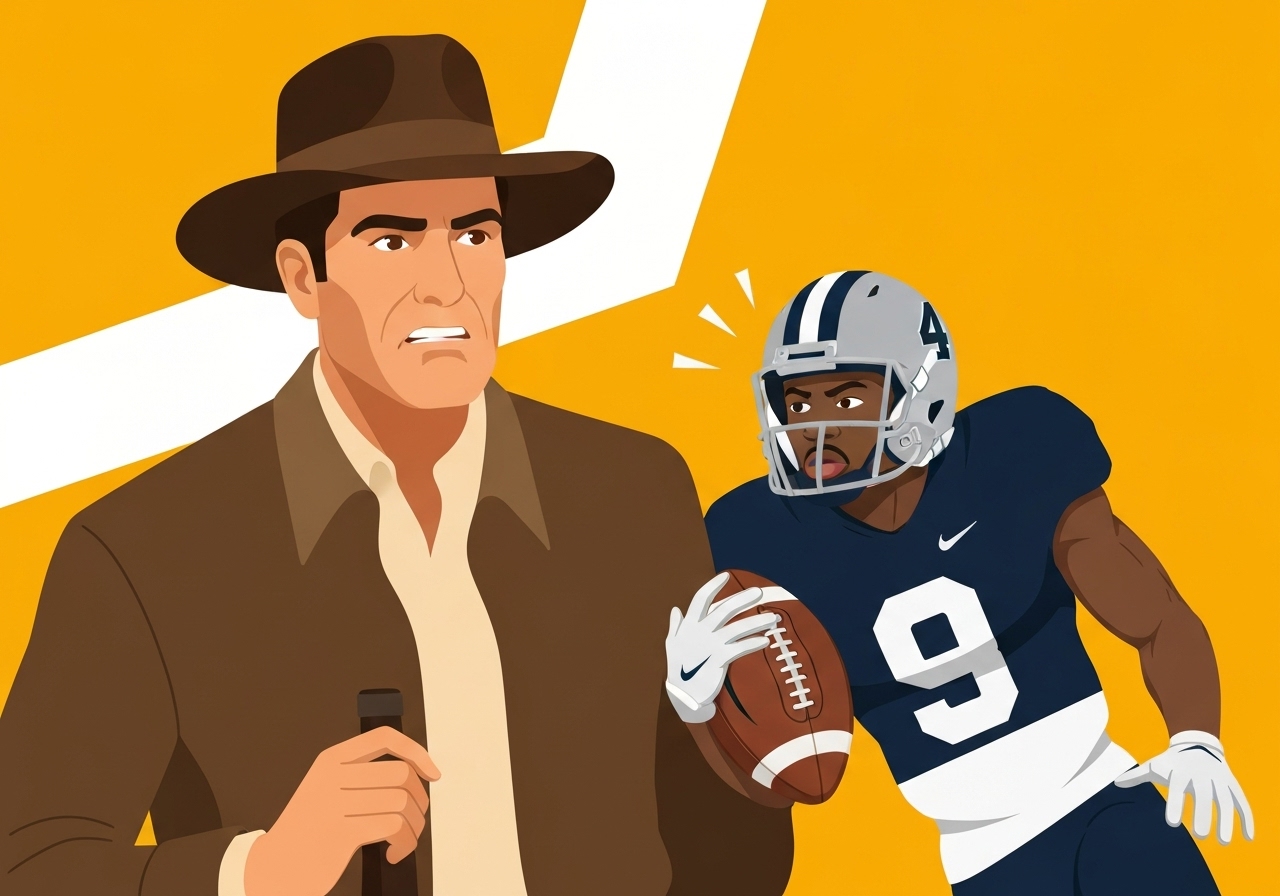
On Saturday, Nov. 8 at Beaver Stadium, No. 2 Indiana escaped a late upset bid by Penn State when Omar Cooper Jr. hauled in a reviewed touchdown in the closing minute to secure a 27-24 win. The victory moved Indiana to 10-0 and handed Penn State a sixth straight loss, leaving the Nittany Lions 3-6 and winless in Big Ten play. The scorebook records a dramatic finish: Indiana began a final, no-timeout drive at its own 20 and quarterback Fernando Mendoza connected with Cooper Jr. in the back of the end zone on third-and-goal. Officials reviewed the catch and upheld the touchdown, preserving the Hoosiers’ unbeaten season and marking Indiana’s first-ever win at Beaver Stadium.
Key takeaways
- Final score: Indiana 27, Penn State 24; the game was decided by a last-minute touchdown catch by Omar Cooper Jr.
- Indiana is now 10-0 and in strong position for a Big Ten title and a top-four College Football Playoff seed.
- Penn State fell to 3-6 overall and has lost six consecutive games, remaining winless in conference play.
- The deciding drive began at Indiana’s 20-yard line with fewer than two minutes remaining and no timeouts; Mendoza completed the decisive throw on third-and-goal.
- Indiana’s victory was the program’s first at Beaver Stadium after previously being 0-13 on Penn State’s home field.
- Penn State’s midseason turbulence included a season-ending injury to quarterback Drew Allar and the dismissal of coach James Franklin, according to reports.
- The Hoosiers notched back-to-back 10-win seasons for the first time in program history.
Background
Indiana entered Saturday’s game as one of the nation’s elite teams, having dominated much of its schedule with several decisive wins that drew national attention. The Hoosiers’ potent offense and stout defensive moments had produced comfortable results in prior weeks, creating expectations of another controlled performance at Beaver Stadium. Penn State came into the matchup struggling to find consistency; the Nittany Lions had been spiraling through a multi-game skid and faced significant roster and staff disruptions during the season. Off-field changes and injuries — including a reported season-ending injury to Drew Allar and the firing of James Franklin — compounded Penn State’s on-field challenges and raised questions about the program’s short-term direction.
Historically, Beaver Stadium has been a difficult venue for visiting teams, and Indiana’s program had never won there in 13 prior attempts. The fact that the Hoosiers finally recorded a victory on that field underscores both the magnitude of the win and the shifting dynamics inside the Big Ten this season. For Indiana, the program’s recent rise has been driven by improved recruiting, schematic adjustments, and consistency at key positions. For Penn State, the sequence of losses has exposed depth, schematic and leadership issues that opponents exploited as the season progressed.
Main event
The game began with Indiana building a halftime cushion and expanding that edge to a 20-7 lead midway through the third quarter. Penn State responded late in the third and early in the fourth, using a mix of running and timely defensive stops to generate a 17-point run that flipped the scoreboard. With less than seven minutes remaining, the Nittany Lions had seized a 24-20 lead, and momentum seemed to favor the home team. Key contributors for Penn State on the comeback included Ethan Grunkemeyer and Nick Singleton, who helped sustain drives and generate points during the second-half rally.
Facing a two-point deficit and starting at its own 20-yard line with fewer than two minutes left and no timeouts, Indiana ran a decisive finishing drive. Quarterback Fernando Mendoza moved the offense methodically downfield, completing short-to-intermediate throws and relying on clock awareness to preserve the chance for a final play in the red zone. On third-and-goal from the short edge of the end zone, Penn State brought a blitz package intended to collapse passing lanes and pressure the quarterback.
Mendoza delivered a tight-window throw to Omar Cooper Jr., who contested the ball in the back of the end zone and managed to get a foot down before going out of bounds. The replay review focused on control and whether the receiving foot established contact in bounds; officials ultimately upheld the on-field ruling, awarding the touchdown and giving Indiana a 27-24 lead. Penn State had a final possession but was unable to convert for a tying field goal or touchdown in the waning seconds.
Analysis & implications
For Indiana, the win cements a season that has elevated the program into legitimate national-title conversation. A 10-0 record at this stage positions the Hoosiers for the Big Ten title race and a potential College Football Playoff berth, provided they maintain consistency in remaining games and avoid major injuries. The victory also highlights Indiana’s ability to execute under pressure: a late-game drive against a hostile crowd, finishing with a high-difficulty target in the end zone, boosts the team’s résumé for selection committees and polls.
Penn State’s loss deepens institutional concerns. Six consecutive defeats and a 3-6 record severely jeopardize bowl eligibility and intensify scrutiny on roster depth, coaching direction and recovery timelines for injured players. The reported midseason dismissal of James Franklin and key injuries are structural shocks that make a turnaround before season’s end more difficult. Unless Penn State addresses schematic gaps and stabilizes leadership, the program risk further short-term damage to recruiting and conference standing.
Nationally, the result reshuffles perceptions of the Big Ten pecking order. Indiana’s unbeaten run argues that the conference contains multiple legitimate contenders, while Penn State’s slide removes a formerly perennial power from the short-term title conversation. For College Football Playoff positioning, the Hoosiers’ remaining schedule and margin-of-victory trends will be scrutinized; selection committees weigh both results and perceived quality of wins, so Indiana’s ability to sustain dominant performances matters as much as maintaining a perfect record.
Comparison & data
| Team | Overall | Conference | Current streak | Beaver Stadium record |
|---|---|---|---|---|
| Indiana | 10-0 | — (contending) | Undefeated | 1-13 (first win at Beaver) |
| Penn State | 3-6 | 0-? (winless in conference play) | 6 losses | — |
The table summarizes the immediate statistical contrasts: Indiana’s unbeaten run versus Penn State’s six-game losing streak, and the historical note that Indiana had not previously won at Beaver Stadium in 13 tries. Those contrasts underscore both a program on the rise and one in clear distress. The specifics of conference records will change with remaining games, but the immediate impact on bowl eligibility and postseason outlooks is tangible: Indiana is positioned to compete for conference and national honors, while Penn State faces a more uncertain short-term path.
Reactions & quotes
Indiana’s coaching staff and players emphasized resilience and execution after the game, pointing to the final drive as evidence of the team’s maturity. Postgame remarks highlighted the precision of Mendoza’s throws and Cooper Jr.’s concentration in the end zone. The comments below capture the tone of the reactions from both programs and outside observers.
“That catch was the difference — Omar made a play when it mattered most and we found a way to finish.”
Indiana head coach (postgame, as reported)
Indiana’s camp framed the play as a culmination of practice and situational preparation rather than luck. Players credited the offensive scheme and Mendoza’s accuracy, while staff pointed to situational drills in practice that simulated last-minute goal-line scenarios. The emphasis was on discipline: converting short-yardage opportunities, protecting the football and executing a clock-aware drive to create a single scoring chance.
“We fought back and put ourselves in position to win; coming up short tonight is painful and we must correct the issues that have led to this streak.”
Curt Cignetti, Penn State coach (postgame, as reported)
Penn State’s leadership acknowledged the comeback and expressed frustration at the team’s inability to close the game. The coach stressed that despite the rally, systemic problems — personnel, depth and in-game adjustments — require attention. The tone suggested an urgent need for tactical fixes and roster rehabilitation to arrest the slide and preserve recruiting and program momentum.
Unconfirmed
- Reports of James Franklin’s firing are included in contemporary coverage; official confirmation and the exact terms of any separation should be verified with Penn State or Big Ten announcements.
- Specific medical details and timelines related to Drew Allar’s season-ending injury have been reported, but full medical confirmation and prognoses have not been publicly released.
- Projections about College Football Playoff seeding remain speculative; committee decisions will depend on remaining results and comparative metrics.
Bottom line
Indiana’s 27-24 victory at Beaver Stadium is both a signature win and a validation of a season-long upward trajectory. The Hoosiers preserved an unblemished record and strengthened a case for Big Ten supremacy and a top-four playoff seed, but they must maintain focus and health through the remainder of the schedule to secure those outcomes. The game will be remembered for a high-pressure, technically difficult catch and for Indiana’s ability to execute in the most consequential moments.
For Penn State, the loss deepens an already difficult season and amplifies questions about program direction, personnel depth and recovery timelines. The immediate priorities are stabilization, addressing tactical shortcomings that surfaced during the six-game skid, and clarity from institutional leadership on next steps to restore competitiveness in the conference.