
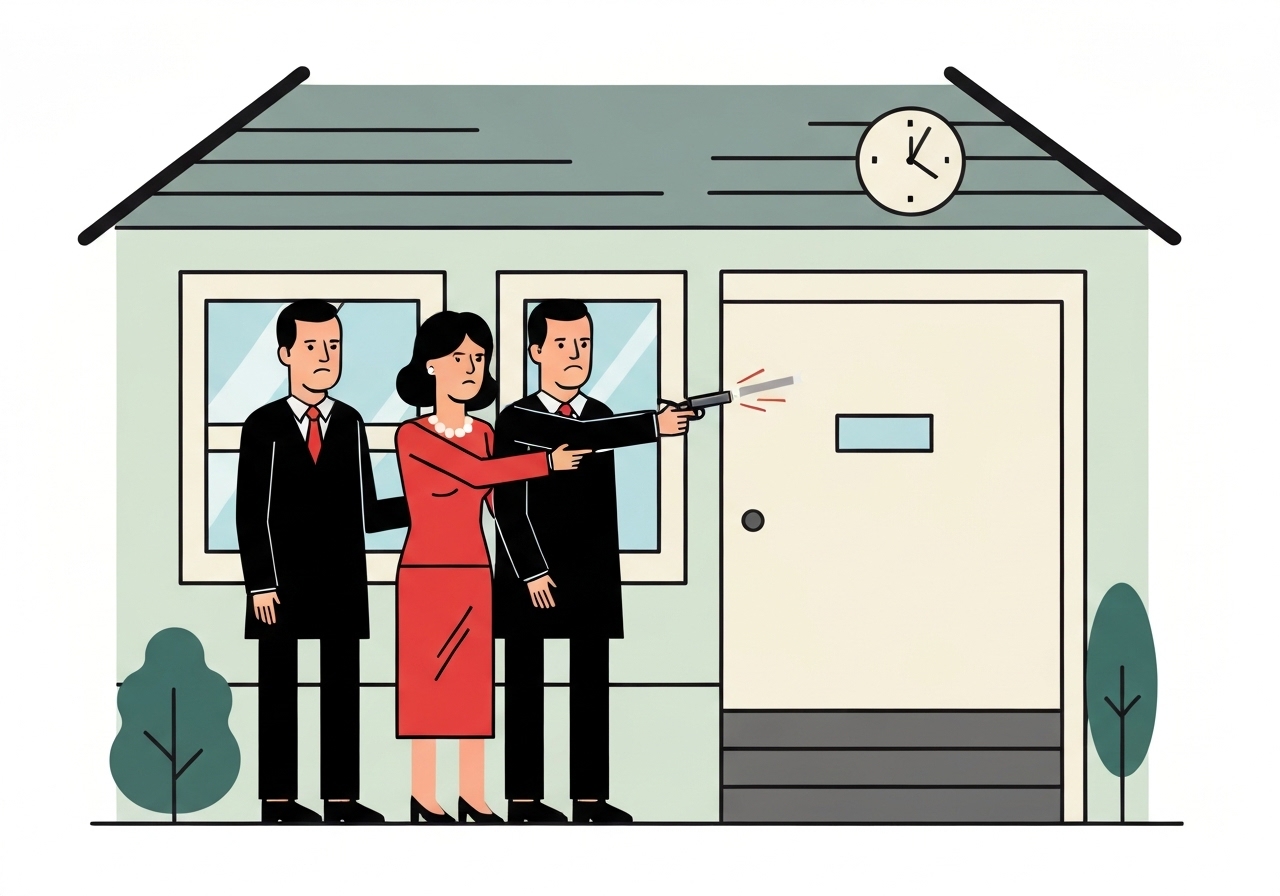
Lead: A Tippecanoe County judge and his wife were wounded in a shooting at their Lafayette, Ind., home on Sunday, Jan. 18, 2026. Authorities say both victims — Judge Steven P. Meyer, 66, and his wife, Kimberly Meyer — are in stable condition after the attack, which police said began when a man knocked and then fired through the front door. The incident has renewed concern about threats to public officials amid a recent string of attacks nationwide.
Key Takeaways
- Judge Steven P. Meyer, 66, and his wife Kimberly Meyer were shot at their Lafayette home on Sunday, Jan. 18, 2026; both were reported in stable condition.
- Police were called at about 2 p.m.; shell casings were recovered at the scene, a residential neighborhood roughly ten minutes from Purdue University.
- A caller to dispatch reported a man claimed to have found the couple’s dog and then fired through the door before fleeing; authorities have released few details.
- Judge Meyer announced plans to retire at the end of 2026 and has served 12 years on the bench, presiding over several high-profile cases.
- State Chief Justice Loretta H. Rush issued a warning urging judges to be vigilant and safe while handling more than one million cases annually in Indiana courts.
- The shooting comes amid a wave of attacks on public servants last year, including an arson at the Pennsylvania governor’s residence, a firebombing at a New Mexico party headquarters, and the assassination of a Minnesota state representative and her husband.
Background
Judge Steven P. Meyer has served on the Tippecanoe County Superior Court for 12 years and previously was a member of the Lafayette City Council. He ran for office as a Democrat and handled a number of cases that drew state attention, including a July case in which he sentenced a father to 24 years after an unsecured gun led to the death of a 1-year-old.
Threats and attacks on public officials have increased in recent years, prompting courts and law-enforcement agencies to reassess security for judges, prosecutors and other officials. In Indiana, the state Supreme Court and local police departments have issued reminders about personal safety and situational awareness for the judiciary and court staff.
Main Event
The Lafayette Police Department said dispatchers were alerted at about 2 p.m. on Sunday, Jan. 18, 2026. Officers responding to the Meyers’ suburban home found Judge Meyer shot in the arm and Kimberly Meyer injured in the hip; both were taken for medical treatment and listed in stable condition.
According to a police dispatch log released by authorities, an unknown man approached the couple’s door, said he had found their dog, and then fired through the door before leaving the scene. Investigators recovered shell casings outside the residence and described the neighborhood as roughly a ten-minute drive from Purdue University’s campus.
The police released limited details as the investigation continued. Detectives canvassed the area and interviewed potential witnesses; they did not immediately identify a suspect or provide a motive. Law-enforcement officials asked anyone with video or information to come forward.
Analysis & Implications
The shooting raises immediate questions about the risks faced by judges who handle contentious or high-profile cases. Judges often receive threats tied to decisions they make, and incidents like this can have chilling effects on judicial independence if officials alter behavior out of fear rather than legal principle. Indiana’s chief justice framed the episode as part of a broader pattern that requires improved protections and situational vigilance.
For state and local law enforcement, the case highlights gaps in prevention and rapid threat assessment. A porch knock followed by gunfire suggests the attacker sought close proximity and surprise, tactics that are difficult to deter with public-facing security systems alone. Courts may weigh options such as temporary personal protection, enhanced home security guidance for judges, or operational adjustments for high-risk dockets.
Politically and socially, the incident is likely to intensify debate over how to balance public access to elected and appointed officials with the need for security. Legislatures and judicial bodies may consider funding for protective measures, while civil libertarians and court administrators will scrutinize any changes that could impede transparency or public trust.
Comparison & Data
| Year | Incident | Target | Outcome |
|---|---|---|---|
| 2025 | Arson at governor’s residence (Pennsylvania) | Governor and family (residence) | Residence damaged; family present but unharmed |
| 2025 | Firebombing at party headquarters (New Mexico) | Political party office | Property damaged; investigation ongoing |
| 2025 | Assassination of state representative (Minnesota) | State representative and spouse | Both killed; suspect under investigation |
The table places the Lafayette shooting in the context of several high-profile attacks on public servants reported last year. While each incident differs in method and target, together they indicate a broader trend of elevated risk for officials and institutions, prompting law-enforcement and judicial responses across states.
Reactions & Quotes
“I worry about the safety of all our judges,”
Loretta H. Rush, Chief Justice of the Indiana Supreme Court (official statement)
Chief Justice Rush urged judges to adopt precautions and emphasized institutional responsibilities for safety. Her brief statement underscored both personal concern and the volume of cases handled statewide.
“We are grateful to the Lafayette Police Department, the medical teams and our neighbors for their support,”
Kimberly Meyer (public statement)
Kimberly Meyer’s statement, issued Monday, thanked responders and the community while offering few details about the couple’s condition beyond their stability.
“We are actively investigating and ask anyone with information to contact detectives,”
Lafayette Police Department (dispatch/official request)
The department repeated that few operational details were being released while the investigation continues and requested tips and footage from local residents.
Unconfirmed
- The shooter’s identity and any connection to Judge Meyer’s past cases have not been publicly confirmed by investigators.
- It is unconfirmed whether the attack was targeted specifically at Judge Meyer or was a random act of violence using a pretext of a lost dog.
- Reports about a motive or prior contact between the suspect and the couple remain unverified pending investigation.
Bottom Line
The nonfatal shootings of Judge Steven P. Meyer and his wife spotlight the growing security concerns for judges and other public servants. While investigators have recovered physical evidence and continue to seek leads, key questions about motive and suspect identity remain open.
Expect state judicial authorities and law-enforcement partners to review protective protocols; the episode may prompt policy discussions on funding and operational measures to safeguard courthouses and the private lives of legal officials. For the public, the case is a reminder of the tension between accessible civic institutions and the need to protect those who serve within them.
Sources
- The New York Times — National newspaper reporting the incident and timeline (news)
- Lafayette Police Department — City police dispatch and public safety office (official)
- Indiana Supreme Court / Judicial Branch — Institutional statements on judicial safety (official)
- Journal & Courier — Local reporting and photo coverage (local press)