
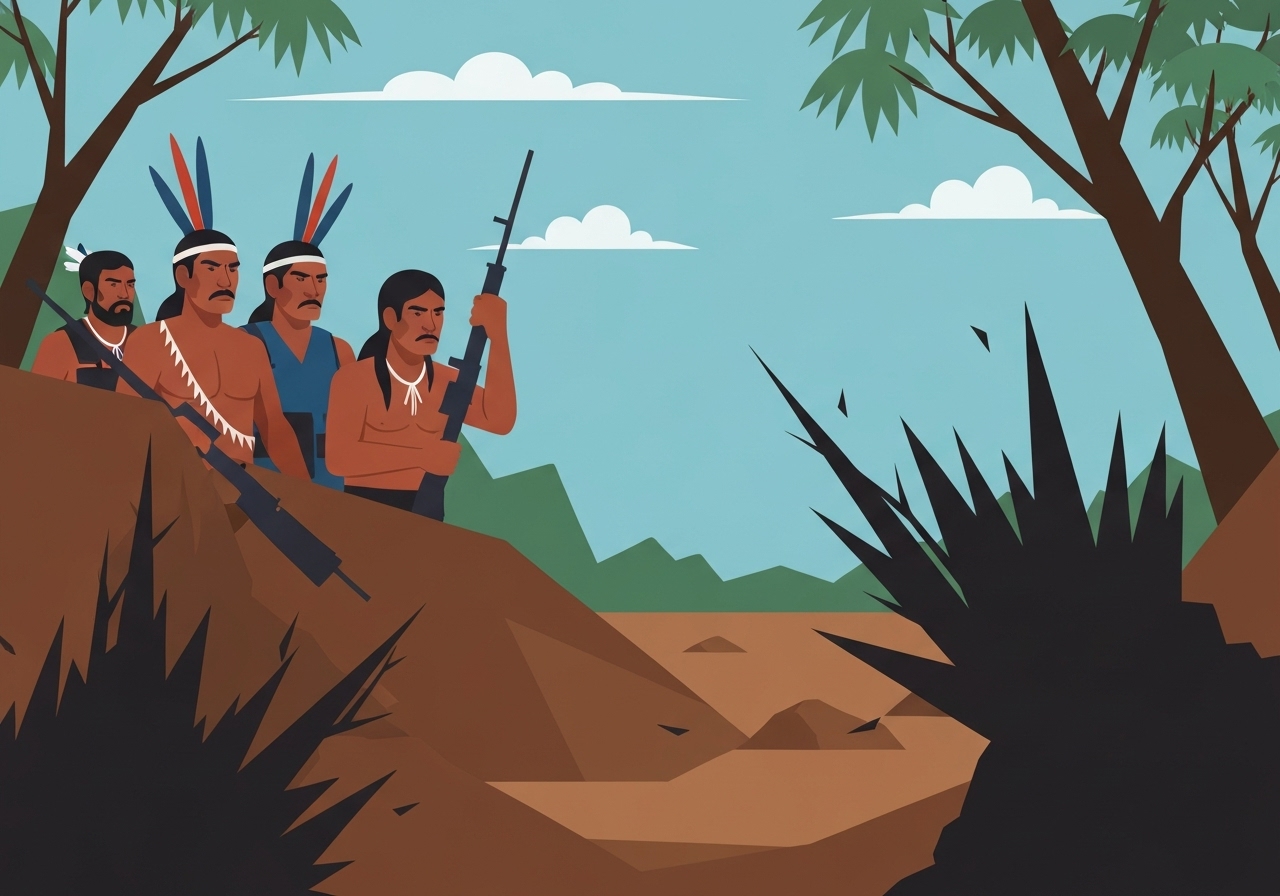
In Ucayali, Peru, members of the Kakataibo Indigenous Guard patrol ancestral forests to locate and dismantle illicit coca plots that have proliferated in the lowland Amazon. The patrols—armed with machetes, traditional bows, spears and occasionally an old firearm—search for coca fields, clandestine airstrips and other signs of the drug trade that bring deforestation, violence and threats to isolated communities. Peru has seen coca cultivation climb from about 43,000 hectares in 2013 to nearly 90,000 hectares in 2024, and the country now produces roughly 850 tons of cocaine annually; traffickers increasingly use jungle routes rather than Andean corridors. Faced with attacks and perceived inaction by authorities, Kakataibo leaders say they formed the Indigenous Guard to protect people and territory.
Key Takeaways
- The area of coca cultivation in Peru rose from nearly 43,000 hectares (106,255 acres) in 2013 to almost 90,000 hectares (about 222,000 acres) in 2024, according to government-linked estimates.
- Peru’s current estimated cocaine output is approximately 850 tons per year, driven by global demand including markets in the United States.
- In Ucayali province there are an estimated 12,000 hectares (nearly 30,000 acres) of coca and multiple clandestine airstrips, some on Indigenous titled land and inside reserves.
- About 20 Indigenous leaders in Peru have been murdered in recent years for opposing drug networks and illegal logging; six victims were Kakataibo leaders.
- Dirandro, Peru’s counternarcotics police, report regular seizures—including cocaine presses—but describe the Amazon as a sprawling, hard-to-police frontier where eradication often resembles a game of whack-a-mole.
- Kakataibo patrols now use drones and community policing to report fields to authorities, while facing death threats and intimidation from traffickers.
Background
Peru is the world’s second-largest producer of cocaine and, while highland coca traditionally supplied much of the industry, cultivation has expanded into the Amazon lowlands in recent years. The jungle’s sprawling borders with Brazil and Bolivia make overland smuggling to neighboring countries easier than transport over the Andes to Lima’s ports. That shift has created a frontier economy where illicit crop production, illegal logging and armed groups frequently intersect.
The Kakataibo are a relatively small Indigenous group spread through central Amazonia. Some Kakataibo communities—and a handful of other Indigenous peoples—have chosen deep isolation after traumatic historical contact that brought disease, violence and enslavement. The arrival of coca growers and traffickers near those reserves has created a new layer of threat for groups that lack regular state protection.
Main Event
On patrol, Kakataibo guards move along overgrown trails and through rivers to locate newly planted coca. They inspect fields, map clandestine runways and sometimes render landing strips unusable, as other Indigenous communities have done by digging holes to prevent light aircraft landings. When their drone geo-locates plantations inside a government reserve, patrols file reports with state agencies and counternarcotics police.
Dirandro officers show seized equipment such as a cocaine press capable of producing kilogram bricks, emphasizing that police operations can disrupt laboratories and shipments but rarely eliminate the networks behind them. The region’s heat produces lower-quality coca alkaloid compared with Andean crops, but jungle routes simplify cross-border movement to Brazil and Bolivia, shifting trafficking patterns toward the Amazon lowlands.
Kakataibo leaders report regular intimidation. Patrol leader Segundo Pino has received explicit death threats on his phone, warning that leaders will “fall one by one” and that “blood will be spilled.” Those messages underscore the lethal stakes for Indigenous organizers confronting traffickers who may cooperate with illegal loggers and other actors in the frontier economy.
Analysis & Implications
The expansion of coca into the Amazon has ecological and social consequences: forest cleared for crops accelerates biodiversity loss and undermines carbon storage. Deforestation driven by illicit agriculture compounds existing legal pressures on the jungle from logging and ranching, reducing buffer zones around lands where isolated peoples live. When traffickers establish processing or landing infrastructure, that infrastructure becomes a hub for further illegal activity and conflict.
Politically, the situation exposes gaps in state capacity. Dirandro and other national forces face logistical limits policing a territory larger than Texas, and eradication without sustained alternative livelihoods risks displacing cultivation rather than ending it. Indigenous self-policing fills an enforcement vacuum but also places community members in direct danger, raising human-rights and rule-of-law concerns.
Economically, global demand for cocaine sustains the market. As long as prices and demand remain high internationally, traffickers have incentives to find new production and transit zones. The Amazon route reduces transport costs to neighboring countries, but it also raises costs in violence and instability for local populations and for the Peruvian state’s reputation and diplomacy in border regions.
Comparison & Data
| Year | Reported coca hectares (Peru) | Approx. acres |
|---|---|---|
| 2013 | ~43,000 ha | 106,255 acres |
| 2024 | ~90,000 ha | 222,390+ acres |
| Ucayali (recent estimate) | ~12,000 ha | ~30,000 acres |
These figures show a roughly twofold increase in national coca area over the last decade, and a significant concentration in Ucayali province. The rise in hectares correlates with a 2024 national output estimate of about 850 tons of cocaine per year. While the Andean highlands historically produced higher-quality alkaloid, the logistical advantages of jungle routes have shifted trafficking patterns.
Reactions & Quotes
Community leaders emphasize their lack of alternatives and limited trust in state protection. Patrol organizers describe the Guard as a last-resort defensive measure rather than an offensive militia.
“We have no choice.”
Kakataibo community leader (patrol statement)
Security authorities stress operational challenges. A Dirandro commander pointed to seized equipment as proof of ongoing interdiction work but acknowledged traffickers adapt quickly to enforcement actions.
“We’re always pursuing the narcos but they also keep evolving.”
Dirandro commander (counternarcotics police)
Local relatives of isolated Kakataibo families say the uncontacted communities feel invaded and frightened when planes or strangers appear near their reserves, reinforcing patrols’ protective rationale.
Unconfirmed
- Precise scale of collusion between specific logging companies and drug networks in Ucayali remains under investigation and is not fully documented publicly.
- Attribution of particular murder threats to named trafficking cells has not been independently verified beyond local leader accounts and police enquiries.
Bottom Line
The Kakataibo Indigenous Guard exemplifies communities taking direct action where state reach is limited: their patrols disrupt illicit plantations and provide rapid local reporting, but they do so amid credible threats to life. Expanding coca cultivation in Peru’s Amazon has increased environmental degradation and violence, creating urgent policy dilemmas about enforcement, protection and alternatives for rural livelihoods.
Long-term solutions will require coordinated interdiction, sustained rural development programs, and stronger protection for Indigenous territories—particularly reserves that shelter people living in voluntary isolation. Without multi-pronged national and international responses to demand, finance and illicit land use, local communities will remain on the front line of a conflict that is both environmental and humanitarian.
Sources
- NPR report (media: investigative field reporting)