
Lead
Inter Miami CF secured the 2025 MLS Cup presented by Audi with a 3-1 victory over Vancouver Whitecaps FC on December 6, 2025, at Chase Stadium in Fort Lauderdale. Lionel Messi supplied two second-half assists, setting up Rodrigo De Paul’s 71st-minute go-ahead goal and a stoppage-time finish by Tadeo Allende. The result delivered Inter Miami its first Philip F. Anschutz Trophy in the club’s sixth season. Vancouver had temporarily equalized in the 60th minute through Ali Ahmed before Miami’s late winner.
Key Takeaways
- Final score: Inter Miami 3, Vancouver Whitecaps 1 — match played December 6, 2025 at Chase Stadium, Fort Lauderdale.
- Scoring sequence: 8′ Édier Ocampo (own goal) put Miami ahead, 60′ Ali Ahmed equalized for Vancouver, 71′ Rodrigo De Paul restored Miami’s lead, 90+6′ Tadeo Allende sealed the win.
- Lionel Messi recorded two assists in the second half, directly creating the 71st-minute De Paul strike and the stoppage-time Allende finish.
- This victory is Inter Miami’s first MLS Cup (Philip F. Anschutz Trophy) in the club’s sixth season since founding.
- Tadeo Allende’s stoppage-time finish was noted in the official match report as marking a ninth Audi MLS Cup Playoffs goal in the player- or event-related tally cited by league coverage.
- Vancouver’s equalizer came via Canadian international Ali Ahmed in the 60th minute; Rocco Ríos Novo was the Miami goalkeeper on duty for the match.
Background
Inter Miami entered the 2025 postseason as a club that has rapidly expanded its global profile since its founding. High-profile signings and a star-driven strategy — most notably the arrival of Lionel Messi — reshaped both ticket demand and international attention toward Major League Soccer. The MLS Cup trophy, named the Philip F. Anschutz Trophy, remains the league’s top prize and a milestone for any franchise aiming to cement long-term sporting legitimacy in North America.
Vancouver Whitecaps FC reached the final after a playoff run that highlighted their defensive organization and counterattacking threats; the Whitecaps’ path included multiple away results that tested the depth of their roster. For both clubs, the match represented different organizational arcs: Miami seeking its first top-level domestic title after heavy investment, Vancouver aiming to add a landmark trophy to its club history. The final at Chase Stadium also reflected MLS’s broader strategy of showcasing marquee events in high-attendance, media-friendly venues.
Main Event
The match opened decisively in the eighth minute when an Édier Ocampo deflection off a Tadeo Allende cross resulted in an own goal, giving Miami an early lead. For the remainder of the first half Miami managed the tempo through possession phases that made use of Messi’s playmaking close to the touchline. Vancouver slowly grew into the game and created chances on transitions as the half progressed, but the score remained 1-0 at the break.
In the 60th minute Vancouver’s persistence paid off: Ali Ahmed struck with sufficient power to beat Rocco Ríos Novo and level the match. That goal shifted momentum and forced Miami to open up, producing more space for quick combinations. Eleven minutes later a midfield turnover led to a rapid Miami counter; Messi exploited the turnover, fed Rodrigo De Paul, and De Paul converted in the 71st minute to put Miami back in front.
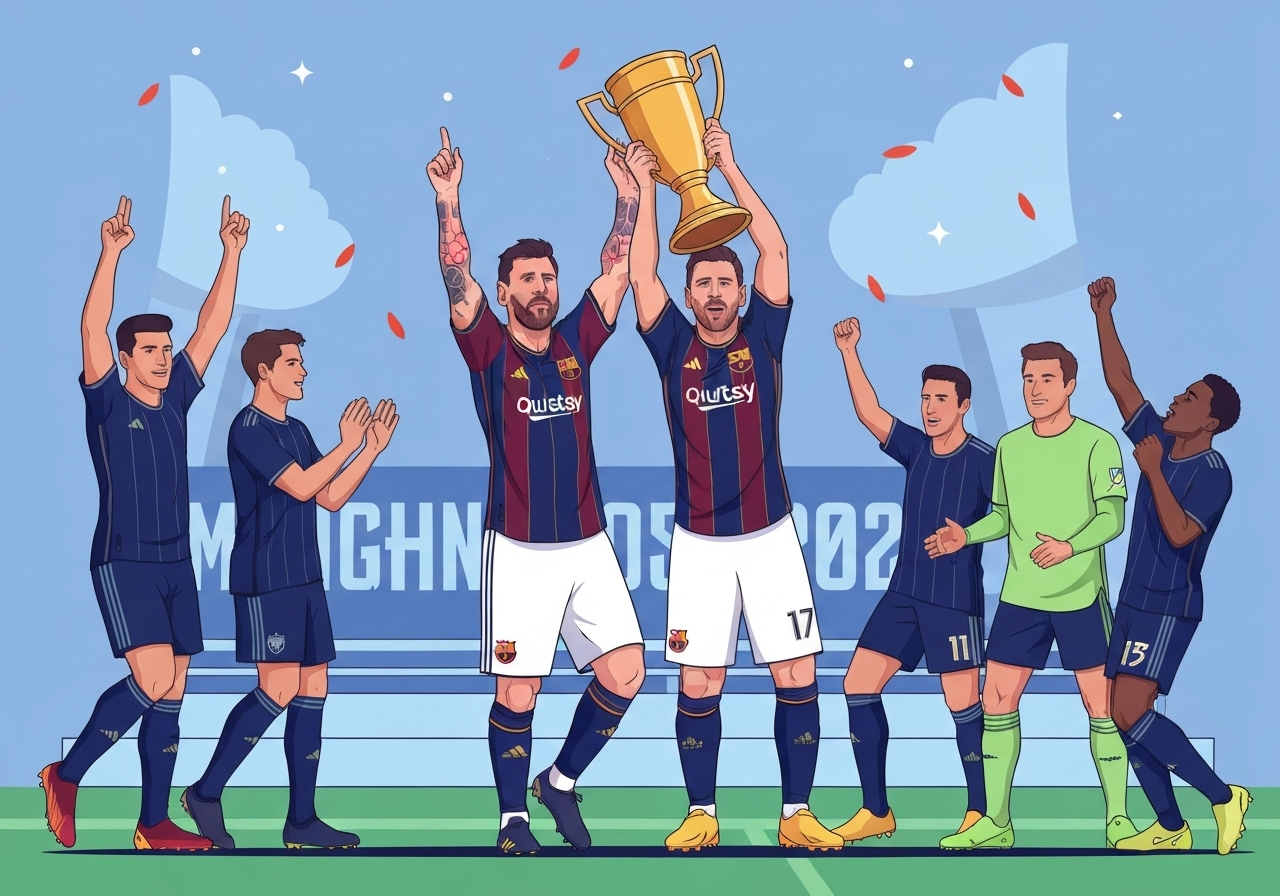
As the clock wound down the game became stretched with both sides searching for a decisive play. In stoppage time Messi again manufactured the final decisive action, slipping a pass that put Tadeo Allende through on goal for a composed low finish in the 90+6th minute. The finish closed the scoring at 3-1 and allowed Inter Miami to run down the remaining seconds en route to lifting the trophy on home soil.
Analysis & Implications
Sporting-wise, the match underlined the outsized influence a world-class playmaker can have in MLS playoff soccer. Messi’s two assists were the decisive margin; his ability to read transitional moments and deliver final passes accelerated Miami’s attack during the match’s key sequences. For Inter Miami, the result validates a high-investment roster model in the short term — they converted marquee signings into silverware within six seasons of the club’s founding.
For Vancouver, the final exposed limits in maintaining intensity across 90 minutes against top-tier opponents with elite creators. The Whitecaps’ equalizer at 60 minutes demonstrated resilience, but the team ultimately conceded key moments in transition and stoppage-time vulnerability proved decisive. Vancouver’s coaching staff will likely prioritize roster depth and late-game defensive patterns in offseason planning.
At the league level, Miami’s title adds to MLS’s media narrative of growth driven by international stars and club investment. The final — played in Fort Lauderdale and drawing strong television and social engagement — will be used by MLS in future marketing to emphasize the competition’s ability to stage high-profile, globally watched events. Long term, the result may accelerate sponsorship and commercial interest in clubs that can combine local fanbases with international star power.
Comparison & Data
| Minute | Scorer | Assist (if any) | Result |
|---|---|---|---|
| 8′ | Édier Ocampo (OG) | Tadeo Allende (cross) | Miami 1–0 Vancouver |
| 60′ | Ali Ahmed | — | Miami 1–1 Vancouver |
| 71′ | Rodrigo De Paul | Lionel Messi | Miami 2–1 Vancouver |
| 90+6′ | Tadeo Allende | Lionel Messi | Miami 3–1 Vancouver |
The table above summarizes the scoring timeline and the direct involvement of Lionel Messi on the 71st and 90+6th-minute goals. The match report highlights that the late Allende finish was catalogued in league coverage as a ninth Audi MLS Cup Playoffs goal in the player- or event-related metric cited by MLS reporting; that figure is carried here as reported by the match source.
Reactions & Quotes
League and club accounts amplified the moment across social platforms while supporters in Fort Lauderdale celebrated on the pitch. Official league posts emphasized Miami’s trophy lift and Messi’s continued postseason impact.
INTER MIAMI LIFT THE TROPHY
Major League Soccer (official Twitter)
Leo stays winning.
Major League Soccer (official Twitter)
Fans and commentators on social media framed the victory as both a sporting milestone for Inter Miami and another career highlight in Lionel Messi’s storied résumé. Media analysis in the hours after the match focused on roster construction, Messi’s match influence, and what the title means for MLS’s commercial trajectory.
Unconfirmed
- Long-term roster intentions for Inter Miami, including contract renewals or future high-profile signings, remain unconfirmed pending official club announcements.
- Any immediate transfer offers or contractual negotiations for Lionel Messi following the MLS Cup win are unverified and were not reported in the official match coverage.
Bottom Line
Inter Miami’s 3-1 MLS Cup victory on December 6, 2025, represents the club’s first top domestic title and underscores the immediate competitive returns of assembling elite attacking talent. Lionel Messi’s two assists were decisive in both breaking and sealing the match, illustrating how a single playmaker can shift outcomes in tight playoff contests.
For Vancouver Whitecaps FC, the final will be viewed as a valuable experience and a benchmark for offseason adjustments; addressing late-game defensive moments and squad depth will be priorities. For MLS broadly, the match heightened the league’s global visibility and offered a showcase moment that the competition will reference in marketing and commercial discussions going forward.
Sources
- MLSsoccer.com match report (Official league match report)
- Major League Soccer (official Twitter) (Social media posts and visuals from league)