
Lead
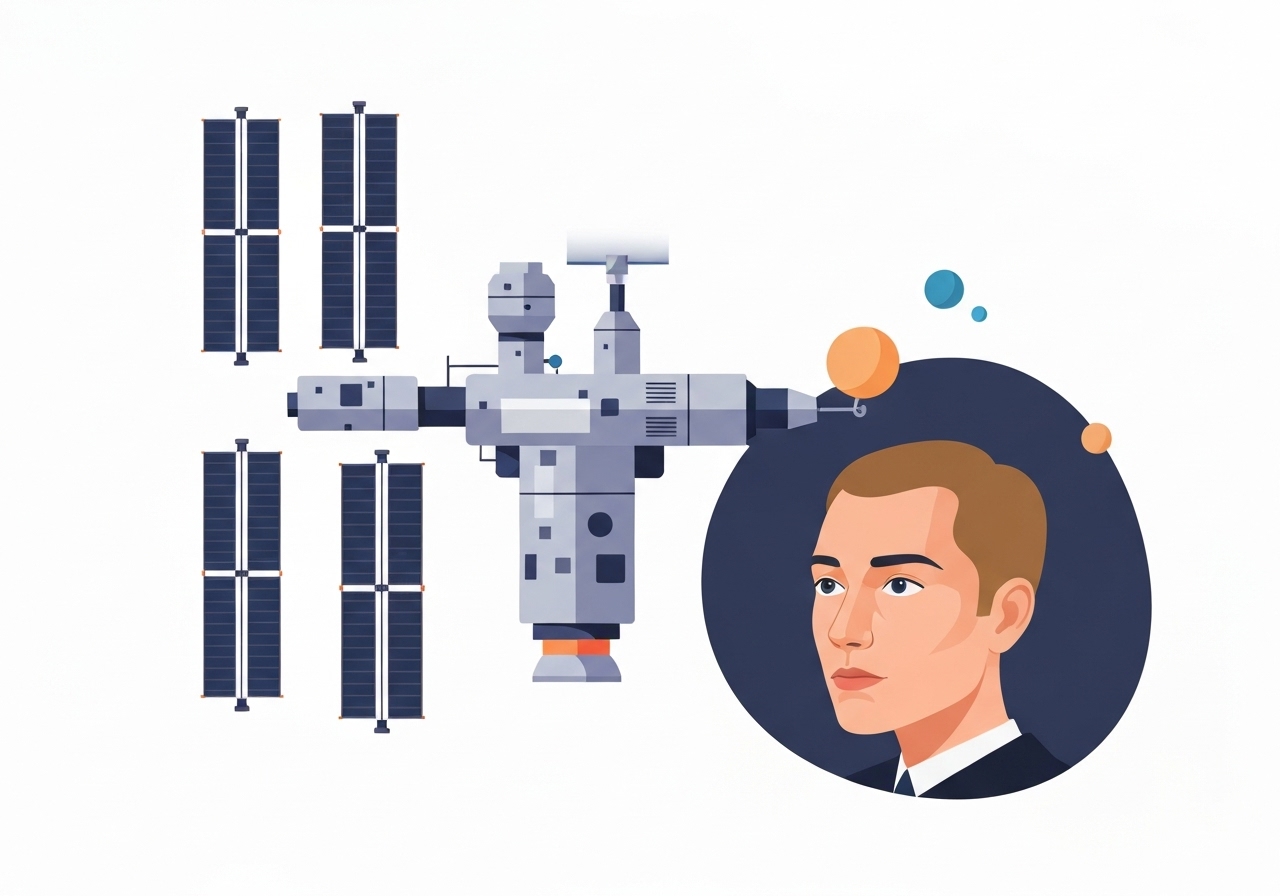
Twenty-five years after the first long-term crew arrived, the International Space Station (ISS) remains continuously inhabited in low Earth orbit, some 400 km (250 miles) above the planet. Since Expedition 1 in November 2000, more than 280 people have visited the complex, which has grown from three initial modules into an international laboratory and symbol of cooperation. The station has delivered thousands of experiments, hosted tourists and handled emergencies while costing governments and partners tens of billions of dollars. This article distils the ISS’s quarter-century in orbit into the key numbers, milestones and implications.
Key Takeaways
- The ISS has been continuously occupied since 2 November 2000; more than 280 astronauts and cosmonauts have flown to it.
- The first element, Zarya, was launched in November 1998; the oldest module age cited is 27 years as of the source’s timeline.
- There are between 16 and 20 pressurised modules, eight major solar arrays and an assembled wingspan of solar panels 109 m (356 ft) across.
- Habitable volume is roughly 388 cubic metres — comparable to a six‑bedroom house — and the station typically hosts seven crew at a time.
- Crew members exercise about two hours daily to counter bone and muscle loss; longest single ISS mission recorded here is 371 days (Frank Rubio, returned Sept 2023).
- About 98% of water (breath, sweat, urine) is reclaimed by the station’s recycling systems; food and life‑support technologies continue to improve.
- Research output cited: roughly 4,400 peer‑reviewed papers based on ISS investigations to date.
- Estimated total programme cost reported around $150 billion, with annual NASA operating costs of roughly $3–4 billion.
Background
The ISS emerged from decades of national programmes, merging elements of the US Freedom concept and Russia’s Mir heritage into a single multinational endeavour. Construction began with launches in the late 1990s; Zarya’s launch from Baikonur in November 1998 marked the first delivered component. Political debates, budgetary pressures and technical delays dogged the project in its early years, yet partners persisted and gradually assembled the complex.
From the outset the station was a multinational enterprise: hardware and modules came from Russia, the United States, Japan, Europe and Canada. The Space Shuttle fleet was central to assembly for many years, transporting large pressurised elements and using its robotic arm to position them. After the Shuttle’s retirement, commercial vehicles (notably SpaceX Dragon) have taken on crew and cargo delivery roles.
Main Event
Expedition 1—three crew members—moved into a compact three‑module complex in November 2000 and stayed roughly five months, conducting experiments and several spacewalks. Since then the station expanded piece by piece: pressurised modules, trusses, radiators and large solar arrays were added across dozens of assembly flights (the original count cited is 42 assembly flights).
The ISS is now a working laboratory where daily schedules balance maintenance, science and outreach. Crews run physiological, materials and biological experiments intended both to enable long‑duration human spaceflight and to produce benefits on Earth. Private firms have also flown payloads and begun to use the microgravity environment to explore manufacturing and pharmaceutical applications.
The platform has faced emergencies and anomalies: radiator and ammonia leaks have prompted unscheduled spacewalks; micrometeoroid and debris strikes have left small impact scars (including a chip recorded in a Cupola window). High‑profile incidents—such as Luca Parmitano’s 2013 helmet water contamination—highlight ongoing operational risks and the need for robust procedures.
Analysis & Implications
The ISS has demonstrated durable international cooperation: despite geopolitical strains, partners have maintained joint operations, shared logistics and coordinated scientific agendas. That continuity has enabled incremental technology maturation in life support, orbital servicing and crew health monitoring—capabilities that feed directly into Artemis and planned lunar missions.
Economically, the programme’s headline costs (the article cites roughly $150 billion total and $3–4 billion per year from NASA) raise questions about return on investment. Measured benefits include thousands of scientific publications, commercial spinoffs and the training of crews and ground teams—but the balance of costs versus societal benefit remains debated among policymakers and analysts.
Operationally, the ISS is both a laboratory and a testbed for long‑duration human presence in space. Systems such as closed‑loop water recovery (near‑98% reclamation) are essential if humanity intends longer missions to the Moon or Mars. At the same time, orbital congestion (about 28,000 tracked objects) and collision avoidance manoeuvres are an increasing burden on mission planning.
Comparison & Data
| Metric | Value |
|---|---|
| Habitable volume | 388 m³ |
| Annual power generated | 735,000 kWh/year |
| Software complexity | ~3,000,000 lines of code |
| Inventory items onboard | ~486,000 |
| Estimated programme cost | ~$150 billion |
The table highlights a few representative figures that communicate the station’s scale: living space comparable to a large house, substantial electrical output enabled by expansive solar arrays, and complex logistics tracked via detailed inventory systems. Software and hardware heterogeneity (from legacy Soviet electronics to modern off‑the‑shelf devices) complicates operations and maintenance but also demonstrates adaptability.
Reactions & Quotes
If I didn’t fix the toilet, it wasn’t getting fixed.
Chris Hadfield, astronaut (on a 2012 on‑orbit repair)
Hadfield’s remark, delivered in the context of an on‑orbit toilet failure he repaired during a busy mission day, underlines the hands‑on maintenance demands aboard the ISS and the multi‑tasking nature of crew duty cycles.
I had to set an alarm to remind me to get back to work.
Nicole Stott, astronaut (on Cupola distractions)
Stott’s comment reflects the psychological and human dimensions of life in orbit: the station offers striking views and opportunities for outreach, but crews must balance that against tight experiment and maintenance schedules.
Unconfirmed
- The total programme cost of $150 billion is an aggregate estimate; partner accounting methods differ and make an exact, universally accepted total difficult to verify.
- The precise count of pressurised modules (16–20) varies by definition—some figures include small nodes and visiting vehicles differently.
- The cited 98% water‑recovery rate describes system performance targets and typical operations but can fluctuate during outages or maintenance periods.
Bottom Line
After 25 years of continuous occupation, the ISS stands as both a technical achievement and a global research platform. It has produced thousands of experiments, trained generations of astronauts, and proved many technologies needed for deeper space exploration. At the same time, high operating costs, aging hardware and orbital debris pressures are pushing partners to define what comes next and how to transition scientific activity into new commercial and lunar architectures.
For policymakers and the public, the key questions now are maintenance versus replacement, the role of commercial operators, and how lessons from the ISS can be scaled to sustainable exploration beyond low Earth orbit. The station’s legacy will be judged by what comes after it—and how effectively industry and governments apply its hard‑won lessons.