
Lead
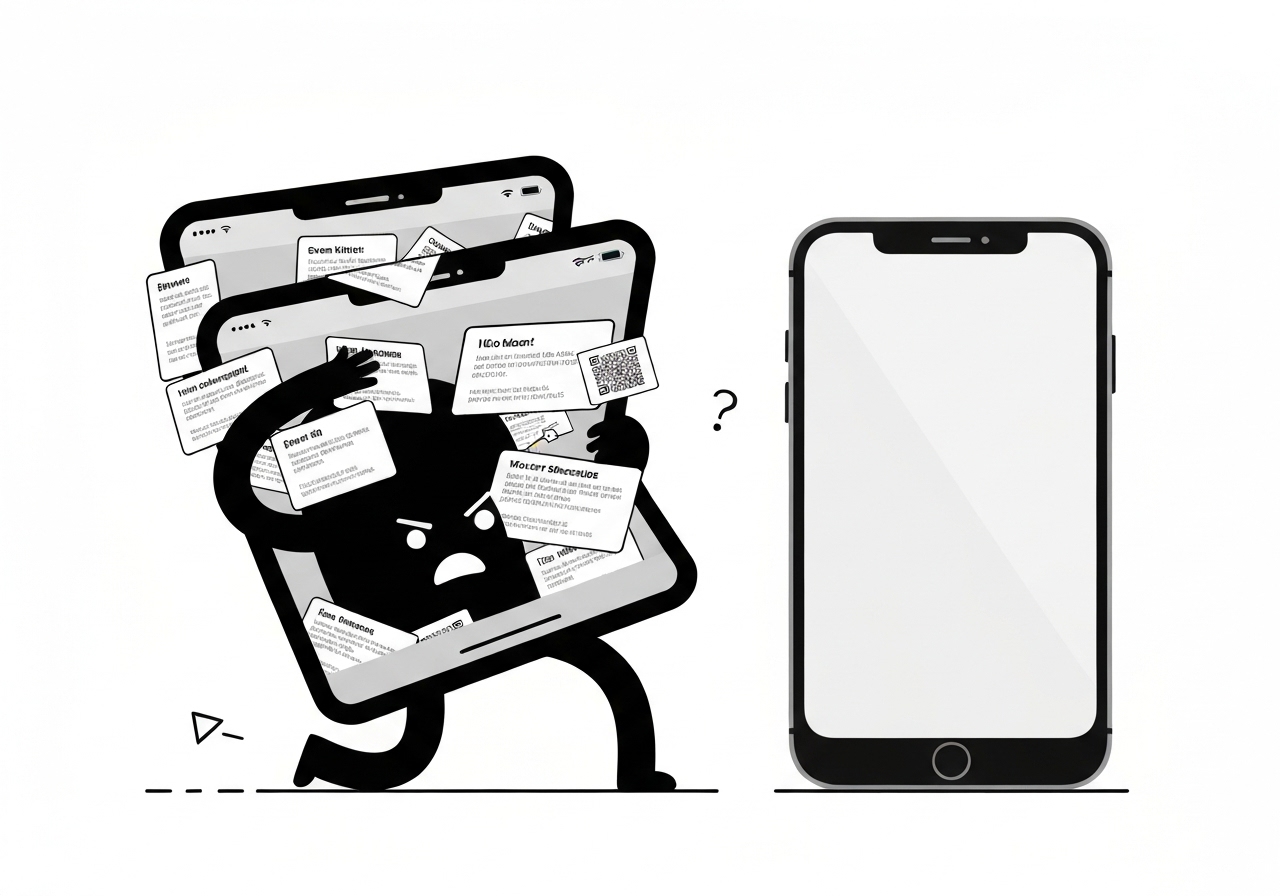
Apple released iOS 26.2 last week, and users across social platforms reported widespread frustration with slower performance, confusing interface changes and unexpected battery alerts. A longtime late-adopter who only moved to smartphones in 2013 describes an accidental upgrade that transformed daily phone use into a source of irritation. Online conversation—from Reddit threads to Bluesky posts—has amplified individual grievances into a broader outcry. For many, the update feels less like an improvement than a disruption to devices they rely on every day.
Key Takeaways
- iOS 26.2 rolled out last week and sparked large-scale user complaints about responsiveness and UI changes across multiple social platforms.
- Several users report actions feel roughly twice as slow since installing the update, anecdotally increasing task completion times.
- Battery-status messaging now shows countdown-style prompts (for example, “24m to 80%”), which some users find intrusive and anxiety-inducing.
- Commonly flagged issues include altered touch sensitivity, new animations for text bubbles, harder-to-find search fields and difficulty uploading downloaded photos.
- Public reactions include a Bluesky post from author John Darnielle calling the update “foundationally bad” and a Reddit thread headlined “New iPhone update made me so overwhelmed, I ended up throwing my phone.”
- Many affected devices are relatively new; users report having recent models with ample storage yet still experiencing degraded behavior.
- Some workarounds—rolling back settings, toggling features off—are available but often require multiple steps and technical comfort.
Background
Software updates have long provoked a mix of irritation and acceptance: some people embrace the new features, others resent changes to familiar workflows. The author frames this episode against family anecdotes of deliberate resistance to change—grandmother preferring manual car windows and a father clinging to a malfunctioning six-CD stereo—illustrating how technology can feel like an imposition when it breaks established habits.
Over the past decade, smartphones have become both tools for work and constant companions in daily life; users expect reliability as much as novelty. Companies push updates to add features, improve security and extend product life, but frequent or poorly communicated changes can accelerate feelings that devices have been made obsolete on purpose. That tension—between progress and reliable utility—helps explain why a single update can provoke a disproportionate reaction.
Main Event
The author installed iOS 26.2 after agreeing to the update late one night and woke to a reworked interface and degraded responsiveness. Reported problems include noticeably slower interactions—several users say typical taps and swipes now take roughly twice as long to register—and new animations that make typing and message handling feel sluggish. Touch sensitivity seems inconsistent: at times overly responsive, at others requiring repeated presses to register a command.
Other complaints focus on discoverability and workflow friction. Users describe search fields and files not appearing where they expect, added steps to post previously downloaded photos, and a reduction in visual contrast that makes elements harder to read. Some features also surface new, unsolicited status messages about battery life, such as countdown estimates to a given charge percentage, which users say create unnecessary concern.
Online, the response ranged from exasperated anecdotes to outraged posts. One widely-shared Reddit thread used a dramatic headline about someone throwing a phone; while details are anecdotal, the thread captured a large volume of similar frustrations. Musicians, writers and other public figures joined the conversation, amplifying the sense that the update’s effects are broad rather than isolated.
Analysis & Implications
First, the incident underscores a trust problem between device makers and users. When updates produce friction on devices people rely on for work and personal life, the perceived value of new features can be outweighed by everyday costs in time and frustration. That dynamic risks eroding brand goodwill, especially among users who pay a premium for seamless performance.
Second, the episode illustrates how design choices—animations, default transparencies, persistent status prompts—can have outsized behavioral impacts. What may be intended as a subtle UI polish can degrade perceived speed and clarity, particularly for people who prioritize quick, distraction-free interactions. The mismatch between a phone’s familiarity and a sudden new layout magnifies the feeling of being forced to relearn basic tasks.
Third, there are broader product-lifecycle questions at play. If updates consistently introduce regressions on newer hardware, users may infer deliberate obsolescence or insufficient quality control. That perception can increase pressure from regulators and consumer advocates to require clearer rollback options, longer beta testing or more granular user controls for UI changes.
Finally, the path forward is partly technical and partly communicative. Patches and incremental updates can address performance regressions, but clearer release notes, opt-in trial periods and accessible toggles for controversial features would likely reduce backlash. For enterprise users and those who depend on consistency, more robust deployment controls would mitigate workflow disruption.
Comparison & Data
| Metric (Anecdotal) | Before iOS 26.2 | After iOS 26.2 |
|---|---|---|
| Responsiveness | Near-instant taps and swipes | Reportedly ~2x slower on many devices |
| Battery status messaging | Simple percentage readout | Countdown-style alerts (e.g., “24m to 80%”) |
| UI discoverability | Stable search and file locations | Fields and functions moved or hidden |
The table summarizes recurring user reports rather than formal benchmarks; claims of doubled latency and other numerical impressions are anecdotal. Independent measurements would be required to confirm magnitude and root causes, but the volume of similar complaints across platforms suggests the issues are widespread enough to merit investigation.
Reactions & Quotes
“This is like foundationally bad.”
John Darnielle / Bluesky post
That succinct critique from a public figure helped crystallize broader dissatisfaction and was widely shared across social feeds. It framed many users’ own frustrations as part of a systemic problem rather than isolated annoyance.
“New iPhone update made me so overwhelmed, I ended up throwing my phone.”
Reddit thread headline
The dramatic Reddit headline is representative of the emotional tenor of many posts; while not an empirical datapoint, it signals high affect and a readiness among users to vocalize disruption to everyday routines.
Unconfirmed
- The precise performance degradation (for example, the “twice as slow” claim) has not been validated by independent benchmarks and remains anecdotal.
- Reports that a user physically threw a phone are unverified; the Reddit headline conveys tone more than proven facts.
- Assertions about hidden toggles requiring arcane actions or specific locations to disable features (the “mansion/Fidelio” anecdote) appear to be satire or hyperbole and are not substantiated.
Bottom Line
This release cycle has highlighted how quickly a software update can convert everyday convenience into daily friction. Widespread anecdotal reports—about slower responsiveness, confusing UI shifts and intrusive battery readouts—have eroded user confidence and generated a noisy, cross-platform backlash. For many people the cost of relearning or tolerating slower behavior outweighs any marginal benefit offered by new features.
Practical next steps for users: check for Apple support notes or incremental patches, explore settings to disable new animations or status prompts, and back up data before attempting any deeper troubleshooting. For Apple, the situation calls for prompt diagnostics, clearer communication and technical fixes where performance regressions are confirmed; without that, reputational and regulatory pressure could increase as frustrated users demand more control over updates.