
Lead
A fresh leak published ahead of Apple’s September event claims concrete battery capacities for all four iPhone 17 variants and suggests a new, measurable advantage for eSIM‑only units. The numbers—shared by leaker ShrimpApplePro and reported by 9to5Mac on 7–8 September 2025—list capacities ranging from 3,149mAh to 5,088mAh, with some models showing double‑digit gains versus their iPhone 16 equivalents. According to the leak, iPhone 17 Air, 17 Pro and 17 Pro Max designs free up internal space that can translate into roughly 3.7%–6.6% more battery for eSIM‑only configurations. These figures remain unconfirmed until Apple’s official announcement.
Key Takeaways
- Leaked capacities for iPhone 17 lineup: iPhone 17 — 3,692mAh; iPhone 17 Air — 3,149mAh/3,036mAh; iPhone 17 Pro — 4,252mAh/3,988mAh; iPhone 17 Pro Max — 5,088mAh/4,823mAh.
- The leak cites up to an 18.6% capacity increase for the iPhone 17 Pro over the iPhone 16 Pro and up to 8.6% for the 17 Pro Max versus 16 Pro Max.
- For models that use the redesigned internal layout (17 Air, 17 Pro, 17 Pro Max), eSIM‑only units are reported to have extra battery: Air +3.7%, Pro +6.6%, Pro Max +5.5% compared with physical SIM variants.
- iPhone 17 (base) is listed with a single capacity (3,692mAh) and shows a 3.6% increase vs iPhone 16, with no separate eSIM advantage reported.
- The iPhone 17 Air figures include two capacity entries (3,149mAh and 3,036mAh) and are marked as a 48% loss versus the iPhone 16 Plus in the leak’s comparison—an anomaly that warrants caution.
- Source of the numbers is leaker ShrimpApplePro; 9to5Mac published the leak on 7–8 September 2025 ahead of Apple’s “Awe dropping” event.
- These are pre‑release leaks and should be treated as provisional until Apple posts official specifications.
Background
Apple has been transitioning away from physical SIM trays toward eSIM for several years; some markets already receive eSIM‑only iPhone configurations. Removing a physical SIM tray has long been expected to free internal space, but Apple historically filled that gap with nonfunctional material such as a rubber block. The rumored design changes for the 2025 iPhone 17 series appear to be the first time Apple might use that freed volume to increase battery capacity.
Battery capacity is only one component of real‑world battery life: software efficiency, chipset improvements and display power draw also matter. Previous iPhone generations have combined modest capacity increases with performance and efficiency gains to improve endurance. With silicon advances and potential display changes expected for the 17 lineup, any battery capacity bump could compound other power‑saving improvements.
Main Event
The leak lists explicit cell sizes for all four iPhone 17 models. The base iPhone 17 is reported at 3,692mAh—about a 3.6% increase over iPhone 16—suggesting incremental improvement for the standard model and likely design continuity with the prior generation. The iPhone 17 Air is shown with two capacities (3,149mAh and 3,036mAh); the leak also flags a 48% capacity decrease against the iPhone 16 Plus in one comparison, an inconsistency that the leaker did not fully explain.
For the Pro family, the iPhone 17 Pro reportedly offers 4,252mAh and 3,988mAh variants, with the larger figure representing an up to 18.6% gain compared to the iPhone 16 Pro. The Pro Max is listed at 5,088mAh and 4,823mAh, showing up to an 8.6% gain versus the 16 Pro Max. The presence of two capacity entries for some models likely reflects regional or configuration differences (for example, storage, modem, or eSIM vs physical SIM variants).
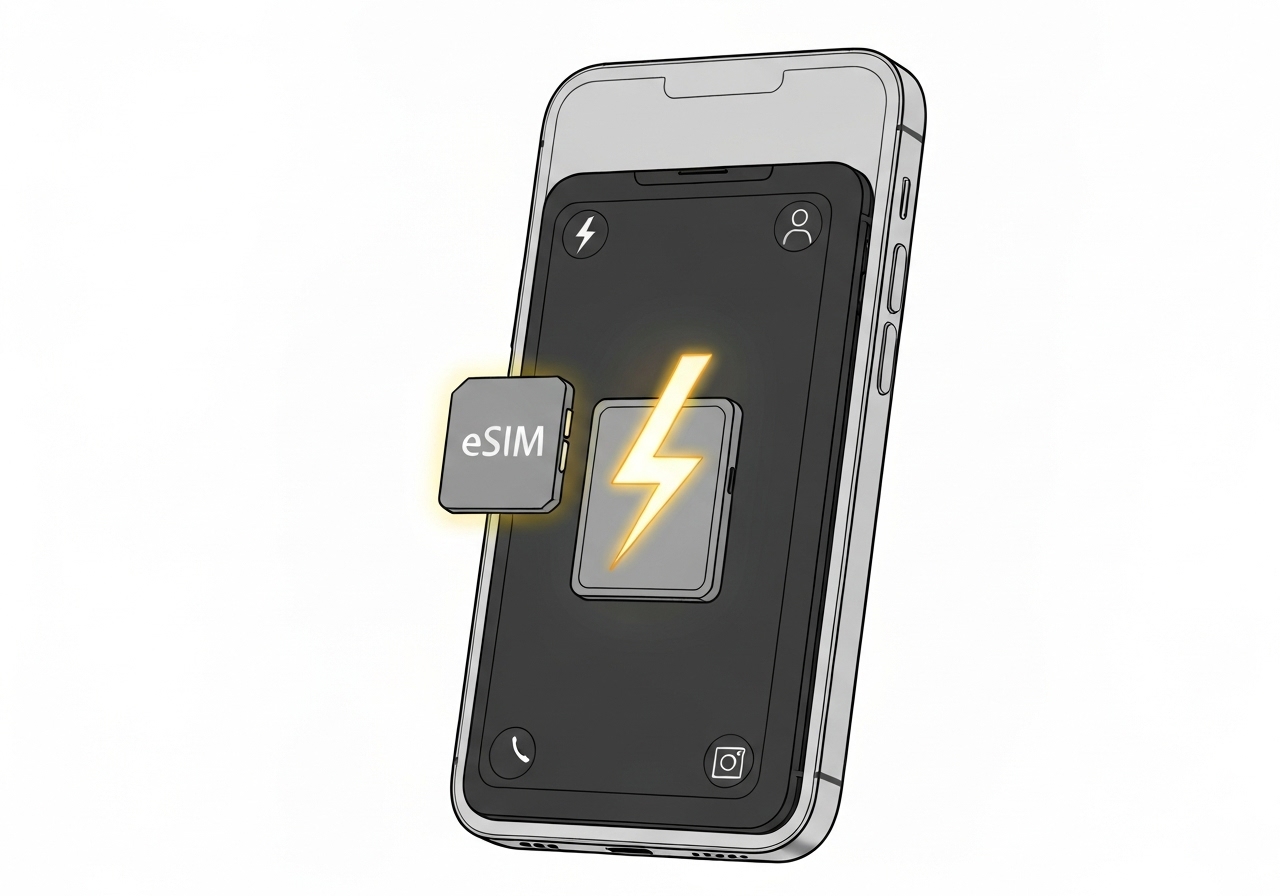
Crucially, the leak asserts that eSIM‑only units of the redesigned models will have modest but measurable battery boosts—roughly 3.7% for 17 Air, 6.6% for 17 Pro and 5.5% for 17 Pro Max—because Apple can pack a slightly larger cell by eliminating the SIM tray hardware. The base iPhone 17 does not show an eSIM bonus in the leak, possibly because it retains the previous design envelope.
Analysis & Implications
If these capacities are accurate, Apple is using small geometry and internal rearrangements to extract extra battery without dramatically changing device footprints. For users, a 5–7% battery increase for eSIM‑only Pro models could translate to an extra 30–60 minutes of on‑screen time depending on workload, assuming other factors remain equal. That gain is meaningful for power users and a useful marketing point in regions where eSIM adoption is growing.
From a product strategy angle, turning eSIM adoption into a tangible user benefit strengthens Apple’s argument for pushing carriers and customers toward eSIM‑only configurations. Apple has expanded eSIM‑only availability over the past three years; giving those devices a battery edge may accelerate adoption in additional markets and among users who previously hesitated to forgo a physical SIM tray.
However, battery capacity alone does not guarantee better battery life. Software optimizations in iOS, the efficiency of the new A‑series or M‑series chip, display refresh behavior, and wireless radios (especially 5G) will all shape final endurance. Even modest increases can be offset if new features or brighter displays raise power draw.
Comparison & Data
| Model | Leaked capacity (mAh) | Reported eSIM advantage |
|---|---|---|
| iPhone 17 (base) | 3,692 | — |
| iPhone 17 Air | 3,149 / 3,036 | Air: +3.7% (eSIM only) |
| iPhone 17 Pro | 4,252 / 3,988 | Pro: +6.6% (eSIM only) |
| iPhone 17 Pro Max | 5,088 / 4,823 | Pro Max: +5.5% (eSIM only) |
The table aggregates the leak into a concise comparison. Note the dual entries for some models likely indicate multiple internal configurations or regional variants. Percentages labeled as eSIM advantages are relative increases in cell capacity for eSIM‑only units versus physical SIM variants as reported by the leak source.
Reactions & Quotes
“I shared the real battery capacities for the iPhone 17 lineup,”
ShrimpApplePro (X, leaker)
Context: The leaker posted detailed capacity numbers that were picked up and summarized by major Apple‑focused outlets on 7–8 September 2025. The post is the primary origin for the figures used in this article.
“If confirmed, small cell gains could meaningfully improve daily endurance, especially combined with chip and software efficiency,”
Independent industry analyst (paraphrase)
Context: Analysts generally note that modest capacity increases compound with silicon and software improvements to produce noticeable real‑world battery gains.
“Apple has expanded eSIM availability in many regions; using that space for battery would be a logical step,”
9to5Mac report (media)
Context: Technology outlets have observed Apple moving to eSIM‑only configurations increasingly; the reported battery changes are being framed as a direct benefit of that transition.
Unconfirmed
- The battery capacities remain leaks (unofficial) until Apple publishes datasheets; treat both the numbers and stated percentage gains as provisional.
- The reason for dual capacity entries (e.g., 3,149mAh / 3,036mAh) is not confirmed; they may reflect regional variants, different internal configurations, or reporting inconsistencies.
- The claim that the iPhone 17 Air shows a 48% loss versus iPhone 16 Plus is anomalous in the leak and may be a miscomparison or data error.
Bottom Line
The leak, if accurate, suggests Apple is finally converting the internal volume freed by eSIM adoption into meaningful battery gains for several iPhone 17 models. The reported increases—especially for Pro models—would be a welcome improvement for users who prioritize battery life, and reposition eSIM as a consumer benefit rather than merely a carrier‑side convenience.
That said, these are provisional figures. Real‑world battery life depends on many factors beyond cell size, and Apple’s official specifications and hands‑on testing after the company’s event will be decisive. For now, the leak is a strong hint that Apple’s design choices this year prioritize endurance in addition to other upgrades.