
Lead
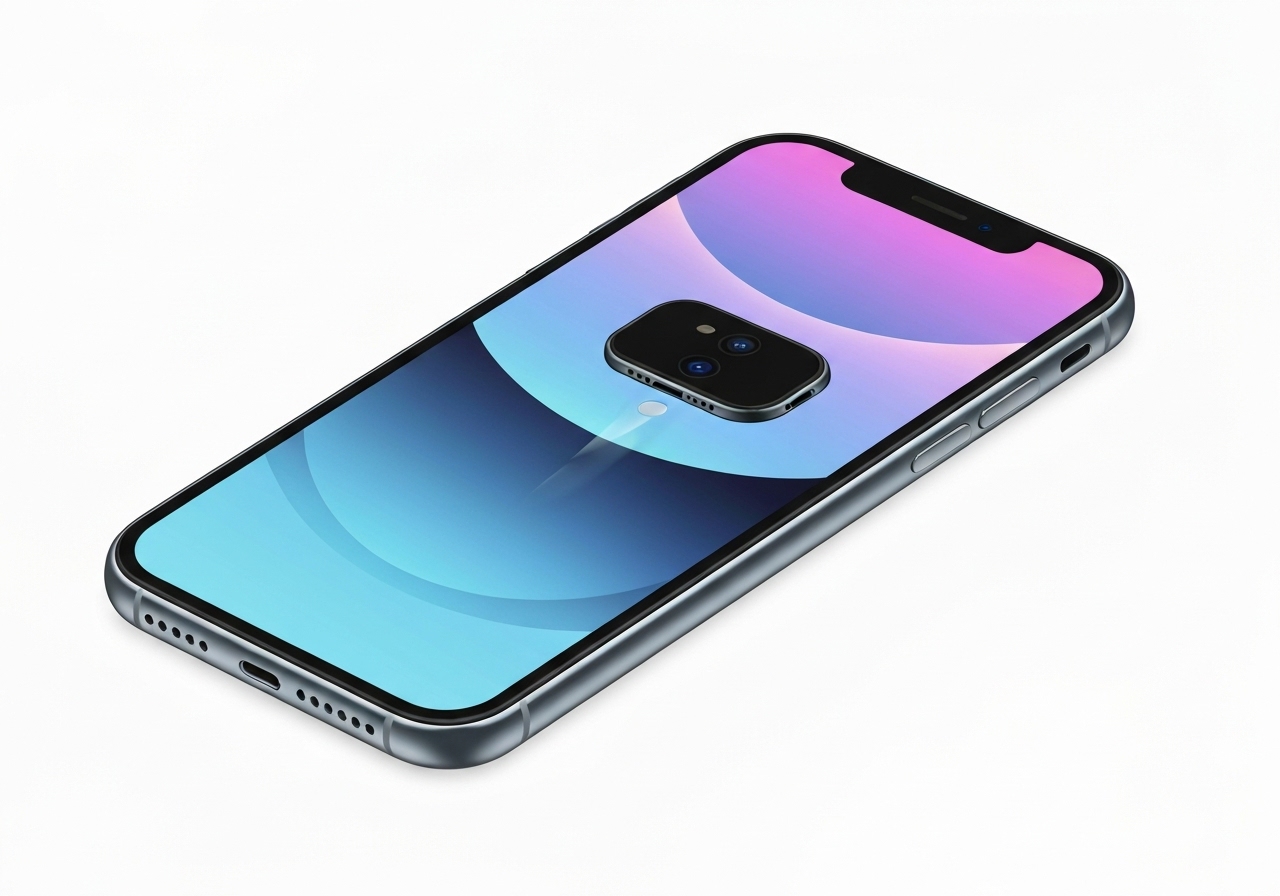
Apple is reportedly preparing to place the front-facing camera beneath the iPhone display for its 2027, 20th‑anniversary model, according to a Chinese leaker and recent industry reports. The development aligns with earlier signals that under‑screen Face ID could appear on iPhone 18 Pro models in 2026, with a full under‑display selfie camera following in 2027. Suppliers and analysts referenced in reporting point to new optical designs and a possible 24‑megapixel inner‑display camera as evidence Apple is solving the light‑transmission problems that have limited previous implementations. If true, the move would let Apple ship a handset with no visible cutouts and a radically different, edge‑curved exterior.
Key Takeaways
- Chinese leaker Digital Chat Station reported Apple plans an under‑screen selfie camera for its 2027 iPhone, tied to the device’s 20th anniversary.
- Under‑screen Face ID is expected to debut on iPhone 18 Pro models in 2026, with camera adoption following a year later.
- JP Morgan cited an industry‑first 24‑megapixel camera under the inner display for Apple’s first foldable — higher than the 4–8MP typical of current under‑display solutions.
- LG Innotek has been developing under‑display camera modules using a “freeform optic” multi‑lens array to reduce distortion and boost brightness, per a 2024 report.
- Android phones with under‑display selfie cameras often show reduced image brightness and sharpness; Apple’s reported approach aims to address those shortcomings.
- Apple is also said to be working on an almost bezel‑less design that curves around four edges and may skip the “iPhone 19” name for 2027.
Background
Under‑display cameras have been available on several Android models for a few years, but most early implementations sacrificed image quality because the sensor must capture light through display layers. That trade‑off has kept many manufacturers, and observers believe Apple, cautious about adopting the technology until image performance matched the company’s standards. Apple’s long supplier network — including South Korea’s LG Innotek — has been exploring optical and module changes to improve light transmittance and reduce artifacts.
Apple’s product cadence and naming conventions provide context for the rumor. The company has a history of skipping incremental numbers for milestone devices, as when it released the iPhone X for the 10th anniversary in 2017 rather than an “iPhone 9.” Reports that Face ID components could move under the display as early as 2026 suggest a staged rollout: biometric sensors first, then a fully hidden selfie camera in 2027 for a special anniversary model.
Main Event
On November 10, 2025, the Weibo account Digital Chat Station posted that Apple’s development of under‑screen camera technology is proceeding on a schedule aimed at adoption in 2027. The same reporting cycle referenced earlier supplier work and recent analyst notes suggesting Apple is close to overcoming the optical penalties that previously limited under‑display cameras. The combination of internal engineering, supplier prototypes and financial‑industry reporting has renewed speculation about a 20th‑anniversary redesign.
One notable technical claim circulating in industry commentary is a 24‑megapixel camera positioned under the inner display of Apple’s first foldable. That figure is substantially higher than the typical 4 or 8 MP sensors used in current under‑display phones, implying improvements in sensor sensitivity and display transparency. JP Morgan analysts and other market watchers cited in reports suggested such a sensor would be an “industry first.”
Separately, an April 2024 report highlighted LG Innotek’s work on a “freeform optic” multi‑lens array intended to reduce distortion and boost brightness for under‑display modules. While it is not confirmed whether Apple will use LG Innotek’s exact design, the report provides a plausible technical route for addressing the brightness and clarity losses that occur when a camera sits beneath display layers.
Analysis & Implications
If Apple succeeds in delivering an under‑display selfie camera with image quality rivaling visible‑hole solutions, the user‑facing design of future iPhones would change markedly. A hidden front camera removes the last prominent visual interruption on many phone screens, enabling a truly uninterrupted display that could complement other display innovations such as edge curvature. That change would have aesthetic and marketing value, reinforcing Apple’s premium positioning.
Technically, solving the light‑transmission problem requires advances along several vectors: sensor sensitivity, pixel‑pattern adjustments in the display stack, and optical elements that counteract diffraction and scattering. The reported use of freeform optics and a higher megapixel count suggests suppliers and Apple engineers are pursuing a systems‑level fix rather than a stopgap. If the 24MP figure holds, it would also indicate a substantive leap in under‑display imaging performance.
Market effects could be significant. Android vendors that rushed under‑display cameras primarily to hit spec checklists may face renewed pressure if Apple ships a demonstrably better implementation. Component suppliers such as LG Innotek and others could see increased demand, while smartphone photography benchmarks and third‑party camera apps may need to adapt to new hardware characteristics.
Comparison & Data
| Metric | Typical Current UDC Phones | Reported Apple 2027 Claim |
|---|---|---|
| Front camera resolution | 4–8 MP | 24 MP |
| Common issue | Reduced brightness, blur, color shifts | Engineered compensation via optics/display design |
| Likely year of adoption | 2020–2025 (early adopters) | 2027 (anniversary iPhone) |
The table summarizes publicly reported figures: most under‑display selfie modules on Android use low‑resolution sensors (commonly 4–8 MP) to contend with light loss through the display. The 24‑MP figure attributed to Apple represents a departure from that pattern and indicates targeted improvements in sensor sensitivity and display transparency. That said, pixel count alone does not guarantee better low‑light performance; optical throughput and image processing will be decisive.
Reactions & Quotes
Industry watchers and supply‑chain observers reacted to the reports with cautious interest, noting the technical hurdles that have hindered under‑display camera quality to date.
“Development is progressing as planned for adoption in 2027,”
Digital Chat Station (Weibo account, leaker)
The comment above was the clearest near‑term timeline claim to emerge publicly. It was reported via technology media summarizing posts from the Weibo account rather than an official Apple announcement.
“Apple’s first foldable will include an industry‑first 24‑megapixel camera under the inner display,”
JP Morgan (financial research note, cited in media)
JP Morgan’s note, as reported in coverage of the rumor cycle, framed the higher megapixel count as evidence Apple may have improved light transmittance and image quality over earlier under‑display designs.
Unconfirmed
- Whether LG Innotek’s specific freeform‑optic modules will be the final hardware used in Apple’s 2027 model remains unconfirmed.
- The 24‑megapixel under‑display camera figure is reported by financial analysts and media; Apple has not publicly confirmed the specification.
- Design claims about a fully bezel‑less display curving around all four edges and the decision to skip the “iPhone 19” name are based on industry expectations and have not been verified by Apple.
Bottom Line
Reports that Apple plans an under‑display selfie camera for its 2027, 20th‑anniversary iPhone reflect an industry push to eliminate visible front‑facing cutouts while preserving or improving image quality. The combination of supplier work on novel optics and analyst claims of a 24‑MP inner‑display camera suggests Apple is targeting a higher bar than earlier Android attempts.
However, critical technical details remain unconfirmed: Apple has not announced specs, and it is unclear which supplier designs, if any, will be used. For consumers and competitors, the key metric will be real‑world image quality, particularly in low light; if Apple achieves parity with visible‑hole cameras, the move could reset front‑camera design across the smartphone industry.
Sources
- MacRumors (technology news site) — primary report summarizing leaks, supplier reporting and analyst notes.
- Digital Chat Station (Weibo account) (leaker, reported via MacRumors) — timeline claim for 2027 adoption.
- JP Morgan (financial analysis, cited in media) — reported note referencing a 24‑megapixel under‑display camera claim.