
Lead
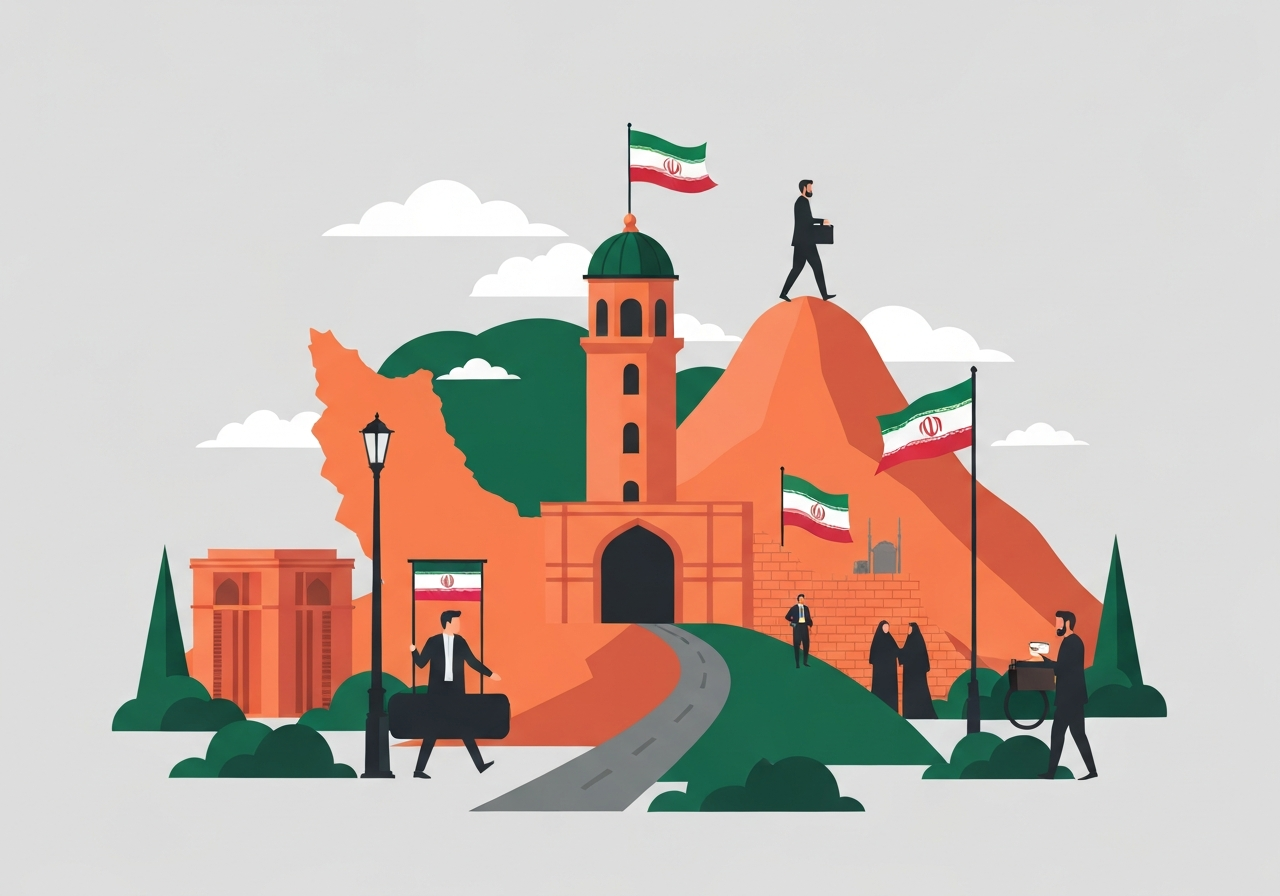
On Wednesday Iran observed the 47th anniversary of the 1979 Islamic Revolution with a sharply divided public scene: state-organized rallies and displays of support for the theocracy contrasted with widespread anger over a bloody government crackdown on nationwide protests. Tehran’s leaders used ceremonies to project unity and to signal willingness to negotiate on nuclear issues, even as international actors — including U.S. President Donald Trump — increased military pressure in the region. The commemorations featured patriotic pageantry and anti-American theatrics, while voices inside the country openly denounced the regime’s repression. The mixed images underscored both the regime’s continuing reach and the depth of domestic unrest.
Key takeaways
- Iran marked the 47th anniversary of the 1979 Islamic Revolution with nationwide state-organized rallies and public ceremonies on Wednesday.
- President Masoud Pezeshkian spoke at Azadi Square, saying Iran does not seek nuclear weapons and is “ready for any kind of verification,” even as the IAEA has been unable to inspect Iran’s nuclear stockpile for months.
- Authorities displayed missiles, debris described as from downed Israeli drones and mock coffins draped in U.S. flags during ceremonies; chants such as “Death to America!” were broadcast on state television.
- Activists say the government’s crackdown that intensified on Jan. 8 killed thousands and led to tens of thousands of detentions; officials acknowledged sorrow but sought to avoid confrontation with the public.
- The U.S. positioned the aircraft carrier USS Abraham Lincoln, shot down a drone near the ship, and helped a U.S.-flagged vessel in the Strait of Hormuz; President Trump said a second carrier “might be going.”
- Senior Iranian security official Ali Larijani traveled from Oman to Qatar amid mediation efforts; Qatar’s emir spoke with President Trump about regional de-escalation.
- Iran’s population is about 85 million, with roughly 2.5 million government employees (about one-fifth based in Tehran), factors that shape turnout and the character of state rallies.
Background
The 1979 Islamic Revolution transformed Iran’s political system and has been commemorated annually as the central founding event of the Islamic Republic. Over the decades the regime has cultivated symbolic rituals and institutional power centers — including the office of the Supreme Leader — to maintain legitimacy. Today Ayatollah Ali Khamenei, aged 86, remains the symbolic head of that system, and state ceremonies often emphasize continuity and resistance to foreign pressure.
Since late last year and accelerating into January, Iran has faced sustained public demonstrations driven by economic grievances and political demands for greater freedoms. Security forces responded with force beginning in earnest on Jan. 8; activists report thousands killed and tens of thousands detained. That crackdown and its human cost have become central domestic and international flashpoints, complicating both internal governance and diplomacy.
At the same time, Iran’s nuclear program and the prospect of renewed negotiations with the United States continue to shape external pressure. The 2015 nuclear agreement remains the benchmark for many diplomats, but the U.S. withdrawal under former President Donald Trump and subsequent military escalations have left deep mistrust on all sides. Regional actors and mediators such as Oman and Qatar have been active behind the scenes to prevent a wider confrontation.
Main event
State television broadcast images of hundreds of thousands at pro-government rallies across major cities, with government-organized processions, fireworks and public displays of military hardware. Officials showed fragments they described as parts of downed Israeli drones and staged mock coffins draped in U.S. flags; one coffin bore the photo of U.S. Central Command chief Adm. Brad Cooper. Such theatrics aimed to underline the regime’s narrative of external threat and internal resilience.
At Azadi Square in Tehran, President Masoud Pezeshkian addressed the crowd and reiterated that Iran was not seeking nuclear weapons and expressed openness to verification measures. He also criticized Western statements and warned that a high wall of mistrust hampered progress. Pezeshkian acknowledged the sorrow caused by the recent crackdown and pledged assistance to those harmed, while insisting the government did not seek confrontation with its people.
Concurrently, visible signs of dissent persisted. The night before official events, witnesses reported shouts of “Death to the dictator!” from residences in Tehran, and some long-time participants said they could not attend rallies after the streets were “bloodied” by the suppression. Attendance at pro-government events continued to include government employees and security force supporters, complicating assessments of genuine popular backing.
Diplomatically, senior security official Ali Larijani moved from Oman to Qatar on Wednesday as mediators pursued talks to salvage emerging nuclear negotiations. Qatar’s state agency said its emir spoke with President Trump about efforts to de-escalate the region. Meanwhile, the International Atomic Energy Agency has reported it has been unable to verify aspects of Iran’s nuclear activities for months, adding urgency to diplomatic discussions.
On the military front, the U.S. positioned the carrier USS Abraham Lincoln, accompanying ships and aircraft in the region. U.S. forces said they shot down a drone that approached the Lincoln and intervened to assist a U.S.-flagged vessel that Iranian forces attempted to impede in the Strait of Hormuz. President Trump told Axios he was considering sending a second carrier group to the Middle East, a move that regional capitals view as both a deterrent and a risk-raising signal.
Analysis & implications
The anniversary showcased the regime’s attempt to project control and resilience while exposing deep fissures at home. State-organized spectacles can buoy supporters and reassure security services, but they are a poor substitute for addressing grievances that sparked the protests. The government’s admission of sorrow over the crackdown suggests political sensitivity, yet accountability and reconciliation remain uncertain.
Internationally, the juxtaposition of diplomatic outreach and military posturing complicates prospects for a negotiated settlement on the nuclear file. Iran’s willingness to engage publicly with verification language contrasts with IAEA access problems and persistent mutual distrust. Mediators such as Oman and Qatar are central to any progress, but their leverage is limited if hard-line factions or external actors escalate pressure.
U.S. naval deployments are designed to deter further escalation, protect shipping lanes and signal resolve, but they also risk miscalculation in a crowded and tense theater. A second carrier would raise the stakes and could prompt reciprocal measures by Tehran or its regional partners. Policymakers must weigh whether heightened military signals advance negotiation leverage or consolidate hard-line positions on both sides.
Domestically, the crackdown’s human toll could erode the regime’s long-term legitimacy if grievances are not addressed. Large state turnouts can reflect administrative mobilization rather than voluntary consent, and the presence of 2.5 million government employees — roughly 500,000 in Tehran — means that attendance figures should be interpreted in context. The coming weeks will test whether political openings for dialogue can be sustained amid security pressures.
Comparison & data
| Indicator | 1979 Revolution | 2026 Commemoration / Context |
|---|---|---|
| Anniversary | 1979 founding event | 47th anniversary observed on Wednesday |
| Population | — | About 85 million |
| Government employees | — | ~2.5 million total; ~20% in Tehran |
| Crackdown (activists’ figures) | — | Begun in earnest Jan. 8; activists report thousands killed, tens of thousands detained |
| IAEA inspections | Variable since 2015 | Unable to verify Iran’s stockpile for months |
The table places the 2026 commemoration in demographic and political context rather than offering a strict numerical comparison with 1979. The most salient quantitative items for current policy are population scale, public-sector employment (which affects turnout), and activist estimates of casualties and detentions from the Jan. 8 crackdown. Those figures frame both domestic legitimacy questions and international diplomatic calculations.
Reactions & quotes
Officials and analysts reacted with a mix of public reassurance and guarded warnings. The president’s remarks emphasized openness to verification while faulting external mistrust; diplomats and mediators stressed the fragility of negotiations.
“We are not seeking nuclear weapons … and are ready for any kind of verification,”
President Masoud Pezeshkian (remarks at Azadi Square)
Pezehskian framed Iran’s stance as conciliatory on paper while simultaneously lamenting past Western actions that, he said, have undermined trust.
“We have an armada that is heading there and another one might be going,”
President Donald Trump (to Axios)
Trump’s public comment signaled possible reinforcement of U.S. naval forces in the Middle East, a mix of deterrence messaging and pressure tied to diplomacy.
“Last time we negotiated, last June we were in the middle of negotiation then they decided to attack us … We need to make sure that that scenario is not repeated,”
Foreign Minister Abbas Araghchi (to RT)
Araghchi cited previous hostilities as a source of Iranian mistrust and underlined Tehran’s demand for assurances that negotiations will not be followed by military strikes.
Unconfirmed
- Precise casualty and detention totals from the Jan. 8 crackdown remain contested and independently verifiable figures are lacking; activist counts have not been fully corroborated by independent monitors.
- Claims about specific downed Israeli drones and the provenance of displayed debris have been asserted by Iranian authorities but lack independent verification in open sources.
- Which additional U.S. carrier (if any) might be dispatched remains unclear and unannounced by U.S. defense authorities.
Bottom line
The 47th-anniversary events presented a deliberate image of state strength while exposing continuing domestic fissures and international tensions. Ceremonial displays and official rhetoric aim to reassure both the regime’s base and security establishments, yet they do little to resolve the root grievances that sparked nationwide protests.
Diplomacy and deterrence are now operating in tandem: mediators are pushing to salvage nuclear talks even as the United States increases its naval presence. The immediate future depends on whether talks can rebuild sufficient trust to curb the risk of miscalculation, and whether Iranian authorities can address domestic demands without further eroding legitimacy.
Sources
- Associated Press (news agency) — original reportage on the anniversary, speeches and domestic events.
- International Atomic Energy Agency (IAEA) (international organization) — source for verification and inspection status related to Iran’s nuclear program.
- Axios (news website) — cited for President Trump’s comments about potential carrier movements.
- Qatar News Agency (state media) — reported the emir’s conversation with President Trump and Qatar’s mediation role.
- U.S. Naval Institute News (defense press) — referenced for reports about carrier movements and deployments.