
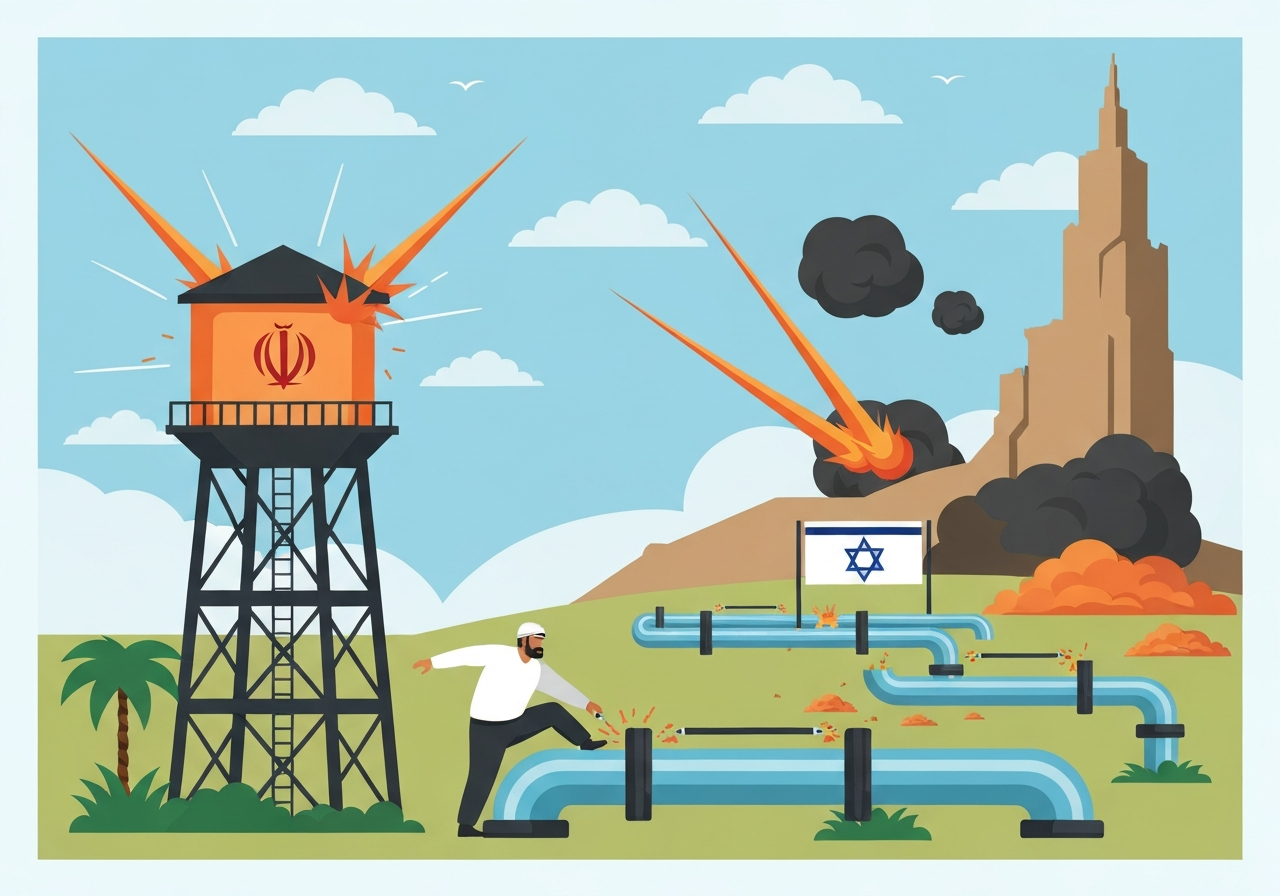
Lead: On March 23, 2026, Iran warned it would strike electrical plants across the Middle East and mine Persian Gulf waters if the United States follows through on threats to bomb Iranian power stations, while Israel said it launched a wide-scale set of strikes on infrastructure in Tehran. The warnings put desalination-linked water supplies and regional electricity grids at risk, particularly in Gulf Arab states that co-locate power and water facilities. The exchange of threats follows recent missile attacks from Iran toward Israel and mounting U.S. and Israeli operations targeting Iranian capabilities. The immediate result has been spikes in energy prices and heightened regional alarm.
- Iran’s Defense Council said it would mine ‘all access routes’ in the Persian Gulf if invaded, a move that could disrupt shipping of one-fifth of the world’s oil.
- The Islamic Revolutionary Guard Corps stated Iran would hit power plants supplying electricity to American bases and infrastructure with U.S. economic ties if U.S. strikes hit Iranian stations.
- The semiofficial Fars and Mizan agencies published lists naming desalination and power facilities, including the UAE’s Barakah nuclear plant, as potentially affected.
- Brent crude traded near $112 a barrel, about 55% higher since Feb. 28, after the war between Israel, the U.S. and Iran intensified.
- Iran’s health ministry reported more than 1,500 Iranian deaths in the conflict; Israeli strikes killed at least 15 people in Israel; Lebanese authorities attribute over 1,000 deaths and roughly 1 million displaced to strikes targeting Hezbollah.
- U.S. Central Command said the campaign is focused on infrastructure and manufacturing to degrade Iran’s ability to rebuild its weapons and missile platforms.
- Concerns persist that mining the Gulf or attacks on desalination plants would create acute water shortages across Gulf states that rely on desalination for drinking water.
Background
The current escalation follows attacks that began on Feb. 28, 2026, when U.S. and Israeli forces struck Iranian targets, marking a broadening of direct confrontation. Iran has responded with missile and drone strikes, including an assault targeting Dimona in Israel, and officials have repeatedly warned of retaliatory steps. Gulf Arab states depend heavily on desalination plants often co-located with power infrastructure, so strikes on electricity networks can swiftly cascade into potable water shortages. The Strait of Hormuz has been intermittently closed or constrained by Iran’s actions, complicating global energy flows and prompting international concern about maritime security.
Regional actors hold differing stakes: the United States and Israel aim to degrade Iran’s long-term weapons and drone capabilities; Iran seeks to deter further strikes and to impose costs by threatening economic and logistical chokepoints. Domestic political pressures in Tehran and Washington add urgency to leaders’ rhetoric, narrowing room for de-escalation. International bodies, including the International Energy Agency and United Nations officials, have warned of far-reaching economic and humanitarian fallout if the conflict intensifies.
Main Event
On Monday, March 23, Iran’s Defense Council issued a statement warning that any attempt to target Iran’s coasts or islands would prompt mining of the Persian Gulf and adjacent access routes. The council framed the move as following established military practice and intended to deny hostile forces maritime access. Semiofficial Iranian outlets subsequently published lists of critical sites, including desalination and power facilities in Gulf states, and named the UAE’s Barakah nuclear power site among locations that could be affected.
Israel announced it had ‘begun a wide-scale wave of strikes’ on infrastructure targets in Tehran, though initial public statements offered few details about specific sites hit or damage assessed. Over the weekend Iran launched missiles toward Dimona in Israel; Israeli officials said the Dimona site suffered no apparent damage. Meanwhile, Iranian Revolutionary Guard statements signaled that Tehran would strike power plants serving American bases and economic facilities with U.S. ties if U.S. forces attacked Iranian electrical infrastructure.
U.S. Central Command chief Adm. Brad Cooper told a Farsi-language outlet that Iran was launching missiles and drones from populated areas and urged civilians to shelter, saying there would be a clear signal before it was safe to come out. U.S. officials have discussed the possible deployment of Marines to secure islands or locations to reopen the Strait of Hormuz to commercial shipping, a mission Washington says is essential to stabilize global energy markets.
Analysis & Implications
Attacks on electricity networks would have disproportionate humanitarian consequences in the Gulf, where desalination plants convert seawater into the majority of drinking water. Targeting power infrastructure risks creating simultaneous crises of drinking water, sanitation and hospital operations, raising the stakes beyond military objectives and into civilian survival. Such outcomes would likely trigger urgent international humanitarian responses and could prompt third-party states to seek emergency mediation or sanctions to halt damage to essential services.
Economically, an extended disruption to shipping through the Strait of Hormuz or to Gulf desalination and power systems would exacerbate already elevated energy prices, strain supply chains and deepen inflationary pressures worldwide, particularly in import-dependent developing countries. The International Energy Agency has warned that the current crisis has already had an outsized impact on markets compared with major prior shocks; sustained disruptions could precipitate longer-term shifts in trade routes and energy sourcing.
Militarily, mining the Persian Gulf would complicate naval operations for all states and increase risk to commercial shipping, possibly prompting multinational naval escorts or interdiction operations. Such a shift raises the risk of miscalculation: mines and countermeasures can persist long after active hostilities and produce collateral casualties and environmental damage. Diplomatically, the publication of specific civilian infrastructure as potential targets narrows options for negotiation and increases pressure on neutral Gulf states to pick sides or accelerate defensive preparations.
Comparison & Data
| Metric | Value / Change |
|---|---|
| Brent crude price | ~$112 per barrel (≈ +55% since Feb. 28) |
| Reported Iranian fatalities | >1,500 (health ministry) |
| Reported fatalities in Israel from Iranian strikes | 15 |
| Reported Lebanese fatalities (strikes on militia) | >1,000; ~1,000,000 displaced |
The table summarizes the immediate economic and human toll as reported by government and international sources. Energy prices have reacted quickly to supply risks, while reported casualty and displacement figures indicate severe humanitarian consequences in multiple theatres. These metrics underscore both the regional reach of the confrontation and the speed with which civilian life and markets are affected.
Reactions & Quotes
U.S. Central Command and U.S. military spokespeople emphasized an operational focus on degrading Iran’s weapons production and delivery capabilities, while cautioning civilians in affected areas. The public messaging sought to combine deterrence with limited warnings to reduce civilian harm.
‘Do not doubt that we will do this.’
Islamic Revolutionary Guard Corps statement (semiofficial)
This brief IRGC statement was issued to underscore Tehran’s commitment to strike power infrastructure if the U.S. attacks Iranian power stations; state broadcasters aired the message to domestic audiences.
‘You need to stay inside for right now; there will be a clear signal at some point.’
Adm. Brad Cooper, U.S. Central Command (official)
Adm. Cooper’s comments, made in an interview with a Farsi-language outlet, were framed as both a warning to protect civilians and an operational note about potential forthcoming strikes against infrastructure and manufacturing targets linked to Iran’s military capabilities.
‘No country will be immune to the effects of this crisis if it continues in this direction.’
Fatih Birol, International Energy Agency (international agency)
IEA remarks highlighted the global economic exposure to disruptions in Gulf energy flows and the risk that sustained conflict will spread economic harm widely, particularly to energy-importing developing nations.
Unconfirmed
- Specific damage to the named Gulf facilities (including Barakah) has not been independently verified by neutral observers as of this report.
- Details about the precise targets and damage from Israel’s ‘wide-scale wave of strikes’ in Tehran remain limited and unconfirmed by multiple independent sources.
- Claims that U.S. Marines will imminently land on specific Iranian islands or territory have been discussed publicly but are not confirmed as executed deployments.
Bottom Line
The exchange of threats over power stations and maritime mining elevates the crisis from a military confrontation to one with direct humanitarian and economic consequences across the Middle East and beyond. Targeting electricity and desalination infrastructure would rapidly degrade civilian life and could provoke international intervention to protect shipping, restore services and prevent wider humanitarian collapse.
Short-term indicators to watch include independent confirmation of damage to named facilities, any new mining activity in the Persian Gulf, shifts in naval deployments around the Strait of Hormuz, and oil-price movements. Diplomatic and multilateral pressure aimed at de-escalation will be essential to prevent tactical operations from cascading into a protracted regional crisis with lasting human and economic costs.
Sources
- Associated Press — (news organization: original reporting)
- International Energy Agency — (international agency: energy market analysis)
- United Nations — (international organization: humanitarian and policy statements)
- Fars News Agency — (semiofficial Iranian outlet: regional reporting)
- U.S. Central Command — (official: military statements)