
Lead
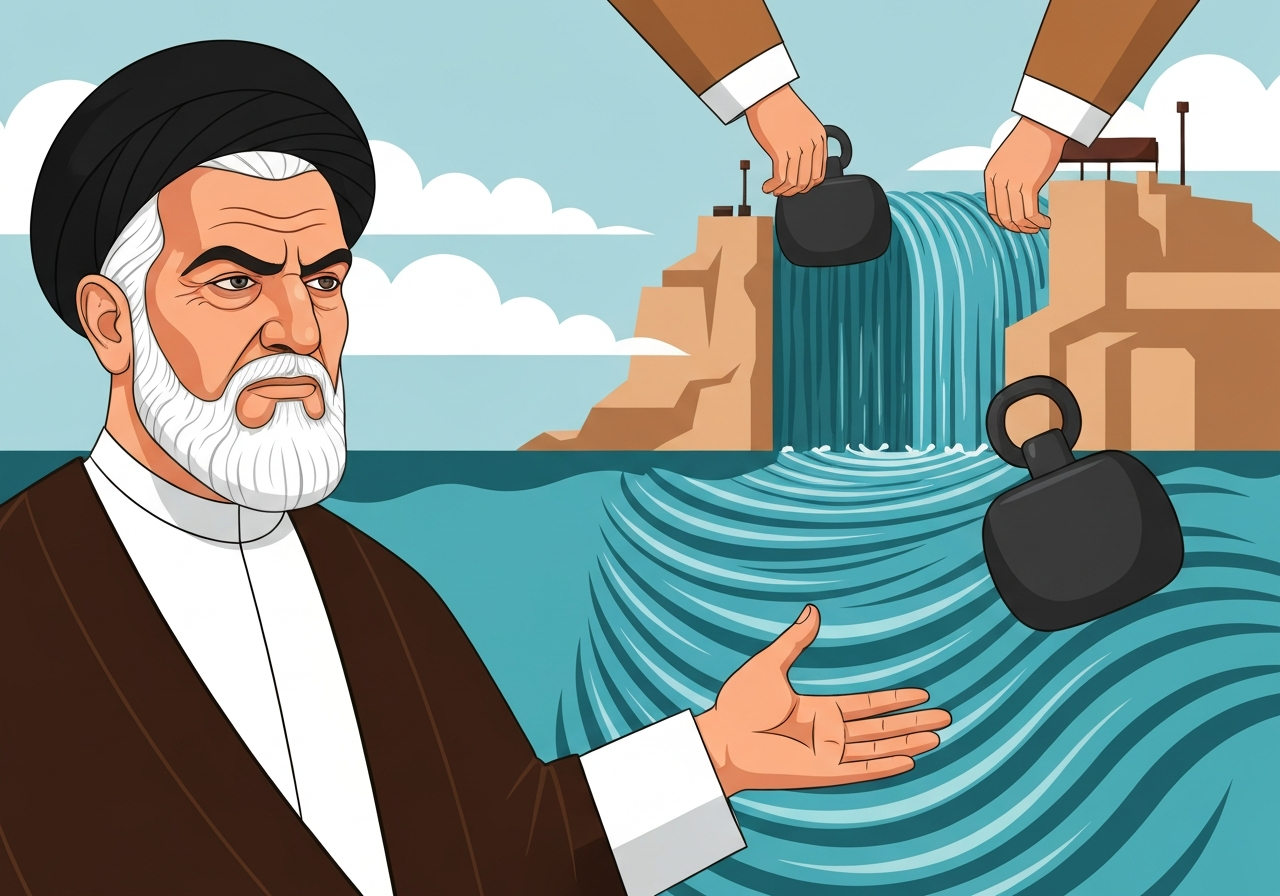
On Thursday in state media, Iran’s Supreme Leader Ayatollah Mojtaba Khamenei said Tehran should use the option of closing the Strait of Hormuz as leverage and vowed continued attacks on Gulf neighbors. The statement, his first since his appointment, was read on television; he did not appear on camera. An Israeli assessment cited in reporting said Khamenei may have been wounded in the opening salvo of the war that began Feb. 28. The developments coincided with an escalation that pushed Brent crude above $100 a barrel and widened displacement across the region.
Key Takeaways
- Ayatollah Mojtaba Khamenei publicly urged using a Strait of Hormuz closure as bargaining power and pledged ongoing strikes; his remarks were delivered on state television and he did not appear in person.
- Brent crude rose more than 9% on Thursday to above $100 a barrel, roughly 38% higher than at the war’s outset on Feb. 28, with prices briefly near $120 in recent days.
- The U.N. refugee agency said up to 3.2 million people in Iran have been displaced, and at least 759,000 are internally displaced in Lebanon.
- Hezbollah fired about 200 rockets from Lebanon into northern Israel during the period of heightened exchanges; Israel responded with strikes in Lebanon and Iran.
- Multiple attacks damaged regional infrastructure: a container ship was hit off Dubai, a major fire occurred on Muharraq Island (Bahrain), and drones struck in Kuwait and Saudi Arabia, causing injuries and airport damage.
- Iranian officials warned that attempts to seize Iranian islands or oil infrastructure — including Kharg Island — would prompt severe retaliation.
- At least 11 people were reported killed in strikes in Lebanon, and reports cite more than 20 fatalities from strikes across Lebanon and Iran connected to recent operations.
- Uncertainty remains over responsibility for several drone and checkpoint attacks inside Iran and over the accuracy of some battlefield injury reports.
Background
The current confrontation intensified after American and Israeli strikes that, according to reporting, contributed to the outbreak of full-scale war on Feb. 28. Tehran and its regional partners, including Hezbollah, have since exchanged attacks with Israel and carried out strikes against Gulf Arab states and maritime targets. The Strait of Hormuz — a narrow chokepoint through which about one-fifth of global oil shipments transit — has been central to Iranian strategy because closure or interference can cause immediate global market disruption.
Iranian leadership changes and wartime messaging have been closely monitored by external intelligence services. State television read Khamenei’s remarks without showing him; Israeli assessments reported he may have been wounded in the conflict’s opening phase. Regional capitals — from Abu Dhabi to Riyadh — have activated air defenses and taken precautions after multiple strikes on civilian infrastructure and transport nodes.
Main Event
On Thursday, state television aired Khamenei’s remarks that Tehran should exploit the potential to close the Strait of Hormuz to extract concessions and reparations. He framed the step as leverage to obtain compensation from what he labeled Iran’s enemy, referring directly to the United States, and said that if compensation is denied, Iran would seize or destroy equivalent assets.
The broadcast marked the leader’s first public statement since his appointment; a news anchor read the text while Khamenei remained off camera. Israeli officials and analysts cited in reporting have suggested he sustained wounds during the initial strikes that opened the war, though Iranian authorities have not publicly confirmed such injuries.
Meanwhile, Iran continued strikes on shipping and energy targets in the Persian Gulf. The United Kingdom Maritime Trade Operations center reported a container ship was struck off Dubai, causing a small fire but no crew casualties. Authorities in Bahrain reported a major blaze on Muharraq Island, and Kuwaiti officials said a drone struck a residential building and damaged airport infrastructure.
On the Lebanese front, Hezbollah launched about 200 rockets into northern and interior Israel, prompting air-raid alerts and shelters to be used overnight. Israel responded with strikes across Lebanon and launched additional attacks on targets in Iran, including infrastructure it described as linked to military programs.
Analysis & Implications
Iran’s explicit invocation of the Strait of Hormuz is an escalation in strategic messaging. Closing the strait — or creating persistent disruption — would immediately reduce global seaborne oil flows and spike energy-market volatility. Markets already priced in risk: Brent climbed past $100 a barrel and has been volatile as traders reacted to attacks on terminals, ports and shipping lanes.
Economically, sustained disruption to Gulf exports could force consuming countries to tap strategic reserves, accelerate supply diversification, and drive higher fuel costs for consumers and businesses worldwide. Middle Eastern producers not directly involved may also face collateral economic effects from insurance and rerouting costs, while shipping lines may divert around the Cape of Good Hope, increasing transit time and cost.
Politically, Tehran’s posture signals it seeks to impose international costs on the United States and Israel to extract security guarantees and reparations — demands echoed by Iran’s president in public statements. That stance lowers the chance that a narrow ceasefire alone will end hostilities unless broader security assurances or mediated settlements are negotiated and verified.
Militarily, the risk of miscalculation grows as state and nonstate actors (including Hezbollah) operate along shared borders and maritime corridors. Attacks on civilian infrastructure, ports and terminals raise legal and humanitarian concerns that could draw wider international condemnation and complicate post-conflict recovery.
Comparison & Data
| Metric | Recent figure | Context |
|---|---|---|
| Brent crude price | > $100 / +9% (day) | About 38% higher than Feb. 28; briefly near $120 in recent days |
| Displaced in Iran | Up to 3.2 million | UN agency estimate of internal displacement |
| Internally displaced in Lebanon | At least 759,000 | UN agency reporting |
| Rockets from Lebanon | ~200 | Hezbollah salvo into northern Israel |
| Reported fatalities (strikes) | More than 20 | Combined reports from Lebanon and Iran |
The table summarizes core numeric indicators tracked by governments, international agencies and reporting outlets. Price swings reflect instantaneous market reactions to new attacks and statements; displacement figures represent aggregated estimates that may change as access improves.
Reactions & Quotes
“The noise was extraordinary, it was really scary.”
Naama Porat, resident of Klil, Israel
Porat described sheltering with her child after the rocket exchanges; residents in northern Israel reported widespread alarms and interceptions overnight, though initial reports indicated no serious injuries in many communities.
“If Lebanon’s government does not prevent Hezbollah from attacking, we will take the territory and do it ourselves.”
Israel Katz, Israeli defense minister
Katz’s warning followed large-scale rocket fire from Lebanon and accompanied broader Israeli statements signaling readiness to expand operations to degrade Hezbollah’s capabilities if necessary.
“We will obtain compensation — or take from their assets or destroy them to the same extent.”
Ayatollah Mojtaba Khamenei (state television statement)
Khamenei framed Iran’s demands as reparations tied to the human and material cost of the conflict and outlined a tiered approach if diplomatic redress is refused.
Unconfirmed
- Reports that Khamenei was wounded early in the war come from an Israeli assessment and have not been independently confirmed by Iranian authorities.
- Attributions for several drone strikes and checkpoint attacks inside Iran remain unclear; investigations and official claims are still ongoing.
- Speculation that the U.S. may target Kharg Island has circulated in reporting; no public confirmation of such an operation has been issued by U.S. officials.
Bottom Line
Iran’s call to use the Strait of Hormuz as leverage signals a strategic shift from isolated strikes to threats aimed at global economic pressure. Markets and regional governments will watch shipping lanes, oil terminals and insurance flows closely; any prolonged disruption would reverberate through energy markets and consumer prices worldwide.
Diplomatic channels and third-party mediators may gain urgency as sanctions, asset seizures and retaliatory strikes raise the costs of continued escalation. Key indicators to monitor in the coming days include confirmed damage to major oil terminals, verified casualty counts, and whether external powers open direct talks to defuse the risk of wider regional conflagration.
Sources
- Associated Press — international news reporting
- UN Refugee Agency (UNHCR) — humanitarian agency reporting on displacement
- United Kingdom Maritime Trade Operations (UKMTO) — maritime incident alerts
- Lebanese Health Ministry — official casualty and health reports