
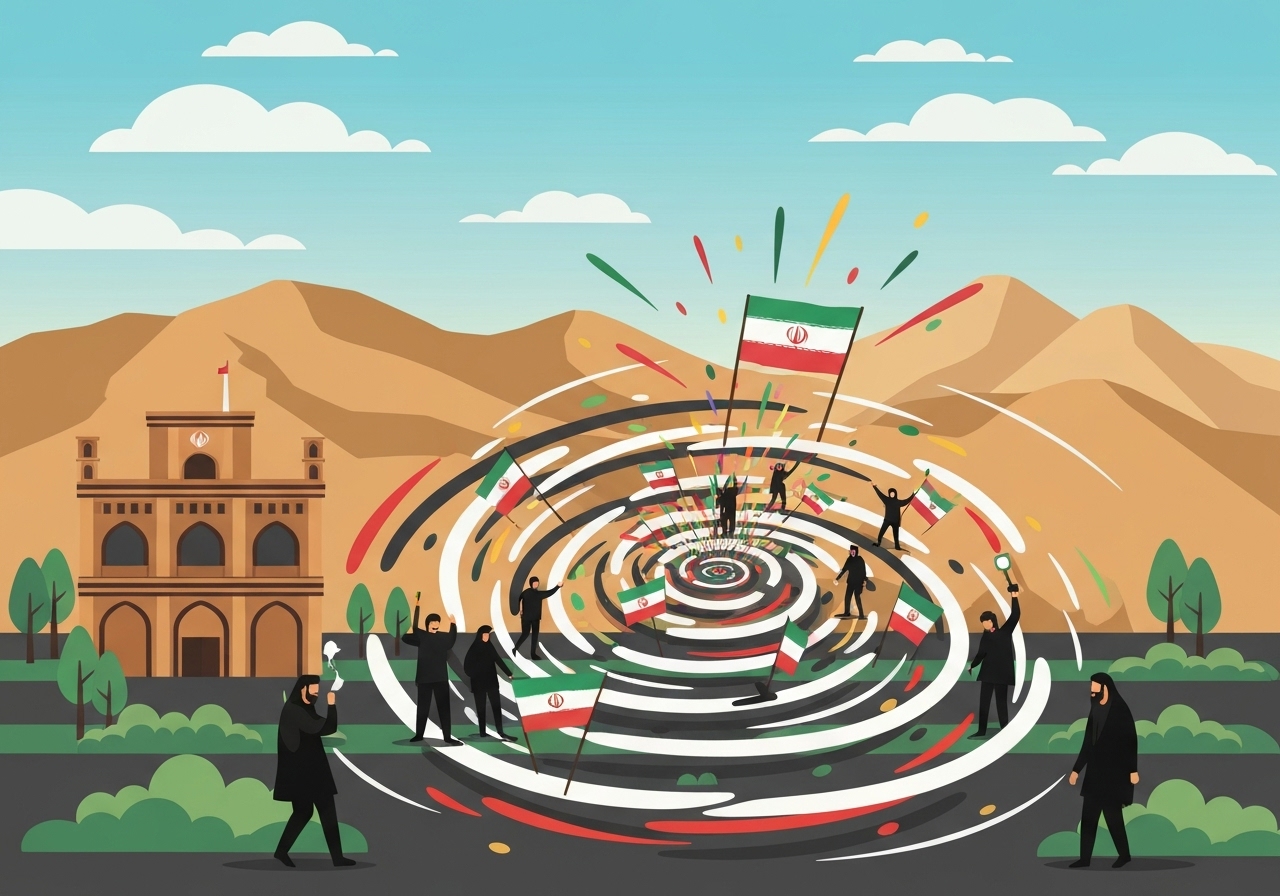
Lead: Hundreds of people gathered across Iran on the 12th night of unrest as large anti-government demonstrations spread to cities including Tehran and Kish Island on the evening of the latest protests. Internet monitoring group NetBlocks reported a sudden, near-nationwide connectivity collapse that hindered communications at a critical moment. Videos verified by regional reporters show crowds chanting in support of the pre-1979 monarchy and opposing Supreme Leader Ayatollah Ali Khamenei. The situation prompted an international response, including renewed threats from US President Donald Trump if demonstrators are harmed.
Key Takeaways
- NetBlocks recorded a sharp drop in connectivity on the evening of the protests and described the event as a “nationwide blackout.”
- Demonstrations reached multiple provinces: verified footage came from Tehran, Mazandaran, Golestan, Ardabil and Kish Island.
- Protesters were filmed chanting pro‑Pahlavi slogans and calling for change; Reza Pahlavi had urged people to take to the streets that day.
- US President Donald Trump warned the Iranian government it would “get hit very hard” if security forces kill protesters, repeating comments made earlier in the week.
- This unrest is part of a broader wave tied to an economic downturn and deteriorating living standards; the events marked the movement’s twelfth consecutive night of protests.
- Real‑time verification is constrained by the communications blackout, complicating independent confirmation of arrests, injuries or fatalities.
Background
The current wave of protests began amid a prolonged economic crisis and mounting public frustration over living costs and state governance. Demonstrations have widened geographically from traditional urban centers to cities and provinces that previously saw limited unrest, reflecting deeper social grievances. Iran has a recent history of intermittent large protests followed by state security crackdowns and intermittent restrictions on digital communications. NetBlocks and other monitoring groups have previously reported connectivity reductions in Iran during periods of heightened political tension, making internet controls a familiar state tool.
Opposition figures, including Reza Pahlavi—the son of Iran’s late Shah—called on citizens to protest, and several verified videos show chants favoring the pre‑1979 Pahlavi monarchy alongside slogans against Ayatollah Ali Khamenei. Security forces have sometimes responded to past demonstrations with force; on earlier nights of this wave there were reports of clashes between protesters and security personnel. International actors, including the United States, have publicly warned Tehran about potential escalation if demonstrators are harmed.
Main Event
On the evening referenced in live reporting, hundreds of people gathered on Kish Island—an island resort in Hormozgan Province—where video verified by regional reporters shows demonstrators chanting and clapping in the streets. Simultaneous confirmed footage from Tehran, the northern provinces of Mazandaran and Golestan, and Ardabil in the northwest indicated demonstrations were geographically widespread that night. The movement’s symbols and chants included calls for the return of a monarchy and direct criticisms of the Supreme Leader.
NetBlocks reported a rapid, large‑scale fall in internet connectivity across Iran during the period when crowds were assembling, describing the pattern as a nation‑scale blackout that followed earlier, targeted censorship measures. Local correspondents and open-source analysts found it increasingly difficult to obtain live updates or independently corroborate reports because of the communication disruption. Authorities did not immediately provide a public, detailed explanation for the connectivity loss.
In Washington, President Trump reiterated an earlier warning, telling a radio audience that he had told Iran it would “get hit very hard” if it killed protesters—comments that he framed as intended to deter lethal repression. International media agencies relayed the president’s remarks and quotes were published in several outlets the same day. At the same time, humanitarian organizations and rights monitors expressed concern about the blackout’s impact on the public’s ability to seek help and report abuses.
Analysis & Implications
An abrupt, broad communications blackout during large‑scale protests has immediate tactical effects: it restricts coordination among demonstrators, inhibits real‑time reporting, and complicates independent verification of human rights abuses. Historically, similar blackouts have often correlated with periods of intense state response; however, causation can be complex, and states sometimes cite security or misinformation concerns when implementing shutdowns. The timing of the outage—concurrent with verified footage of protests in multiple provinces—amplifies concerns among rights groups and foreign governments.
Economically, recurrent unrest and opaque digital restrictions can deter foreign investment and exacerbate the very economic pressures that helped trigger the demonstrations. Persistent instability could deepen currency pressures and supply‑chain disruptions, especially if the unrest spreads to commercial hubs. Domestically, protests that broaden beyond traditional activist networks to include ordinary residents signal a widening base of grievance, which may harden state responses and increase the risk of violence.
Diplomatically, loud public warnings from the United States raise the political stakes. Such statements can serve both as deterrence and as provocation, depending on perception in Tehran and among regional actors. Even if Washington’s threats remain rhetorical, they shape international media coverage and could influence how other states calibrate responses, humanitarian access, and sanctions policy. The uncertainty created by the blackout will constrain outside actors’ ability to assess on‑the‑ground needs and verify allegations.
Comparison & Data
| Metric | This Event | Past Notable Outages |
|---|---|---|
| Reported nights of protests | 12th night | Intermittent multi‑night waves in 2017–2019 |
| Geographic spread | Tehran, Mazandaran, Golestan, Ardabil, Kish Island | Historically focused on major cities, now broader |
| Connectivity status | NetBlocks: near‑nationwide blackout | Previous partial or regional shutdowns reported |
The table above places the current outage in recent context: outages have occurred during previous protest waves but the reported near‑nationwide scale and the number of provinces with verified demonstrations suggest this moment is among the broader disruptions in recent years. Data limitations persist because independent measurements rely on remote sensing tools and voluntary reporting; those tools themselves can be affected when networks degrade.
Reactions & Quotes
“Live metrics show Iran is now in the midst of a nationwide internet blackout; the incident follows a series of escalating digital censorship measures targeting protests across the country.”
NetBlocks (network monitoring group)
NetBlocks framed the outage in the context of earlier censorship steps and warned about the effect on public communications. The group’s live metrics are widely used by journalists and researchers to detect large‑scale connectivity disruptions.
“If they start killing people, which they tend to do during their riots… we are going to hit them very hard.”
Donald Trump (US President)
President Trump repeated a formulation he offered earlier in the week, saying his administrations communicates warnings privately and publicly. His remarks were reported by multiple international news agencies and have been interpreted by some governments as rhetorical deterrence while others viewed them as escalatory.
“We have verified videos from Tehran, northern Mazandaran and Golestan provinces, north‑western Ardabil Province, and Kish Island.”
BBC Persian (regional reporters)
BBC Persian’s verification work underpinned several location‑specific claims in live reporting that evening, supplying corroborated visual evidence of crowds and slogans in multiple provinces.
Unconfirmed
- Precise casualty and arrest figures for the night of the blackout remain unverified by independent observers.
- Attribution of the connectivity outage to a deliberate government directive has not been officially confirmed by Iranian authorities.
- Reports of planned wider security operations in response to the protests have not been corroborated by independent sources.
Bottom Line
The convergence of broad protests and a near‑nationwide internet blackout represents a significant escalation in both civic mobilization and state capacity to restrict communications. The blackout reduced transparency at a moment when independent verification was most necessary, complicating assessments of any emerging humanitarian needs or rights violations.
International warnings and the geopolitical attention they attract increase external scrutiny but offer limited immediate remedies on the ground; the most consequential developments will depend on how Iranian authorities and protest movements adjust tactics in the coming days. Observers should watch for independent confirmations of casualties, official statements on network restrictions, and any further geographic spread of demonstrations.