
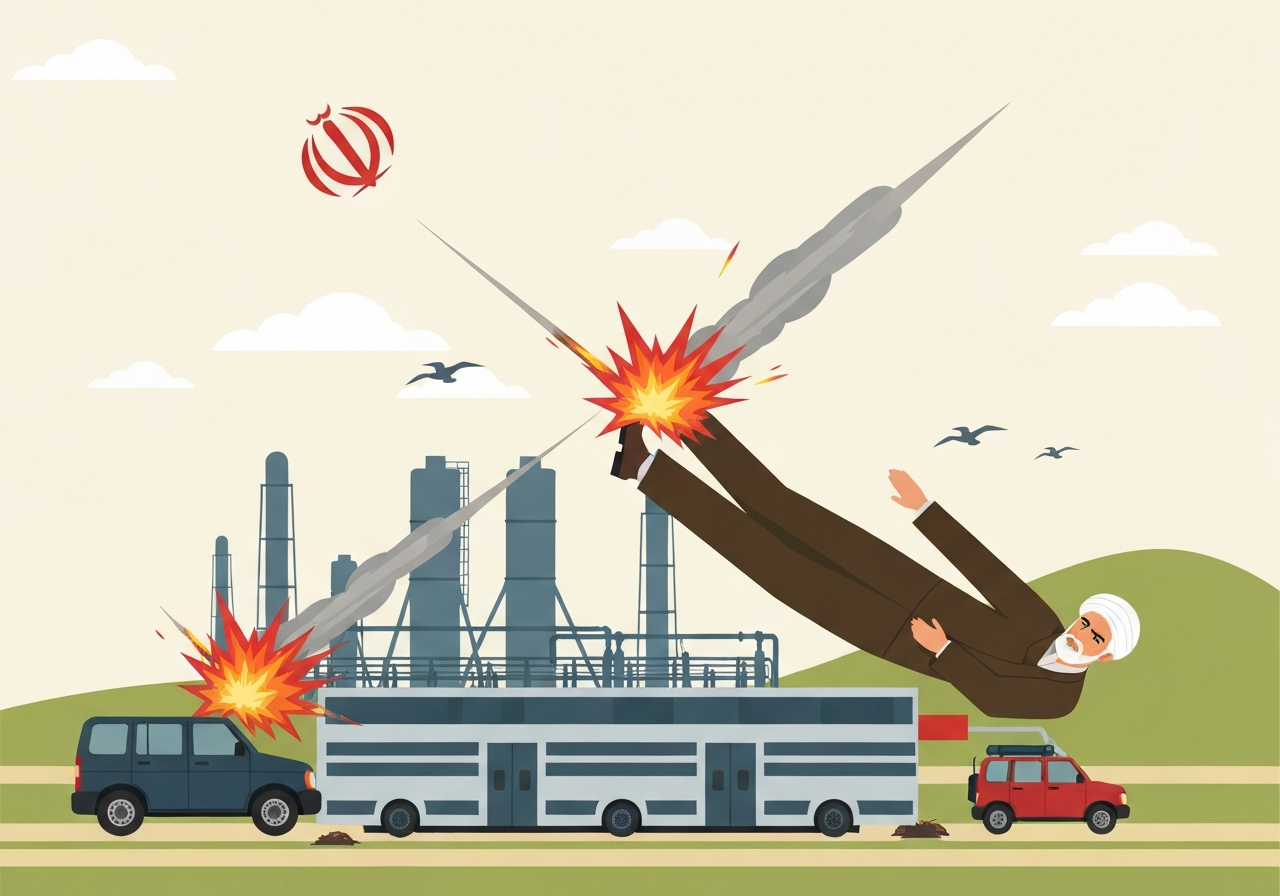
Lead: On March 18, 2026, the conflict between Iran and Israel intensified: Iran reported strikes on the South Pars offshore gas field while Israel said an airstrike killed Iran’s intelligence minister, Esmaeil Khatib. The attacks came after days of targeted strikes that have removed multiple senior Iranian officials and widened fighting into Lebanon, where Israeli strikes hit central Beirut. Missile and drone exchanges reached central Israel, with projectiles landing near Tel Aviv and Ramat Gan, compounding regional energy and humanitarian crises.
Key Takeaways
- Iran reported strikes on the South Pars gas complex on March 18, the largest blow to its energy infrastructure since the war began on Feb. 28, 2026, threatening domestic gas supplies.
- Israel said an overnight airstrike killed Esmaeil Khatib, Iran’s intelligence minister, marking another high-level casualty following the death of Ali Larijani and the Basij commander.
- Energy markets reacted: global Brent crude approached roughly $108–110 per barrel after reports of damage to South Pars-linked facilities in Asaluyeh.
- Casualties: Iran reported at least 1,348 civilian deaths since Feb. 28; Lebanon’s health authorities reported over 900 killed; Israeli authorities reported at least 14 civilian deaths; the Pentagon confirmed 13 U.S. service members killed.
- Hezbollah and other Lebanon-based actors launched rocket barrages into northern Israel; Israel escalated strikes into central Beirut, including strikes without prior warning that killed at least 10 in Zuqaq al-Blat and Basta.
- Iran’s IRGC announced strikes on Israel; Israeli emergency services reported fatalities and injuries from missile impacts in Ramat Gan and near Tel Aviv on March 18.
- The U.S. temporarily waived the Jones Act for 60 days and announced a planned release of 172 million barrels from strategic reserves to blunt oil-price shocks tied to the conflict.
Background
The current campaign began on Feb. 28, 2026, after a coordinated U.S.-Israeli offensive against Iranian facilities and leadership. In the weeks that followed, Israel and allied forces have carried out targeted strikes against senior Iranian officials and missile-production sites; Tehran and its proxies have responded with missile, drone, and rocket attacks across the region. That tit-for-tat pattern has expanded battle lines beyond Iran and Israel to Lebanon, the Gulf states, and maritime routes like the Strait of Hormuz.
South Pars is the world’s largest offshore gas field, shared between Iran and Qatar, and supplies a large portion of Iran’s domestic gas and feedstock for petrochemical plants. Damage to processing or pumping facilities in Asaluyeh could directly reduce household gas and industrial inputs inside Iran even if exports remain limited. Energy security in the Gulf is closely watched by global markets, so strikes that affect shared infrastructure carry outsized economic consequences.
Main Event
On March 18, Iranian state media and officials reported that airstrikes struck infrastructure linked to the South Pars field and related oil and petrochemical installations in Asaluyeh. Tehran described the attack as the most consequential hit to its energy sector since the war began and warned of worsening domestic shortages should repairs be delayed or further strikes follow.
Separately, the Israeli military announced an overnight strike that it attributed to the killing of Esmaeil Khatib, whom Israel described as overseeing espionage and covert operations targeting Israeli and U.S. interests. Iran’s president, Masoud Pezeshkian, publicly confirmed Khatib’s death and denounced the killing as an assassination, while funerals for other senior figures, including Ali Larijani and Gholamreza Soleimani, drew large public ceremonies in Tehran.
Israel also expanded its bombing campaign in Lebanon on March 18, striking central Beirut neighborhoods that residents had previously considered safer. Some strikes were reported without prior warning; Lebanese health authorities reported at least 10 killed and 27 wounded in attacks on the Zuqaq al-Blat and Basta districts. Israeli officials said the targets in Beirut included Hezbollah infrastructure and personnel.
In central Israel, authorities reported missile and rocket impacts near Tel Aviv and Ramat Gan after Iranian-linked launches. Israeli emergency services said at least two people were killed in Ramat Gan and several others lightly injured by shrapnel. Air defenses intercepted many projectiles, but some fragments and at least one missile reportedly breached defenses.
Analysis & Implications
Damage to South Pars would have more severe domestic than global consequences for Iran: most production from the field is consumed internally as feedstock and heat, so disruptions will accelerate shortages already felt in cities and industries. Even if global export flows are only marginally affected, markets react quickly to any credible risk to Persian Gulf infrastructure, which drives price spikes and investor anxiety.
The pattern of leaders being targeted represents a strategic Israeli aim to degrade Iran’s command and control and deter external operations; removing senior officials complicates Tehran’s operational coherence and could prompt decentralization of decision-making in Iran’s security apparatus. That, in turn, raises the risk of miscalculation or autonomous retaliatory acts by proxy forces across the region.
Escalation into Beirut’s central districts is a notable shift: by striking areas beyond Hezbollah’s traditional strongholds, Israel increases civilian risk and the potential for broader Lebanese destabilization. Large internal displacement—already reaching roughly one million people according to humanitarian groups—stresses Lebanon’s fragile public services and raises the prospect of prolonged displacement and regional refugee flows.
Comparison & Data
| Location | Reported Civilian Deaths (since Feb. 28) |
|---|---|
| Iran | 1,348 (Iran U.N. representative) |
| Lebanon | 900+ (Lebanese health officials) |
| Israel | 14 (Israeli authorities) |
| U.S. military | 13 (Pentagon) |
The table summarizes public tallies reported by March 18, 2026. Numbers reflect official statements and media tallies cited by primary reporting; on-the-ground verification remains difficult in active combat zones. Energy prices reacted quickly to the South Pars reports, with Brent crude moving toward the $108–110 range on March 18 after earlier rises linked to the conflict.
Reactions & Quotes
Officials and publics offered starkly different framings of the events on March 18. Below are representative statements and context.
“This cowardly assassination has left the country in mourning.”
Masoud Pezeshkian, President of Iran (public post)
Context: President Pezeshkian confirmed the death of Esmaeil Khatib and framed it as an unlawful killing that will intensify domestic anger and calls for retaliation.
“No one in Iran has immunity; everyone is a target.”
Israel Katz, Israeli Defense Minister (statement)
Context: Israel Katz reiterated Israel’s declared policy of targeting Iranian officials tied to operations against Israel, underscoring a strategy of leadership decapitation to degrade Iran’s external threat capabilities.
“Targeting shared energy infrastructure is a dangerous and irresponsible step.”
Majed al-Ansari, Qatar foreign ministry spokesman (statement)
Context: Qatar—co-owner of the South Pars/ North Field system—warned that hits on shared offshore assets risk broader regional and global energy disruptions and elevated geopolitical tensions.
Unconfirmed
- Attribution of all damage at South Pars to specific U.S. or Israeli strikes remains publicly unconfirmed by independent on-site verification.
- The full operational impact on Iran’s gas-processing capacity and timeline for repairs has not been independently verified and may take weeks or months to quantify.
- Reports that Russia provided satellite or drone assistance to Iran during the strikes are reported by some U.S. officials but lack public, independently verifiable evidence.
Bottom Line
The March 18 strikes mark a new phase of the Iran-Israel confrontation: kinetic blows on energy infrastructure and the targeted killing of a senior intelligence official raise both immediate humanitarian costs and longer-term strategic risks. Damage to South Pars would amplify domestic shortages in Iran and keep upward pressure on energy prices globally even if direct export routes are not immediately severed.
Policymakers face hardened choices: further degrading Iran’s leadership and infrastructure may constrain Tehran’s external operations but increases the risk of broader regional conflagration, including strikes on shared energy assets and increased displacement in Lebanon. International actors will likely prioritize damage assessment, civilian protection measures, and diplomatic channels to prevent escalation while preparing contingency plans for sustained market disruption.