
Lead
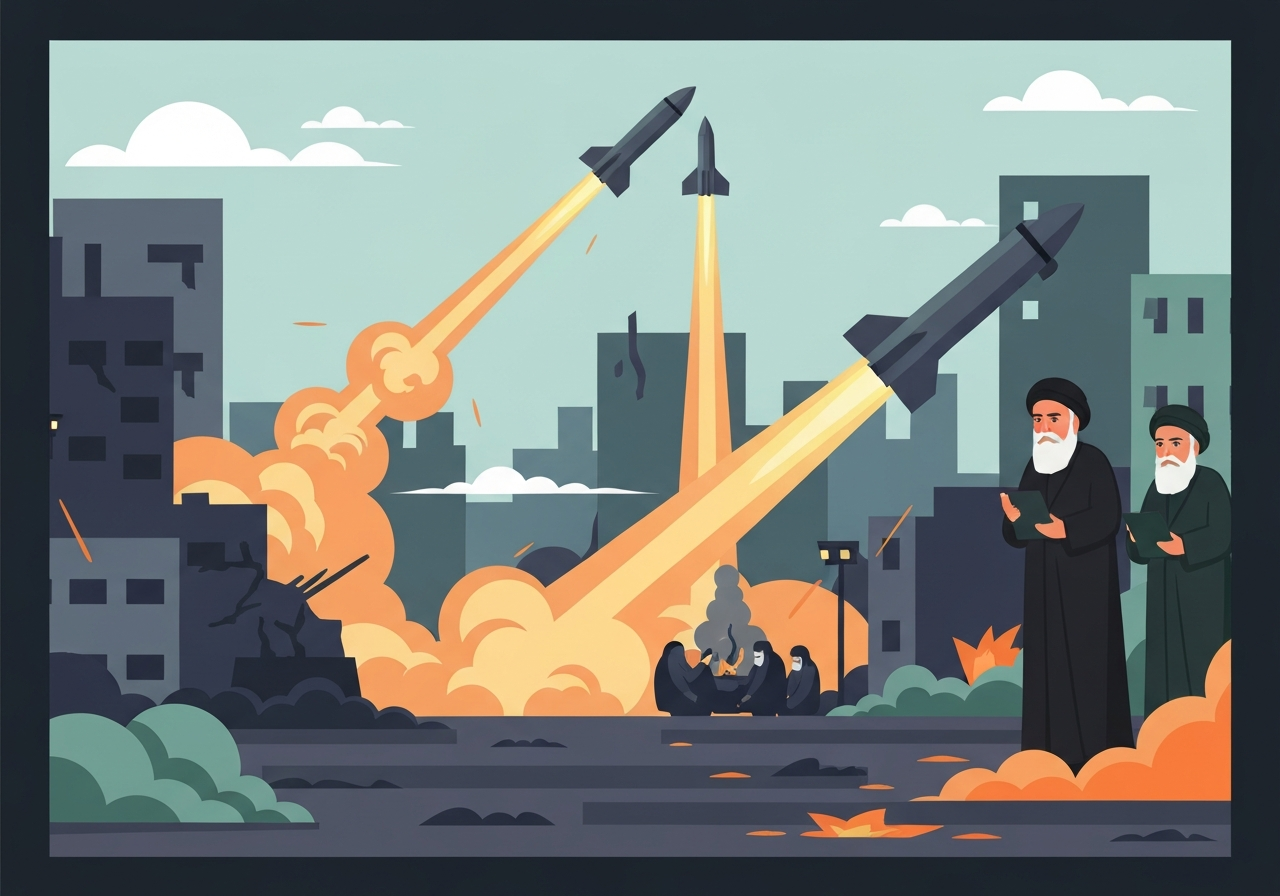
On March 1, 2026, Iran launched waves of missiles and drones across the Middle East as the country held the funeral for Supreme Leader Ayatollah Ali Khamenei and activated an interim leadership council. Attacks struck Israeli population centers and sites hosting U.S. forces, producing civilian casualties and prompting widespread embassy warnings and regional air-defense activity. Iran’s interim leaders vowed retaliation while Israel and U.S. officials reported strikes on Iranian military infrastructure. The situation remains fluid with diplomatic and security responses accelerating worldwide.
Key takeaways
- Iran launched missile and drone strikes across the region on March 1, 2026, including a barrage that hit Beit Shemesh, west of Jerusalem; Israeli emergency services later reported the death toll there rose to eight and dozens wounded.
- The U.S. Embassy in Jerusalem warned it could not evacuate U.S. citizens and closed consular operations on March 2, 2026; Ben Gurion airport remained closed to all traffic.
- The UAE Defense Ministry said its forces intercepted large numbers of incoming projectiles and that three foreign nationals were killed in attacks it attributed to Iran.
- Oman reported strikes on the Duqm commercial port and an oil tanker off its coast; the tanker crew was evacuated and four crew members were injured, Omani authorities said.
- Iran named a three-person interim leadership council including President Masoud Pezeshkian; state media said Alireza Arafi and Chief Justice Gholamhossein Mohseni Ejei joined the council pending selection of a new supreme leader.
- Satellite imagery showed heavy damage to Khamenei’s Tehran compound; Israel said it had struck key leadership targets and disabled roughly half of Iran’s missile stockpiles.
- Violent protests erupted abroad: in Karachi clashes at the U.S. consulate left at least nine dead; demonstrations and attacks on diplomatic sites were reported in several countries.
- The IAEA board will hold a special meeting Monday at Russia’s request to discuss military strikes against Iran and nuclear implications.
Background
Ali Khamenei served as Iran’s supreme leader since 1989, a political and religious role established by the 1979 Islamic Revolution. His death in the weekend strikes — confirmed by multiple state and international reports on March 1, 2026 — created an immediate constitutional and geopolitical vacuum. Iran’s theocratic system centralizes authority in the office of the supreme leader; succession normally involves the Assembly of Experts, a deliberative religious body whose deliberations can be slow and opaque.
Tensions had been rising for years: U.S.-Israeli air campaigns and sanctions targeted Iran’s nuclear and missile programs throughout 2024–2025, and a focused bombing campaign in June 2025 hit Iranian nuclear sites. The March 2026 strikes by the U.S. and Israel that reportedly killed Khamenei represent a dramatic escalation, prompting Iran to retaliate across a wide geographic area that includes Iraq, the Persian Gulf, and Israel.
Main event
On March 1, Iran’s armed forces launched multiple waves of missiles and unmanned aircraft at targets across the region. Israeli emergency agencies reported strikes on residential areas in Beit Shemesh, roughly 19 miles (about 30 kilometers) west of Jerusalem, causing structural damage and civilian casualties; officials later revised the death toll upward to eight with dozens wounded.
Iran’s state outlets and military spokespeople said the strikes targeted U.S. bases in the Persian Gulf and the Kurdistan region of Iraq as well as sites in Israel. The UAE Ministry of Defense reported intercepting large numbers of missiles and drones — and said three foreign nationals were killed by strikes — while Omani authorities reported hits on Duqm port and an oil tanker, the latter leaving the vessel ablaze and sinking in social-media footage before its crew was evacuated.
Israel’s military said its forces had struck the “heart of Tehran” for the first time since the campaign began, and issued assessments that roughly half of Iran’s missile stockpiles were destroyed in earlier strikes. U.S. Central Command acknowledged reports of civilian harm were under investigation and emphasized efforts to minimize noncombatant casualties.
Domestically in Iran, state media showed crowds gathering in Tehran for Khamenei’s funeral at the University of Tehran as President Masoud Pezeshkian announced the interim leadership council had begun operating. Iranian officials made stern statements promising reprisal and calling for broad mobilization against the U.S. and Israel.
Analysis & implications
The near-term security picture is highly unstable. Iran’s ability to strike multiple countries simultaneously demonstrates both reach and intent to expand the conflict beyond bilateral strikes with the U.S. and Israel. That raises the risk of miscalculation: defensive actions by regional states, interceptions that fail, or accidents at sea could widen fighting quickly.
Politically, the creation of an interim leadership council aims to preserve regime continuity and project control. Yet the death of a long-tenured supreme leader creates a succession challenge; the Assembly of Experts must convene under extraordinary pressure, and internal jockeying could produce either a negotiated transition or empower hardline actors who favor intensified confrontation.
Economically, maritime attacks near the Gulf and on commercial shipping — including the reported tanker strike and port incident at Duqm — threaten energy shipments and insurance costs, with potential knock-on effects for oil prices and global trade routes. International actors will likely face pressure to secure sea lanes and critical infrastructure, increasing foreign military exposure in the region.
Diplomatically, Moscow and Beijing’s vocal condemnations of the strikes and calls for de-escalation set up a geopolitical split in responses. The IAEA’s special board meeting at Russia’s request underlines international concern about the nuclear angle; the agency’s previous assessments noted Iranian nuclear material remained. Sanctions, emergency UN diplomacy, and coordinated embassy adjustments are probable next steps.
Comparison & data
| Event/Location | Reported casualties | Source |
|---|---|---|
| Beit Shemesh (near Jerusalem) | 8 dead; dozens wounded | Israeli emergency services / Magen David Adom |
| UAE (interceptions) | 3 dead (foreign nationals); many intercepts claimed | UAE Ministry of Defense (official) |
| Oman — Duqm port & tanker | 1 injured at port; 4 tanker crew injured | Oman News Agency (official) |
| Karachi, Pakistan | 9 dead; 50+ wounded | Local officials / hospitals (local reporting) |
The numbers above reflect official statements and emergency-service tallies published on March 1, 2026. Casualty figures have varied across reports as rescue and medical organizations continued on-scene triage and documentation. Where multiple tallies exist, authoritative local emergency services and national ministries are cited.
Reactions & quotes
The interim leadership council “started its work,” and Iran will “continue with all our strength along the path set by Imam Khomeini,” President Masoud Pezeshkian said in a recorded statement broadcast on state television.
Masoud Pezeshkian / Iranian presidency (state media)
The U.S. Embassy in Jerusalem warned it was “not in a position at this time to evacuate or directly assist Americans in departing Israel” and advised U.S. citizens to shelter in place and heed local alarm systems.
U.S. Embassy in Jerusalem (official alert)
“We had two ballistic missiles fired in the direction of Cyprus,” Britain’s defense secretary said, adding the missiles were not thought to have been aimed at the island specifically but underscoring the risk to bases and personnel.
John Healey / U.K. Defense Secretary (BBC/CBS report)
Unconfirmed
- Reports that a girls’ elementary school in Minab was struck, with claims of more than 100 deaths, remain under investigation and are not corroborated by U.S. or Israeli officials at this time.
- Different agencies provided varying numbers for intercepts and launches (for example, UAE statements on the quantity of missiles and drones); precise tallies have not been independently verified.
- Attribution of every individual strike (which nation or unit was responsible) is still being assessed by international monitors and military officials.
Bottom line
The conflict has escalated from targeted strikes to a broader regional exchange of missiles and drones that is already producing civilian harm, diplomatic rupture, and economic risk. Iran’s activation of an interim leadership body seeks to maintain governance for now, but succession uncertainty and military reprisals create sustained instability.
Key items to watch in the coming days are: the Assembly of Experts’ timeline and any signs of internal political consolidation in Iran; further strikes or counterstrikes that could draw additional regional states into combat; the IAEA’s conclusions about nuclear-site impacts; and expedited diplomatic efforts by major powers to prevent wider war. For civilians in affected countries, embassy advisories and local air-raid guidance should be followed closely.