
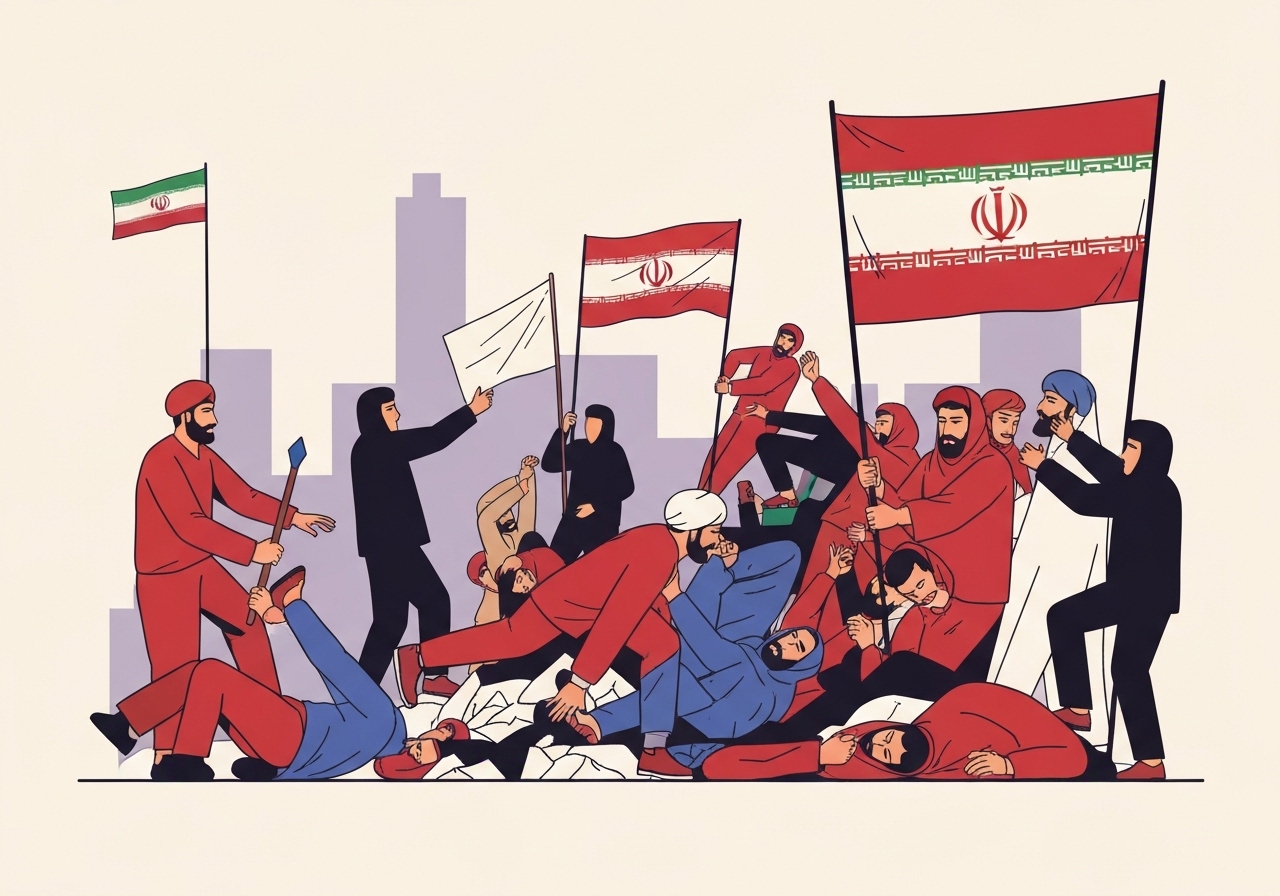
Over the past ten days of nationwide unrest in Iran, at least 36 people have died, a foreign-based rights monitor reported, as security forces moved to disperse demonstrations that began in Tehran’s bazaars and spread to multiple provinces. The Human Rights Activists News Agency (HRANA) said 34 of the dead were protesters and two were affiliated with security forces; Iranian authorities have reported three security personnel killed. BBC Persian has so far confirmed the identities of 20 of those killed, while rights groups and local footage document large clashes, mass arrests and a contested raid on a hospital in Ilam province.
Key Takeaways
- HRANA reports 36 deaths over 10 days: 34 protesters and 2 security-affiliated people, with BBC Persian confirming 20 identities.
- Authorities or semi-official outlets report three security personnel killed in separate incidents, including one policeman shot in Malekshahi, Ilam.
- Rights groups say more than 60 protesters were injured and 2,076 people arrested during demonstrations that have reached 27 of 31 provinces.
- Protests began on 28 December after a sharp fall in the rial; inflation has reached about 40% amid sanctions, mismanagement and corruption.
- Videotaped clashes show riot police firing tear gas in Tehran’s Grand Bazaar and footage of protests in markets and towns including Yaft Abad, Azari junction, Abdanan and Malekshahi.
- Amnesty International reported a forcible entry into Imam Khomeini Hospital in Ilam by security forces, alleging assaults on medical staff and wounded protesters.
- International reactions include UN calls to prevent further casualties and a US warning from President Donald Trump threatening potential intervention.
Background
The unrest began on 28 December when Tehran shopkeepers protested after the Iranian rial plunged further against the US dollar on the open market. The currency’s year-long collapse and soaring inflation—reported at roughly 40%—have fed public anger rooted in long-standing economic hardship, wide corruption allegations and the impact of international sanctions related to Iran’s nuclear program.
What began with merchants soon drew students and other urban demonstrators, rapidly moving beyond Tehran to 27 of Iran’s 31 provinces. The protests come after large-scale unrest in 2022 following the death in custody of Mahsa Amini, when human rights groups say more than 550 people were killed and about 20,000 detained in the crackdown, informing both protesters’ tactics and the state’s heavy security response.
Main Event
Video verified by BBC Persian shows riot police deploying tear gas inside Tehran’s Grand Bazaar as crowds chanted slogans against the country’s clerical leadership. Footage from covered market streets captures protesters shouting “Death to the dictator” and then retreating into side alleys as gas disperses the crowd.
Parallel demonstrations were recorded at Yaft Abad market, the Caterpillar shopping mall and the Azari junction. In western Ilam province, footage from Abdanan showed large marches and scenes of people ripping open rice sacks and throwing grain into the air; other clips appeared to show a bank on fire and burning furniture in Malekshahi.
Semi-official outlets reported a policeman shot dead in Malekshahi and said clashes included attempts by some to enter security facilities. Local Kurdish groups and witnesses have described a heavy-handed security response, and Amnesty International has accused Revolutionary Guards and special police of storming Imam Khomeini Hospital in Ilam, using shotguns, firing tear gas into hospital grounds and beating people inside.
Iranian officials have announced investigations in some areas: President Masoud Pezeshkian’s office said on Monday it ordered the interior ministry to form a delegation to probe unrest in Ilam. Meanwhile, judiciary officials warned of no leniency toward demonstrators they label “rioters” while promising to listen to legitimate economic grievances.
Analysis & Implications
The convergence of an acute economic shock—currency collapse and steep inflation—with existing political grievances has created an unusually broad-based protest movement. When protests cut across markets, universities and regional towns, they test the state’s capacity to control unrest without further eroding legitimacy among key urban constituencies and economic actors.
Hardline rhetoric from Iran’s Supreme Leader and senior judiciary figures signals intent to suppress what they portray as violent disorder rather than address systemic economic failures. That posture increases the risk of escalatory tactics by security forces, which in turn can deepen public anger and expand protest participation.
Internationally, the protests put Tehran in a delicate position. Vocal foreign responses—ranging from the UN’s appeals to restraint to a US president’s threat of intervention—raise the diplomatic temperature and could be used by the Iranian leadership to frame protests as foreign-instigated, justifying harsher measures.
Economically, sustained instability will likely further weaken investor confidence and the currency, aggravating inflation and fueling a feedback loop of hardship and dissent. Politically, the scale and rapid spread of demonstrations may prompt limited concessions on local issues or targeted investigations, but a comprehensive reform response appears unlikely in the short term given current leadership priorities.
Comparison & Data
| Metric | Current unrest (Dec–Jan) | 2022 uprising |
|---|---|---|
| Reported deaths | At least 36 (HRANA) | More than 550 (human rights groups) |
| Arrests reported | 2,076 (HRANA) | ~20,000 (rights groups) |
| Geographic spread | 27 of 31 provinces | Nationwide |
The table places the current unrest in the context of 2022’s larger uprising, highlighting that while the immediate death toll is lower so far, the breadth of provinces affected and the large number of arrests echo previous patterns of broad protest and forceful suppression.
Reactions & Quotes
International institutions and local activists have issued sharply contrasting statements that reflect diplomatic tension and human rights concerns.
“He was deeply saddened by the reported loss of life and injuries resulting from clashes between security forces and protesters and underscores the need to prevent any further casualties.”
UN Secretary-General (spokesman)
The UN called for restraint and for peaceful protest to be permitted, stressing protection of civilians and medical personnel. That appeal came amid reports from rights groups alleging hospital raids and mistreatment of wounded demonstrators.
“We are locked and loaded and ready to go.”
President Donald Trump (public statement)
The US president’s forceful warning signalled a readiness to intervene rhetorically, a line Tehran has historically used to portray unrest as foreign-backed, potentially hardening domestic security responses.
“Rioters should be put in their place,”
Ayatollah Ali Khamenei (Supreme Leader)
Statements from Iran’s Supreme Leader and senior judiciary officials have emphasized a tough stance toward demonstrators, drawing scrutiny from rights groups and international observers concerned about proportionality and rule-of-law protections.
Unconfirmed
- Exact attribution of all fatalities remains unclear; counts vary between HRANA, Iran Human Rights, Hengaw and semi-official media.
- Details and scope of the alleged hospital raid in Ilam are contested; rights groups report forcible entry and assaults while Iranian officials have not released a full account.
- Claims that some security personnel were killed by protester gunfire have been reported by semi-official outlets but are not independently corroborated for every incident.
Bottom Line
The protests are driven by an acute economic crisis—currency collapse and high inflation—compounded by long-standing grievances over governance and rights. The reported deaths, large number of arrests and footage of aggressive crowd-control measures indicate an intense state response that risks further escalation.
International calls for restraint and domestic orders for investigations signal pressure on Tehran, but entrenched political calculations and hardline rhetoric make rapid, systemic reform unlikely. Close monitoring of casualty figures, arrest records and independent verification of incidents such as the Ilam hospital reports will be crucial for assessing whether the unrest will subside or widen.