
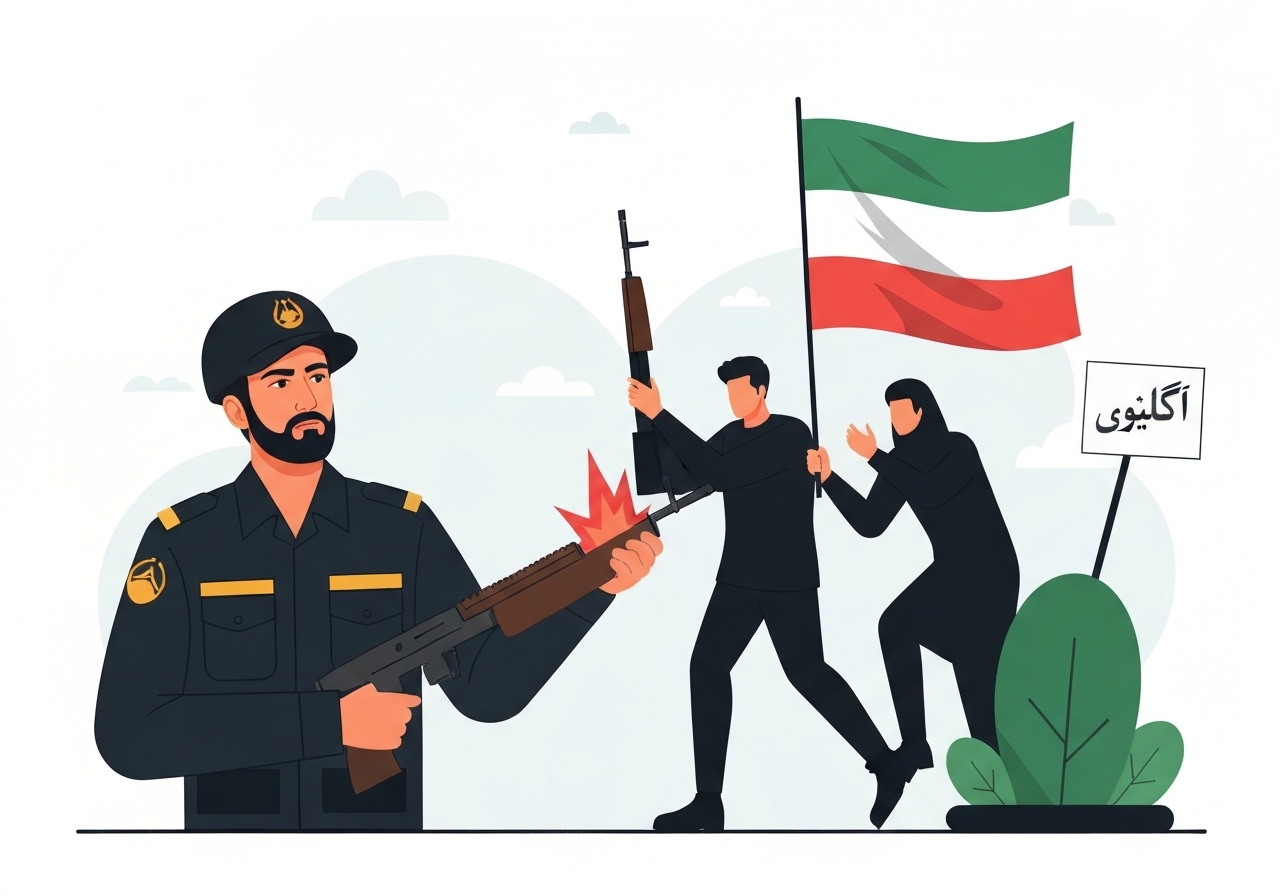
Iranian authorities say a member of the security forces was killed on Wednesday as demonstrations over a sharp fall in the rial entered a fourth day, spreading from Tehran to multiple provinces. Officials identified the deceased as Amir Hessam Khodayari Fard and reported clashes in Kouhdasht, in Lorestan province, as well as incidents in Fars and Hamedan. State outlets said several security personnel were injured and dozens of protesters arrested; videos verified by BBC Persian show security forces firing during at least one confrontation. The government declared a last‑minute bank holiday in Tehran the same day, a move officials framed as an energy measure but many Iranians saw as an attempt to limit gatherings.
Key Takeaways
- A member of Iran’s security forces, named by officials as Amir Hessam Khodayari Fard, was reported killed in Kouhdasht on Wednesday.
- State media said 13 police and Basij members were injured in the Kouhdasht clashes and that 20 protesters were arrested there that night.
- In Fars province, authorities reported three police injured and four arrests after protesters attempted to enter a local government building in Fasa.
- Footage authenticated by BBC Persian shows security forces firing at crowds and protesters breaking a governor’s office gate in Fasa.
- The unrest began in Tehran on Sunday after the rial plunged further on the open market and by Tuesday had drawn university students and spread to multiple cities.
- Officials in Tehran declared Wednesday a bank holiday; President Masoud Pezeshkian said the government would heed “legitimate demands,” while the prosecutor general warned of a “decisive response.”
- Authorities describe these demonstrations as the most widespread since the 2022 unrest following Mahsa Amini’s death, though they note the current events are not at the same scale.
Background
Protests this week were triggered by a steep and sudden fall in the Iranian currency that has exacerbated long‑standing economic pressures for merchants and ordinary citizens. The initial demonstrations began among Tehran shopkeepers on Sunday as the rial weakened notably against the US dollar on the open market, cutting into incomes and raising prices for basic goods. By Tuesday, students and younger demonstrators had joined, broadening the social profile of the unrest and aiding its spread to provincial cities.
Iran has a recent history of episodic nationwide protests: the 2022 uprising after Mahsa Amini’s death in custody marked a major nationwide wave of anger against security forces and the clerical establishment. While current demonstrations have been described by some officials as more limited, the appearance of clashes in several provinces and the use of force have revived concerns about escalation. Key domestic actors include the regular police, the Basij paramilitary (linked to the Islamic Revolutionary Guard Corps), the judiciary, and local provincial authorities who manage security responses on the ground.
Main Event
Officials citing the regional chief justice told state‑aligned Mizan news agency that Amir Hessam Khodayari Fard was killed in Kouhdasht, Lorestan province, on Wednesday. State and semi‑official outlets described confrontations there in which stones were reportedly thrown at security personnel; the same reports said 13 members of the police and Basij were wounded and 20 protesters detained that night. The casualty and arrest figures come from judiciary‑affiliated and IRGC‑linked media and have not been independently corroborated in all cases.
In Fars province, local reporting and video footage recorded and verified by BBC Persian show protesters breaking the gate of the governor’s office in Fasa before clips show security forces firing in response and clouds of tear gas in streets lined by shuttered shops. Officials in Fars said three police officers were injured and four people were arrested in that city. Similar, smaller confrontations were reported in Hamedan and other western towns as unrest rippled outward.
In Tehran the government announced a one‑day bank holiday for Wednesday, citing energy savings amid cold weather. Many residents and analysts interpreted the late notice as an attempt to reduce public transit use and weekday gatherings, limiting protesters’ mobility without declaring broader emergency measures. Security presence was reported as tightened in the capital districts where the demonstrations began.
Analysis & Implications
The immediate driver of these protests is economic: a sudden currency collapse has tangible effects on prices, wages and small businesses, producing rapid public frustration. When such economic shocks intersect with preexisting grievances about governance and security‑force conduct, protests can move quickly beyond isolated market actions to broader political expression. The relatively swift spread from merchants to students suggests a cross‑section of social discontent rather than a single demographic.
State responses — including the late bank holiday and visible deployments of police and paramilitary forces — aim to contain gatherings while avoiding the optics of a full security crackdown. However, the reported use of live fire and the death of a security member raise the risk of a tit‑for‑tat escalation: fatalities on either side can harden stances, provoke reprisals, and accelerate wider unrest. Authorities face a choice between concessions on economic pain points and forceful suppression; each path carries political and social costs.
Internationally, renewed unrest complicates Iran’s economic management and could affect markets and diplomatic calculations, particularly if sustained instability deters investment or disrupts trade routes. Domestically, the government’s promise to listen to “legitimate demands” will be measured against concrete policy moves on currency stabilization and living costs; failure to deliver could widen the protests’ base. Conversely, heavy-handed responses risk reigniting larger mobilizations that recall the 2022 wave.
Comparison & Data
| Location | Reported incidents (official media) |
|---|---|
| Kouhdasht, Lorestan | 1 security member killed; 13 police/Basij injured; 20 arrests |
| Fasa, Fars | Attempted breach of governor’s office; 3 police injured; 4 arrests |
| Hamedan | Clashes reported; details limited in state reports |
| Tehran | Protests began Sunday; bank holiday declared Wednesday |
The table summarizes figures reported in judiciary‑affiliated and state‑linked outlets; independent verification remains partial for some items. Compared with the 2022 uprising after Mahsa Amini’s death, officials and analysts describe this week’s events as more geographically scattered but smaller in scale so far. Data gaps — such as full casualty counts for protesters and independent injury tallies for security forces — limit precise comparisons and trend analysis at this stage. Monitoring open‑source footage and local reporting will be essential to build a clearer empirical picture over coming days.
Reactions & Quotes
Authorities and senior officials offered contrasting tones: some signaled willingness to listen to grievances while others warned against attempts to destabilize public order. These statements play to different domestic audiences — reformist‑minded voters, conservative security establishments, and international observers — and aim to shape the narrative about the protests’ legitimacy and the state’s response.
“Amir Hessam Khodayari Fard was killed in Kouhdasht,”
Mizan news / regional chief justice (judiciary‑affiliated)
The regional judiciary’s statement, relayed by Mizan, named the deceased and framed the incident as a violent clash with protesters. Such official identifications are intended to establish a public record and justify subsequent prosecutions or security measures.
“The government will listen to the legitimate demands of the people,”
President Masoud Pezeshkian (official statement)
The president’s pledge signals an attempt to de‑escalate economic grievances through dialogue or policy adjustments, directed at both demonstrators and moderate critics. Observers will watch for concrete measures to address currency volatility and caller relief for affected businesses.
“Any attempt to create instability will be met with a decisive response,”
Mohammad Movahedi‑Azad, Prosecutor General (judicial official)
The prosecutor general’s warning underscores the security establishment’s intolerance for actions it deems aimed at provoking unrest. Such language typically precedes intensified policing or legal action against organizers and participants.
Unconfirmed
- Who fired the shots that killed the security member has not been independently confirmed; available reports attribute the death to clashes but do not detail the exact circumstances.
- Total numbers of injured protesters and security personnel across all affected cities remain incomplete and vary between state and independent sources.
- Whether the bank holiday materially reduced protest activity in Tehran or merely shifted gatherings to other times or locations is not yet clear.
Bottom Line
The demonstrations that began over a sudden currency collapse have escalated into violent clashes in several provinces, culminating in the reported death of a security force member in Kouhdasht and multiple injuries and arrests. Authorities are balancing limited concessions and public assurances against firm warnings and security deployments — a mix that may contain unrest in the short term but risks further incidents if economic stresses persist.
For observers, the immediate questions are whether authorities will implement meaningful economic measures to stabilize the rial and whether security forces will avoid actions that could intensify mobilization. Independent verification of casualties and arrests, along with transparent reporting of any government responses, will be critical to assessing whether this unrest remains episodic or becomes a deeper political challenge.
Sources
- BBC News (international news outlet; original reporting and aggregation)
- Mizan News Agency (judiciary‑affiliated news outlet; official statements)
- Fars News Agency (semi‑official state news agency)
- Tasnim News Agency (IRGC‑affiliated news agency)
- BBC Persian (international outlet; verification of social video footage)