
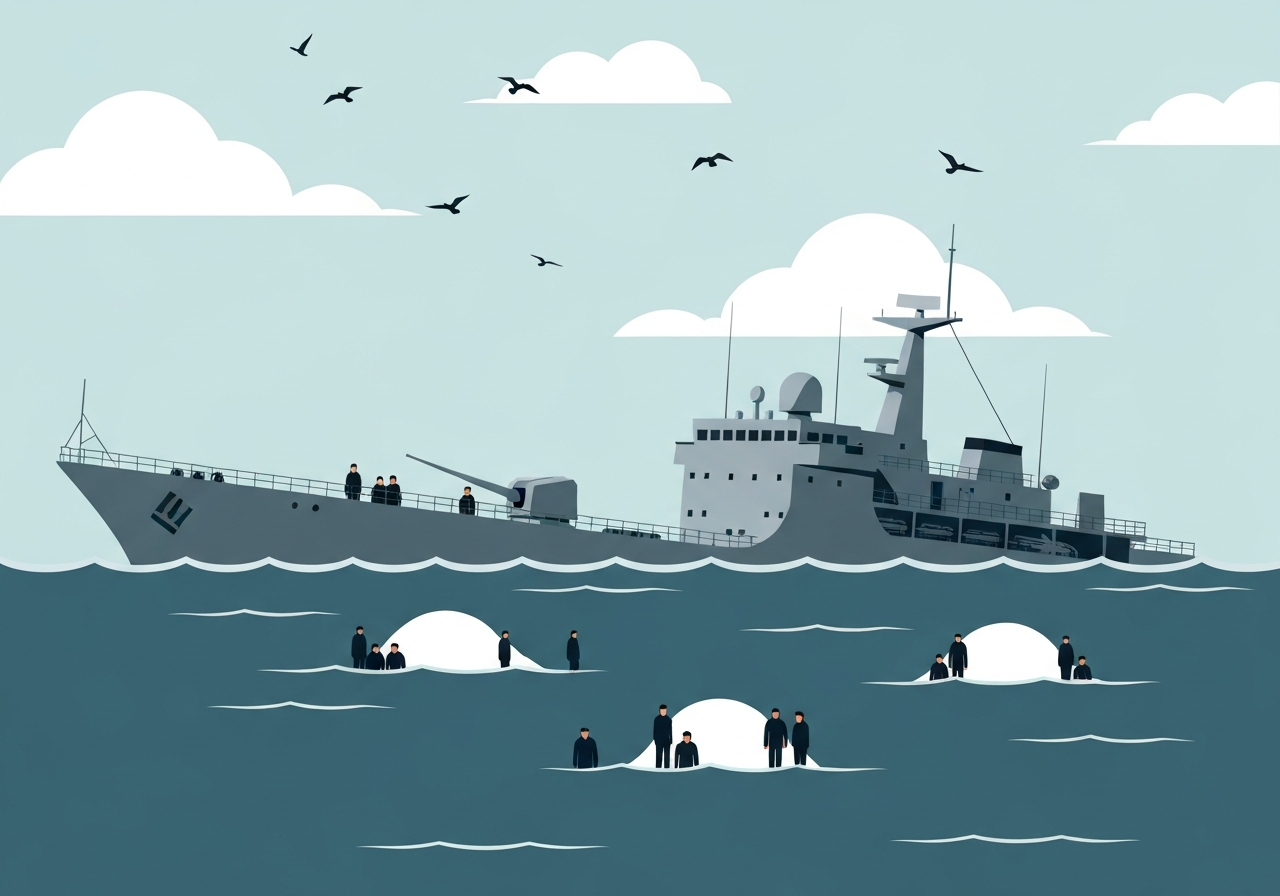
On 4 March 2026 an Iranian frigate, IRIS Dena, sank roughly 40 nautical miles (75 km) off Galle, Sri Lanka, after sending a distress signal between 06:00 and 07:00 local time (00:30–01:30 GMT). Sri Lankan authorities say they have rescued 32 wounded crew members and recovered several bodies, while at least 100 people remain unaccounted for from the ship’s complement of about 180. The vessel had been returning from the 2026 International Fleet Review in Vishakhapatnam, India, and a multinational search-and-rescue effort was launched by Sri Lankan naval and air units. Officials have not yet determined the cause of the sinking and investigations are continuing.
Key Takeaways
- IRIS Dena, an Iranian frigate, sank on 4 March 2026 about 40 nautical miles (75 km) south of Galle, Sri Lanka.
- The ship had approximately 180 crew aboard; Sri Lanka reports 32 wounded rescued and several bodies recovered so far.
- At least 100 people are missing; Sri Lankan officials have described nearly 150 crew as unaccounted for in early reports.
- The distress call was received between 06:00 and 07:00 local time (00:30–01:30 GMT) and prompted a multi-unit search-and-rescue response.
- No other vessels or aircraft were observed in the immediate area of the sinking, according to a Sri Lankan navy spokesperson.
- The frigate had recently taken part in the 2026 International Fleet Review in Vishakhapatnam and was en route home when it sent the distress signal.
- An Iranian embassy team has been dispatched to Galle to interview survivors and help establish what happened on board.
Background
The IRIS Dena is a warship of the Islamic Republic of Iran Navy. On 4 March 2026 the vessel was reported to be returning from a regional naval review in Vishakhapatnam, India, which took place in February as part of the International Fleet Review. Naval delegations participating in such events commonly conduct extended voyages that can involve complex operations and port calls across regional waters.
Sri Lanka’s navy and air force operate routine patrol and rescue capabilities in the southern approaches to the island, and Colombo moved quickly after receiving information that the Iranian ship was in distress. The incident occurs against a backdrop of heightened regional tensions: at the same time, military action between Iran and forces aligned with the United States and Israel has escalated, producing cross-border strikes and casualties in several countries. While those regional developments form the geopolitical context, Sri Lankan authorities have treated the sinking primarily as a maritime rescue and investigation operation.
Main Event
According to Sri Lankan officials, the IRIS Dena transmitted a distress call between 06:00 and 07:00 local time on Wednesday and was located about 40 nautical miles (75 km) off Galle, in waters just beyond Sri Lanka’s territorial limit. Navy ships and air force aircraft were dispatched to the coordinates provided and began search-and-rescue operations immediately. Local media and hospital sources reported that wounded crew were transferred to facilities in Galle for treatment.
Sri Lanka’s Foreign Minister, Vijitha Herath, told parliament that the government had acted on information of the ship’s distress and mobilised naval and air assets. A navy spokesperson said early reconnaissance found no other ships or aircraft near the site at the time of the sinking. Sri Lankan Air Force personnel and first responders coordinated evacuation and casualty care for survivors brought ashore.
Initial tallies reported by authorities identify roughly 180 people on board. Of those, 32 have been reported as rescued wounded and several bodies recovered; official counts of the missing have varied in the immediate aftermath, with some statements describing close to 150 unaccounted-for crew. An Iranian embassy official in Colombo said two officers were sent to Galle to speak with survivors and assist investigations into the sequence of events that led to the loss of the ship.
Analysis & Implications
At a basic level, the incident raises urgent search-and-rescue and forensic priorities: locating survivors, recovering bodies, and preserving evidence that could explain why the frigate sank. If the ship went down rapidly, factors such as collision, onboard explosion, structural failure, flooding, or a fire could be involved. Each hypothesis carries different implications for naval safety, maintenance protocols, and the chain of command onboard.
Regionally, the sinking arrives amid a period of intense military activity involving Iran, the United States and Israel, which has included strikes, retaliatory missile and drone attacks, and reported fatalities in several countries. While there is no public evidence tying those operations to the frigate’s loss, investigators will need to rule out external attack, accidental ordnance detonation, or other combat-related causes before concluding the cause was technical or human error.
Diplomatically, Sri Lanka’s rapid assistance and the presence of Iranian officials in Galle underline the island state’s role as a maritime neighbor and first responder in the busy Indian Ocean shipping lanes. Depending on investigation outcomes, the incident could prompt revised safety checks for warships transiting extended voyages and affect port call and training practices among regional navies.
Comparison & Data
| Metric | Count / Note |
|---|---|
| Estimated crew aboard | About 180 |
| Rescued (wounded) | 32 |
| Bodies recovered | Several (officials) |
| Missing / unaccounted | At least 100; some reports cite nearly 150 |
| Distance from Galle | ~40 nautical miles / 75 km |
The table above compiles early official figures and media reports; numbers may change as rescue and accounting efforts proceed. In maritime incidents, initial casualty counts frequently shift as survivors are located, bodies are recovered, and manifest records are reconciled with onboard lists.
Reactions & Quotes
Sri Lankan officials described their response as immediate and focused on saving lives and preserving evidence for a formal inquiry.
“We received information about the ship in distress and deployed navy ships and air force planes to conduct search-and-rescue operations.”
Vijitha Herath, Sri Lanka Foreign Minister (statement to parliament)
An embassy representative said Tehran had sent officers to assist survivors and help determine what happened.
“Two officers have been dispatched to Galle to speak with survivors and gather information on the circumstances aboard the vessel.”
Iranian embassy official in Colombo (embassy statement)
Unconfirmed
- No independent confirmation currently ties the sinking to combat operations or external attack; investigators have not released a cause.
- Precise casualty and missing-person totals remain provisional pending ship manifest reconciliation and continued search efforts.
- Accounts of whether other vessels or aircraft were in the area at the time of sinking have not been independently verified.
Bottom Line
The sinking of the IRIS Dena off Sri Lanka on 4 March 2026 is a major maritime disaster with at least 100 people missing and dozens rescued or killed. Immediate priorities are life-saving operations and establishing a clear factual record of crew numbers, timeline and the physical cause of the loss.
Because the ship was outside Sri Lanka’s territorial waters and returned from a recent regional naval review, the incident will require cooperation between Sri Lankan authorities, Iranian officials and international maritime agencies. Until investigators publish technical findings, conclusions about whether the loss stemmed from accident, human error or external action must remain provisional.
Sources
- Al Jazeera (news)