
Lead
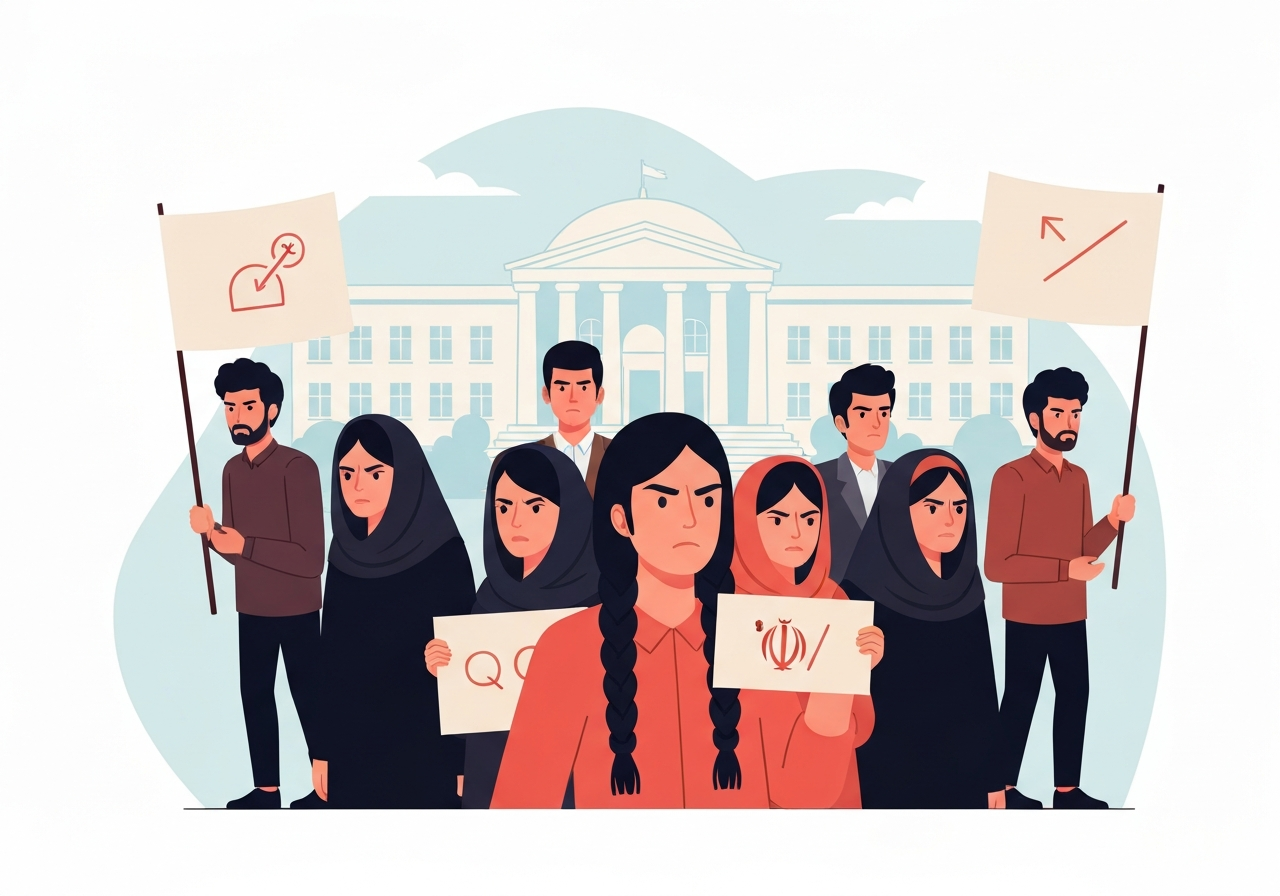
Students at multiple Iranian universities staged a third consecutive day of demonstrations on 23 February 2026, one month after security forces violently suppressed nationwide street protests that left thousands dead. The campus unrest, concentrated in Tehran institutions including the all-women Al Zahra University and Sharif University, featured anti-government chants and symbolic acts of defiance but did not spill onto public streets. The demonstrations unfolded amid heightened Tehran–Washington tensions as negotiators prepared for a new round of talks in Geneva, and followed warnings from both US and Iranian officials about possible escalation.
Key Takeaways
- Protests: Iranian students held third-day campus demonstrations on 23 Feb 2026 at universities including Al Zahra and Sharif in Tehran, with chants such as “death to the dictator.”
- Casualties and repression: The unrest follows a violent January crackdown that rights groups and reports say left thousands dead; universities have warned students of disciplinary measures.
- Violent incidents: A Telegram channel reported a Basij attack at Sharif University that injured several students and required ambulance response; independent verification is limited.
- Symbolic protest: Students used acts such as burning and tearing a national flag and hanging toy mice to mock Iran’s supreme leader.
- Political response: Former president Mohammad Khatami urged release of detainees; student delegates told vice-president Mohammad Reza Aref that security forces fired on protesters.
- Regional context: The protests coincided with US force posture and negotiations in Geneva; Iranian officials rejected military coercion and warned of fierce retaliation to attacks.
- Arms report: Media reports say Iran signed a December deal with Russia for 500 Verba launch units and 2,500 9M336 missiles for air-defence gaps.
Background
The current campus protests come just over a month after mass street demonstrations in January 2026 were met with a forceful security response. Multiple reports describe heavy-handed tactics by security services during the January unrest; those events are widely seen as the catalyst for renewed student activism on campus. Students have historically been a focal point of political dissent in Iran, with universities often the first sites of organized protest and the state sensitive to visible campus unrest.
Political fault lines have widened as Iran prepares for another round of nuclear-related talks in Geneva; US officials have signalled stepped-up military presence in the region while negotiators meet. Domestically, the economy remains under significant strain from sanctions, and reformists and conservative factions are jostling for influence. That dynamic has shaped both the authorities’ approach to dissent and reformists’ responses to the protests.
Main Event
On campus on Monday, students at Al Zahra University chanted anti-government slogans, tore and burned an Iranian flag and staged other acts of ridicule aimed at the supreme leader. At Sharif University a student Telegram channel, Anjmotahed, reported that Basij-affiliated forces attacked on-site, injuring several students and prompting an ambulance to enter the campus. Universities issued text messages warning students that participation in demonstrations could lead to disciplinary action.
Some protesters used theatrical gestures — climbing trees and suspending toy mice from branches — to mock Ayatollah Ali Khamenei by implying he was hiding. Slogans reported by participants included “death to the dictator,” “for every one killed, a thousand will follow,” and statements condemning the January killings. Student representatives who met vice-president Mohammad Reza Aref told him officials’ portrayal of the January violence as the work of “terrorists” was insulting; they said bullets had been used against peaceful protesters.
Security and university authorities kept coverage tightly controlled, reportedly banning photographed demonstrators from campus and limiting domestic reporting. That clampdown, together with disciplinary warnings to students, indicates a deliberate effort by authorities to contain visible dissent within academic institutions rather than allow it to spread publicly.
Analysis & Implications
The persistence of campus protests underscores both the depth of public anger following the January crackdown and the central role of universities as incubators of political dissent in Iran. Even where demonstrations remain confined to campuses, the symbolic acts and slogans signal sustained politicization among youth that could outlast immediate provocations. The authorities’ attempt to limit imagery and punish participants may reduce short-term visibility but risks deepening grievances that could fuel further unrest.
Internationally, the timing complicates Tehran’s diplomatic positioning ahead of Geneva talks. The United States has signalled a tougher posture in the region, and senior Iranian officials, including foreign ministry spokesperson Esmail Baghaei, warned of ferocious retaliation to any attack. Such rhetoric increases the stakes of diplomatic negotiations and raises the risk that miscalculation could spill into wider confrontation.
Economically and politically, the protests add pressure to a government already wrestling with sanctions and internal dissent. The reported December arms deal with Russia, if confirmed, would reflect Tehran’s efforts to shore up air-defence capabilities amidst perceived threats; at the same time, it could further complicate talks with Western powers and fuel concerns about regional arms dynamics.
Comparison & Data
| Item | Reported figure |
|---|---|
| Casualties (January crackdown) | Thousands dead (reported) |
| Reported Russian arms commitment | €500m; 500 Verba units; 2,500 x 9M336 missiles |
| Campus protests (current) | Multiple universities including Al Zahra and Sharif, 23 Feb 2026 |
The table highlights the scale of reported January losses and the size of Russia’s alleged supply to Iran’s air-defence inventory. While the casualty figure comes from consolidated press and human-rights reporting and remains a central driver of domestic anger, the arms-deal numbers derive from media reports of a December agreement signed in Moscow and should be weighed against independent verification.
Reactions & Quotes
Government and diplomatic actors issued stark statements as the campus unrest continued.
“Iran will retaliate ferociously against any attack,”
Esmail Baghaei, Iranian foreign ministry spokesperson (official)
Baghaei’s remark framed Tehran’s posture as one of deterrence in the face of heightened regional military activity and diplomatic pressure.
“Really bad things will happen” if there is no deal,
Donald Trump (former US president / US negotiator commentary)
The comment from the US side, reported in the context of pressure ahead of Geneva talks, underscored Washington’s use of blunt public warnings as leverage in negotiations.
“They are accused of nothing but despair and protest,”
Mohammad Khatami, former president (reformist elder)
Khatami’s call for detainee releases represented a notable public challenge from a senior reformist figure who initially suggested outside involvement in the unrest but has since shifted his stance.
Unconfirmed
- Details of the alleged Basij attack at Sharif University remain based on student-channel reports and have limited independent verification.
- Reports of a secret €500m December arms deal with Russia and the precise delivery schedule for 500 Verba units and 2,500 missiles are based on media accounts and have not been independently confirmed by third-party verifiers.
- Claims about the exact number of deaths in the January crackdown vary between sources; the widely cited descriptor is “thousands dead,” but exact tallies differ by reporting organization.
Bottom Line
Campus demonstrations on 23 February 2026 signal continuing, organized dissent among Iran’s youth in the wake of a deadly January crackdown. Although the protests have been kept largely on university grounds so far, their symbolic resonance and the authorities’ restrictive response make them a persistent political pressure point for the government.
Internationally, the unrest complicates an already delicate diplomatic moment as negotiators head to Geneva and both Tehran and Washington use public warnings to influence outcomes. Key near-term variables to watch are whether campus activism spreads beyond universities, how security services and university authorities respond, and whether reported arms and diplomatic moves alter negotiating dynamics.
Sources
- The Guardian — press report summarising events, Feb 23, 2026.
- UN Human Rights Council — official statements and session records (UN body).