
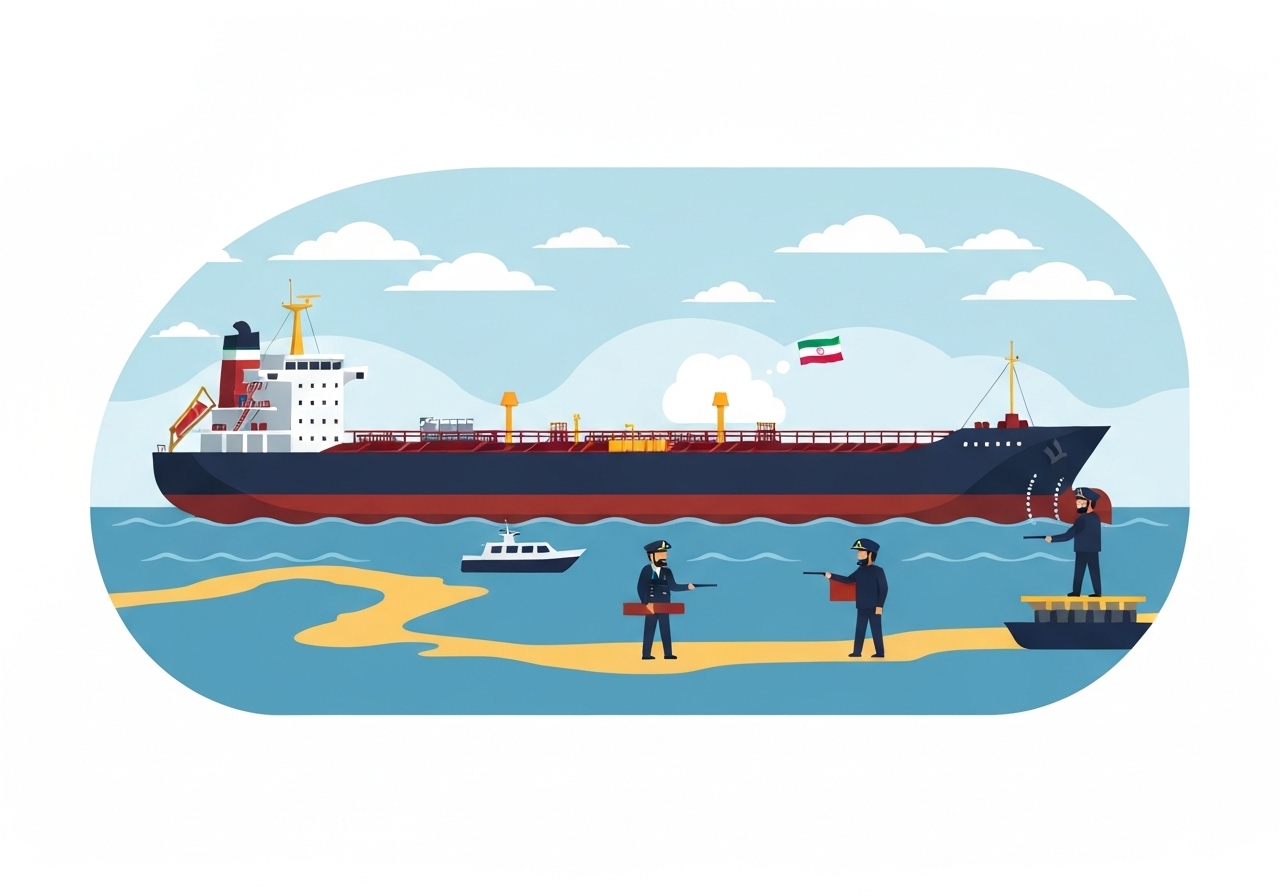
On November 15, 2025, Iran confirmed it seized the Marshall Islands-flagged oil tanker Talara after intercepting the ship in the narrow Strait of Hormuz, state media reported. The Islamic Revolutionary Guard Corps said the vessel was taken into Iranian waters on a court order over alleged violations, including an unspecified “illegal consignment,” and that the action aimed to protect national resources. The Talara was reportedly carrying about 30,000 tons of petrochemical products and had been en route to Singapore when it was intercepted. U.S. and British maritime sources observed the operation, which adds to a pattern of ship seizures and attacks in the region.
Key Takeaways
- Iran confirmed the seizure on Nov. 15, 2025, saying a court order authorized the action and that the ship was taken to Iranian waters.
- The tanker Talara was carrying roughly 30,000 tons of petrochemical cargo, reported as high-sulphur gasoil by the ship manager.
- Private security firm Ambrey described the interception as involving three small boats; a U.S. MQ-4C Triton drone reportedly monitored the scene.
- The Talara was flagged to the Marshall Islands and en route to Singapore when the incident occurred, according to multiple maritime sources.
- UK Maritime Trade Operations noted the ship was forced into Iranian territorial waters by what it termed possible “state activity.”
- This seizure follows a series of regional incidents: limpet mine attacks in 2019, a fatal 2021 drone strike on an Israeli-linked tanker, and vessel detentions in 2022 and 2024.
- The Strait of Hormuz funnels about 20% of globally traded oil, making any disruption there of high strategic and economic consequence.
Background
Tensions in the Persian Gulf have been elevated for years, driven by disputes over Iran’s nuclear program, regional rivalries and periodic maritime attacks. After the U.S. withdrew from the 2015 nuclear deal during the Trump administration, incidents targeting tankers and other vessels increased, including limpet mine attacks in 2019 and a drone strike in 2021 that killed two European crew members. Iran has previously seized vessels it accused of violations; notably, Tehran detained two Greek tankers in 2022 and held them until November that year, and it seized the Portuguese-flagged MSC Aries in April 2024.
The Strait of Hormuz is a strategic maritime chokepoint where roughly 20% of global traded oil transits from the Persian Gulf to international markets. The United States maintains a persistent naval presence in the region through its Bahrain-based 5th Fleet to deter closures and protect shipping lanes. Regional flare-ups — including a short but intense 12-day conflict in June involving Israel and Iran-linked forces — have increased Tehran’s warnings of retaliatory measures and its rhetoric about defending national interests.
Main Event
According to the official IRNA report relaying a statement from the Revolutionary Guard, Iranian forces intercepted the Marshall Islands-flagged tanker Talara on Friday and escorted it into Iranian waters under a court order. The statement did not specify the precise location of the handover, the current port of call, or the detailed nature of the alleged illegal consignment. Iranian officials framed the action as enforcement of legal rulings intended to protect national resources and interests.
Maritime monitoring firms and military sources provided additional details: Ambrey reported three small boats participated in the boarding and interception, while flight-tracking data reviewed by the Associated Press showed a U.S. Navy MQ-4C Triton drone circling the area for hours. UK Maritime Trade Operations said a possible “state activity” compelled the Talara to alter course into Iranian territorial waters. Columbia Shipmanagement, the Cyprus-based manager, later said it had lost contact with the vessel and identified the cargo as high-sulphur gasoil.
Initial accounts indicate the tanker had been bound for Singapore when intercepted. Neither Iran’s statement nor public comments from the ship manager have clarified the status of the crew, the exact legal grounds cited in the court order, or the ship’s immediate destination after seizure. The speed of events and limited independent-access reporting in Iranian territorial waters have constrained independent verification.
Analysis & Implications
The seizure intensifies already elevated maritime risks in a corridor that carries a significant share of the world’s oil supply. Any action that demonstrates a state actor can compel a merchant vessel to enter national waters raises insurance premiums, deters some commercial operators, and can ripple through fuel markets if sustained or expanded. Insurers and charterers will likely reassess risk in the region, which could increase transport costs and freight rates on certain routes.
Politically, the incident provides Tehran with a lever to signal resolve domestically and regionally amid broader confrontations linked to the Gaza conflict and prior hostilities with Israel. By citing a court order, Iranian authorities frame the move as legal enforcement rather than an arbitrary act, which complicates immediate international responses. Conversely, Western and regional powers may interpret the seizure as coercive state activity that undermines freedom of navigation.
Security-wise, the reported use of small-boat interception and the presence of a U.S. surveillance drone highlight modern maritime contest dynamics: state and private actors operate under overlapping jurisdictions with rapid information relay. The U.S. and its partners must weigh tactical options, from enhanced patrols to diplomatic channels, while avoiding escalatory responses that could provoke broader confrontations in an already volatile theater.
Comparison & Data
| Year | Incident | Known Cargo/Impact |
|---|---|---|
| 2019 | Limpet mine attacks on tankers | Multiple vessels damaged, regional insurance hikes |
| 2021 | Drone attack on Israeli-linked tanker | 2 European crew members killed |
| 2022 | Detention of two Greek tankers | Vessels held until Nov. 2022 |
| Apr 2024 | Seizure of MSC Aries | Portuguese-flagged cargo ship detained |
| Nov 14–15, 2025 | Seizure of Talara | ~30,000 tons petrochemical products, forced into Iranian waters |
These incidents show a recurring pattern of maritime coercion and attacks in the last six years. The Talara’s cargo volume—about 30,000 tons—places it among medium-to-large product tankers, significant enough to attract regulatory or enforcement attention if allegations are substantiated. Market and security analysts will monitor insurance premium trends and rerouting behavior in coming weeks for signs of broader economic impact.
Reactions & Quotes
Iran’s Revolutionary Guard framed the action as an enforcement measure tied to a judicial order and national protection. The public statement provided no operational details about the boarding or the crew.
The operation was carried out following a court order and aimed at protecting Iran’s national interests and resources.
IRNA/Islamic Revolutionary Guard Corps (state media)
Maritime security firms and Western monitoring centers emphasized the tactical aspects of the encounter and the involvement of nearby surveillance assets.
Our analysis indicates small-boat boarding activity and corroborating aerial surveillance during the event.
Ambrey (private maritime security firm)
UK maritime authorities characterized the movement into Iranian waters as the result of possible state action, expressing concern for commercial navigation in the corridor.
UKMTO has recorded reports that the vessel was forced into territorial waters following possible state activity.
UK Maritime Trade Operations (UK military maritime reporting)
Unconfirmed
- The exact nature and contents of the alleged “illegal consignment” aboard the Talara remain unspecified by Iranian authorities and are unverified by independent inspectors.
- The current condition and whereabouts of the ship’s crew have not been publicly confirmed by neutral sources.
- It is not yet independently verified whether any damage or casualties occurred during the interception.
Bottom Line
The detention of the Talara underscores persistent maritime risks in the Strait of Hormuz and signals Tehran’s willingness to use legal and kinetic measures to assert control over vessels it deems in violation. The incident is likely to prompt insurance and shipping companies to reassess routes and risk premiums for transits through the Gulf.
Diplomatically, the seizure complicates already strained relations between Iran and Western maritime stakeholders and may prompt further monitoring by U.S. and allied naval assets. Short-term market disruption is possible if further incidents follow or if commercial actors choose to divert cargoes around longer routes to avoid the strait.
Sources
- CBS News (news report summarizing IRNA and AP coverage)
- Associated Press (international news agency reporting and flight-tracking analysis)
- IRNA (Iranian state news agency; official statements)
- Ambrey (private maritime security firm; operational observations)
- UK Maritime Trade Operations (UKMTO) (UK military-affiliated maritime reporting)
- Columbia Shipmanagement (ship manager statements)