
Lead
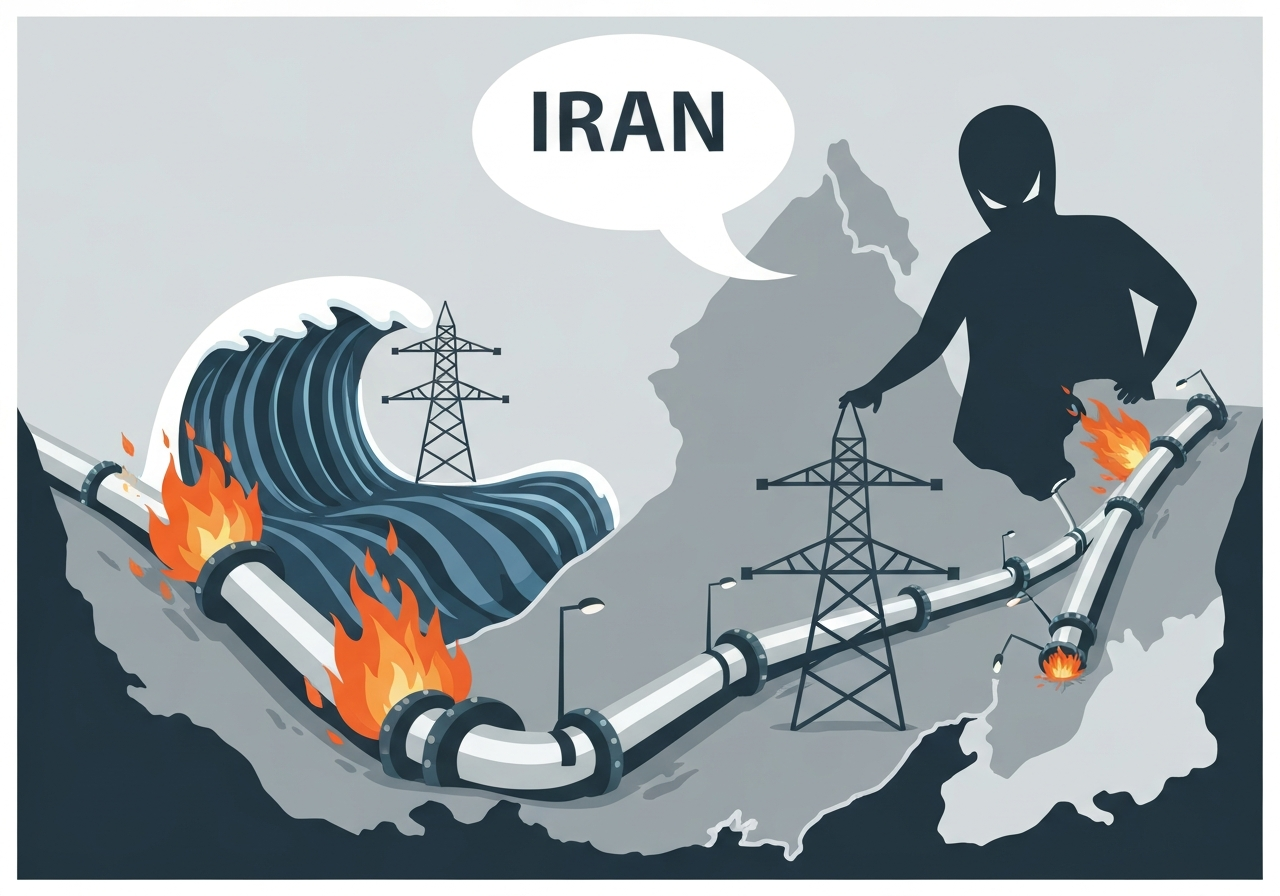
Fresh, escalatory threats from Washington and Tehran on March 22, 2026 raised the prospect of attacks on civilian energy and water systems across the Middle East. President Trump warned that U.S. forces could strike Iranian power plants if the Strait of Hormuz was not reopened within 48 hours; Tehran replied that any such strikes would invite retaliation against energy, desalination and other critical infrastructure — including in countries hosting U.S. troops. The exchanges occurred as the fourth week of the wider regional war produced new missile strikes on Israel, heavy fighting in Lebanon and rising civilian casualties. Global markets and travel through the Hormuz corridor responded immediately, underlining the wider economic and humanitarian stakes.
Key takeaways
- President Trump posted a 48-hour ultimatum on March 21–22, 2026, saying U.S. forces might target Iranian power plants if the Strait of Hormuz remained effectively closed.
- Iran’s military and senior officials vowed reciprocal strikes on regional energy, desalination and information infrastructure and warned the Hormuz would be ‘‘completely closed’’ until damaged plants were rebuilt.
- Iran fired ballistic missiles that struck residential areas in Dimona and Arad, Israel; emergency services reported about 175 people injured in those strikes, at least 10 seriously.
- Human tolls are high and contested: monitoring groups and officials place civilian deaths in Iran in the low thousands (reports cite at least 1,348–1,398 Iranian civilian deaths), Lebanon’s toll is above 1,000, and U.S. service-member fatalities stand at 13.
- Global energy markets reacted: Brent crude rose to about $113 per barrel from roughly $72.48 before the war began; S&P 500 futures fell approximately 0.3% on market nerves.
- The U.S. State Department issued a worldwide advisory urging Americans to “exercise increased caution” amid threats to diplomatic facilities and possible Iran-linked attacks on U.S. interests overseas.
- Israel’s military signaled an expanding campaign in southern Lebanon; Defense Minister Israel Katz ordered intensified demolitions of bridges and some houses to deny perceived Hezbollah routes.
- A Qatari helicopter crash in the Persian Gulf on March 22 killed seven people during a routine routing operation, according to Qatari authorities.
Background
The conflict entered its fourth week in late March 2026 after a series of U.S.- and Israeli-led strikes on Iranian targets and a forceful Iranian response that has included ballistic missiles and drones. The Strait of Hormuz — through which roughly one-fifth of global seaborne oil transits — has been central to the confrontation; Tehran has used threats to the shipping lane as leverage while Washington and allies have warned of severe consequences for any disruption to world energy flows. That dynamic has amplified anxiety in global markets and among regional governments reliant on desalination and uninterrupted energy supplies.
Iranian state institutions and the Islamic Revolutionary Guard Corps exert influence across the country’s energy and construction sectors, though civilian ministries — notably the Ministry of Energy and Ministry of Oil — operate many of the nation’s power and fuel assets. U.S. officials, including Ambassador Mike Waltz to the United Nations, have argued some energy targets are legitimate because of ties to the IRGC; Tehran rejects that framing and says striking civilian systems would be a breach of humanitarian norms.
Past confrontations between Israel and Iran-backed proxies, and repeated clashes with Hezbollah in Lebanon, set the stage for the multi-front escalation. Israel and Hezbollah have exchanged fire repeatedly since March 2; Israel’s military has warned of a protracted campaign in Lebanon, while significant displacement — more than one million people in Lebanon — and high civilian casualties have created urgent humanitarian needs.
Main event
On Saturday night, March 21, Iran launched ballistic missiles that struck residential neighborhoods in Dimona and Arad, cities near Israel’s main nuclear research facility. Local emergency services reported roughly 175 injured in those strikes, with at least 10 persons listed as seriously hurt. Israeli authorities said multiple impact sites were discovered and that battleground assessments are ongoing, including whether some defensive intercepts failed.
President Trump posted a forceful warning that evening and in subsequent interviews suggested U.S. forces could target Iranian power plants if shipping through the Strait of Hormuz was not restored within 48 hours. Ambassador Mike Waltz publicly supported the administration’s framing, calling energy infrastructure legitimate targets in certain circumstances. Iran’s political and military leadership responded in kind: senior figures declared that strikes on Iranian civilian energy systems would prompt retaliatory attacks on energy, fuel, desalination and IT infrastructure across the region.
In Lebanon, Israel intensified efforts to destroy bridges and houses in southern districts it says Hezbollah uses for logistics; Defense Minister Israel Katz ordered stepped-up demolitions of bridge crossings over the Litani River. The Israeli chief of staff, Lt. Gen. Eyal Zamir, said the campaign against Hezbollah has “only just begun,” signaling preparations for a deeper ground operation. Those orders have exacerbated fears among Lebanese civilians of long-term occupation and have contributed to mass displacement and rising civilian casualties.
The U.S. mobilized additional naval and ground assets to the region; the Pentagon has reportedly requested up to $200 billion for war-related needs, while Treasury Secretary Scott Bessent told national television he could not predict how long elevated fuel prices would persist. The State Department’s renewed global advisory warned Americans of potential Iran-linked threats to U.S. facilities and citizens abroad.
Analysis & implications
The exchange of threats targeting energy and water infrastructure marks a dangerous escalation because such systems are both civilian lifelines and economically strategic. Striking power plants or desalination facilities would quickly produce humanitarian crises across the Gulf and Levant: blackouts, surface-water contamination in areas dependent on desalination, and knock-on failures in health care and logistics. Tehran’s explicit mention of targeting facilities in countries hosting U.S. forces increases the risk of spillover beyond Iran and Israel into Gulf states and international shipping lanes.
Military planners face acute dilemmas. For defenders, intercepting ballistic missiles and cluster munitions requires judicious use of costly interceptors (such as Arrow 3) while balancing stockpile depletion risks; Israel’s recent failures to stop two strikes that reached populated areas raised questions about system deployment and sustainability. For attackers, targeting infrastructure risks international legal and political backlash and would likely harden global opposition; yet states facing strategic pressure may calculate that inflicting economic pain forces concessions or deterrence.
Economically, the near-term impact is clear: Brent crude jumped to roughly $113 per barrel, reversing pre-war price levels near $72.48 and adding inflationary pressure worldwide. Markets and insurers responding to shipping risk further magnify the economic cost. Longer term, persistent disruption of Hormuz transit could spur strategic stockpiling, alternate supply routes, and sustained price volatility, each carrying significant costs for energy-importing countries.
Diplomatically, the situation constrains options. Allies of the United States have signaled support for bolstering regional air defenses (France pledged assistance to Saudi defenses), but political appetite for deep new military engagements remains mixed. International humanitarian actors will face mounting need should infrastructure be damaged, while attempts to de-escalate will hinge on back-channel diplomacy and credible guarantees for shipping safety and civilian protection.
Comparison & data
| Metric | Value / Recent change |
|---|---|
| Reported civilian deaths (Iran, official/monitor) | ~1,348 – 1,398 |
| Lebanon civilian deaths | >1,000 (1,029 reported) |
| Israeli civilian deaths | At least 15 |
| U.S. service-member deaths | 13 |
| Injuries in Dimona & Arad | ~175 injured; 10+ seriously |
| Brent crude | ~$113 per barrel (from $72.48 pre-war) |
| S&P 500 futures reaction | ~-0.3% (overnight) |
The table above summarizes disparate but corroborated figures drawn from government statements, monitoring groups and emergency services. Numbers vary across sources — for example, Iranian civilian tolls reported by U.N. and independent monitors differ by several dozen — which underscores both the human scale of the crisis and the difficulty of real-time verification in active conflict zones.
Reactions & quotes
“He stands on his red lines, and he’s not going to allow this genocidal regime to hold the world’s energy supplies or economies hostage.”
Mike Waltz, U.S. Ambassador to the United Nations (television interviews)
Context: Ambassador Waltz voiced support for the administration’s willingness to consider energy infrastructure as legitimate targets under certain conditions, framing strikes as a means to prevent coercion of global markets.
“Attacking a nation’s vital infrastructure means a direct threat against its people and a clear violation of humanitarian principles and international law.”
Mohammad Reza Aref, Iran’s first vice president (statement reported by Mehr)
Context: Iran’s senior official described U.S. threats as targeting the Iranian population and warned of reciprocal measures; Iranian state media carried the remarks as part of a coordinated response.
“The campaign against Hezbollah has only just begun.”
Lt. Gen. Eyal Zamir, Israeli chief of staff (military briefing)
Context: Israel’s military chief framed operations in Lebanon as ongoing and signaled expanded operations that could include deeper ground maneuvers and increased demolition of crossings alleged to be used by Hezbollah.
Unconfirmed
- Whether the Arrow 3 system was withheld deliberately during the Dimona and Arad strikes; Israeli authorities have said they are investigating but have not publicly confirmed deployment details.
- Claims that Iran’s missiles specifically targeted Dimona’s nuclear complex remain contested; Iranian and state-affiliated outlets framed the strikes as retaliation, while Israeli officials have not confirmed a nuclear site hit.
- Reports that the Qatari helicopter crash was linked to combat activity are unproven; Qatari officials described a technical malfunction during a routine operation.
Bottom line
The public exchange of threats over civilian energy and water systems represents a major escalation with real humanitarian and economic consequences. If either side carries out strikes on critical infrastructure, the result would likely be cascading civilian harm across multiple countries and a sharp, sustained rise in energy prices and insurance costs for shipping.
De-escalation will require credible, verifiable commitments to keep commercial shipping lanes open and immediate diplomatic channels to prevent miscalculation. Meanwhile, governments and humanitarian organizations should prepare for infrastructure-related crises — from power outages to desalination failures — while analysts and policymakers weigh the risks of supply depletion for costly interceptors and the long-term implications of a protracted regional conflict.