
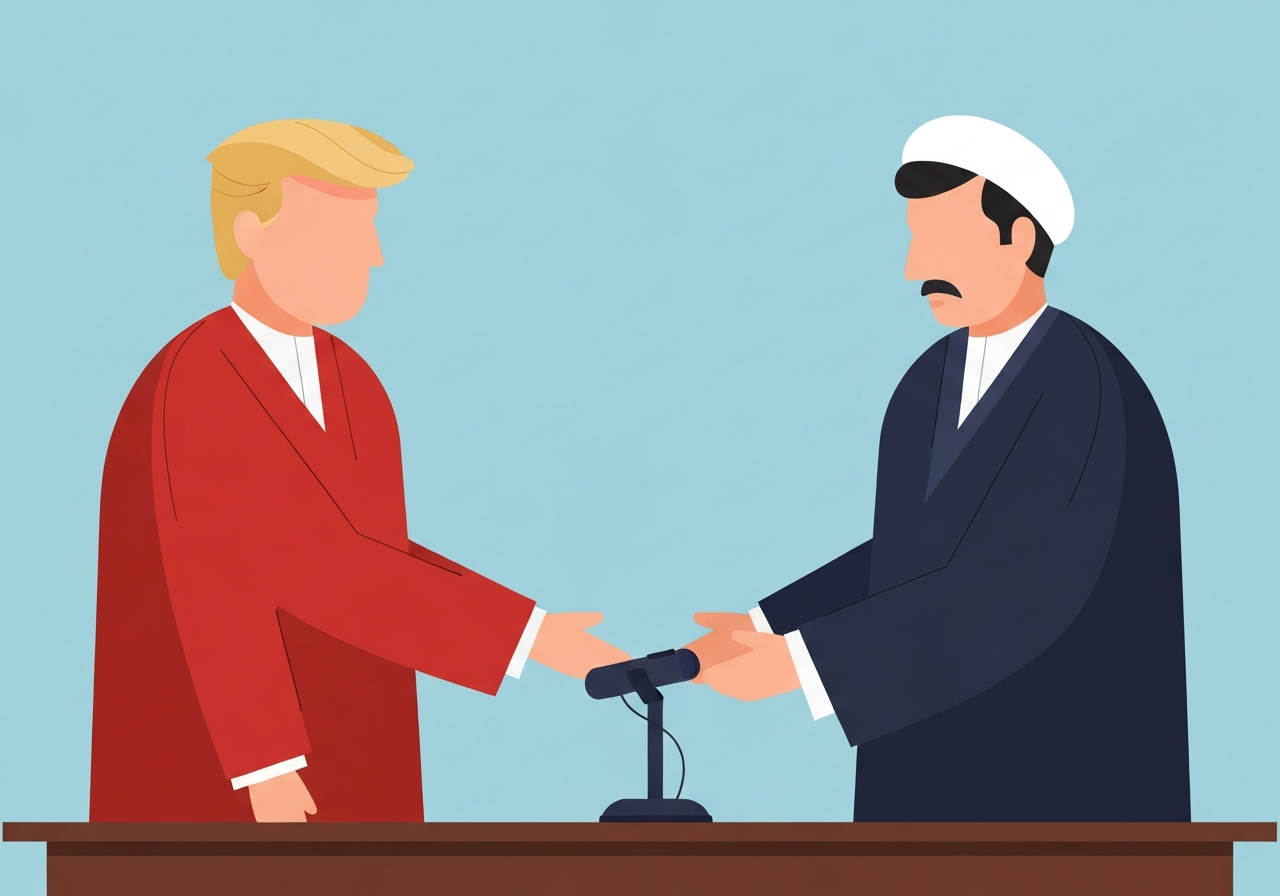
— A rapid escalation across the Middle East followed US‑Israeli strikes on Iran on Sunday, culminating in the reported death of Iran’s Supreme Leader Ayatollah Ali Khamenei and a series of retaliatory missile, naval and air attacks across the Gulf and Levant. US President Donald Trump said he has told Iranian leaders he is “agreed to talk,” even as Washington and its allies continued military operations and Iran vowed unlimited retaliation. Civilians and service members were among the casualties: three US soldiers killed, scores injured across Israel and the UAE, and Iran reporting 165 dead in a girls’ school bombing in Minad. Global leaders and publics reacted with alarm, with Britain permitting US use of UK bases for defensive strikes while stopping short of offensive participation.
Key takeaways
- On March 1, 2026, US and Israeli forces carried out strikes inside Iran, including attacks reported in Tehran, after which Iran launched widespread missile strikes across Israel and Gulf states.
- Iranian authorities reported 165 killed and 96 injured in an airstrike on a girls’ school in Minad; investigations into attribution remain ongoing.
- The US announced three service members killed in the conflict; President Trump said US operations would continue until objectives are met.
- The UAE recalled its ambassador to Iran after strikes on Abu Dhabi and Dubai; Emirati authorities reported at least four people killed in UAE attacks since the escalation.
- Iran’s Revolutionary Guard Corps (IRGC) said it struck three oil tankers in the Gulf/Strait of Hormuz; ship operator V.Ships reported one sailor killed on the Marshall Islands‑flagged tanker MKD VYOM.
- Israeli authorities reported multiple injuries from rocket strikes, including seven wounded in Jerusalem and nine dead in a synagogue in Beit Shemesh.
- A Reuters/Ipsos poll during the attacks found 27% of Americans approved the US‑Israeli strikes, while 56% said President Trump was too willing to use military force (sample n=1,282; margin of error ±3 percentage points).
- UK Prime Minister Keir Starmer authorized US use of British bases for “defensive” strikes on Iranian missile sites but reiterated the UK did not take part in the initial strikes and would not join offensive operations.
Background
The confrontation traces to a recent US‑Israeli operation targeting Iranian facilities on Saturday, which Iranian officials say killed Supreme Leader Ayatollah Ali Khamenei. That death instantly altered the diplomatic and military calculations across the region: Iran vowed broad reprisals and mobilized both conventional forces and proxy networks. The US responded with further strikes, saying it was targeting military and naval assets tied to the Iranian armed forces.
Longstanding tensions—over Iran’s nuclear program, ballistic missile development, and support for militias across Iraq, Syria, Lebanon and Yemen—provide the structural backdrop. Regional states have been pulled into the ripple effects: Gulf monarchies face direct strikes on urban centers, Israel is under rocket barrage, and maritime traffic in the Strait of Hormuz has been targeted, threatening global energy routes. Western capitals are balancing military support for Israel and US forces against concerns about wider escalation.
Main event
On March 1, US and Israeli forces conducted strikes inside Iran, including reported hits in Tehran and at military headquarters, according to Israeli statements about attacks on intelligence and air force sites. Israeli officials said over 100 fighter jets were used in coordinated operations, and spokespeople framed strikes as aimed at degrading Iran’s command and control and military infrastructure.
Iran responded with a multi‑axis campaign: missile salvos toward Israel, attacks on US naval and base assets in the Gulf, and actions the IRGC said targeted foreign‑flagged tankers. Civilian infrastructure and noncombatants suffered: footage and local reporting described a hospital in northern Tehran heavily damaged and evacuations underway, while videos from Israel showed damage consistent with rocket impacts and interception debris.
The human toll mounted rapidly. Iranian state media reported 165 victims in the Minad girls’ school bombing and dozens injured; Israeli authorities reported nine killed in a Beit Shemesh synagogue strike and multiple wounded in Jerusalem. The US said three service members were killed in the course of operations. Shipping operators also reported staff casualties after vessels were hit near Oman.
Analysis & implications
Militarily, the campaign marks a sharp escalation in direct strikes on sovereign Iranian territory by US and Israeli forces, and in Tehran’s willingness to strike urban centers and maritime traffic. If verified, attacks on ports, oil infrastructure or shipping lanes risk a sustained disruption of oil markets and insurance rates, raising energy prices and economic ripple effects well beyond the region.
Politically, the death of Iran’s Supreme Leader—if confirmed as caused by the strikes—creates a power vacuum with unpredictable succession dynamics. Hardliners and security elites may consolidate control, making internal bargaining and reform less likely. Regional governments, from Turkey to Gulf monarchies, will be forced to recalibrate alliances and contingency planning for refugee flows and border security.
Internationally, the United Kingdom’s decision to permit US defensive operations from British bases illustrates how allied support can fall short of direct combat involvement, a distinction leaders emphasize to manage domestic politics. Public opinion data from the United States shows limited popular backing for the operation; this gap between government action and public sentiment could complicate sustained military campaigns.
| Event | Reported figure | Source |
|---|---|---|
| Girls’ school bombing (Minad) | 165 killed, 96 injured | IRNA (state media), reported via DW |
| US service members killed | 3 | US officials, reported via DW |
| Synagogue strike (Beit Shemesh) | 9 killed, 28 wounded | Israeli medical authorities, reported via DW |
| Ships claimed sunk by US (claim) | 9 warships (claimed) | Statement by President Trump (unverified) |
The table above aggregates reported casualties and major claims drawn from the live reporting. Numbers remain subject to confirmation by independent investigators and third‑party monitors; some figures originate from state or official sources with differing verification channels.
Reactions & quotes
British Prime Minister Keir Starmer framed the UK’s role as narrowly defensive while condemning Iranian attacks on Gulf civilians. He stressed the UK did not join the initial strikes and sought a negotiated settlement as the best path forward.
“We were not involved in the initial strikes on Iran and we will not join offensive action now.”
Keir Starmer, UK Prime Minister
US President Donald Trump used social platforms to vow continued operations and called for Iranians to rise up, framing the campaign as retaliation for US casualties and attacks on Western interests. His public messaging also included an unverified claim about sinking Iranian warships, which officials outside the White House have not independently corroborated.
“America will avenge their deaths and deliver the most punishing blow… America is with you.”
Donald Trump, US President
Iranian Foreign Minister Abbas Aragchi characterized Tehran’s actions as self‑defense and warned there would be no limit to Iran’s response. His remarks reflect Tehran’s effort to justify broad retaliation and to rally domestic support amid international condemnation of some attacks that hit civilian sites.
“We are defending ourselves—whatever it takes, and we see no limit for ourselves to defend our people.”
Abbas Aragchi, Iranian Foreign Minister
Unconfirmed
- President Trump’s claim that nine Iranian warships have been sunk has not been independently verified by third‑party naval trackers or international observers.
- Attribution and chain of responsibility for the Minad girls’ school strike remain unclear; Israeli and US authorities have said they are investigating reports and have not acknowledged responsibility.
- IRGC statements that tankers struck were US or UK vessels are contested; independent verification of vessel identities and the precise weapon sources is pending.
Bottom line
The events of March 1, 2026 mark a dangerous widening of direct military confrontation with significant civilian costs and global economic implications. The death of Iran’s supreme leader—if confirmed as a result of the strikes—dramatically raises the stakes and makes an immediate political settlement more difficult.
Allies face a narrow choice: increase military pressure at the risk of wider war, or press harder for diplomatic avenues while trying to contain proxy spillovers. For the international community, rapid independent investigations, humanitarian access, and clear lines of de‑escalation will be essential to prevent further catastrophic escalation.