
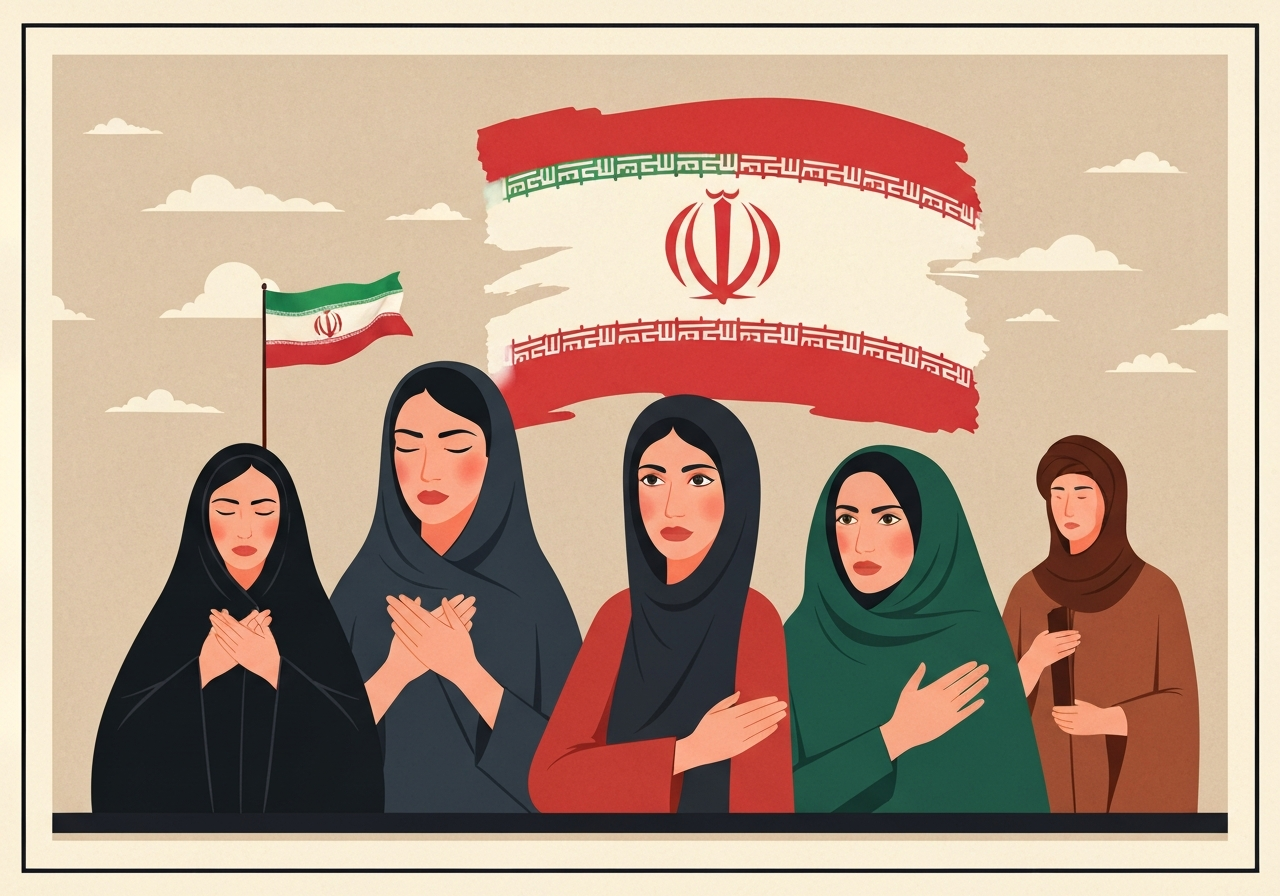
Lead. On March 2, 2026, at the AFC Women’s Asian Cup opener on the Gold Coast, Iran’s national women’s team stood in formation and remained silent while their national anthem played. The match ended 3-0 in favor of South Korea, but the team’s quiet gesture drew attention far beyond the pitch. The moment came as Iran grappled with tumult at home following the reported death of Supreme Leader Ayatollah Ali Khamenei and related military activity. Team officials emphasized focus on the tournament while the broader political backdrop persisted.
Key Takeaways
- Iran lost 3-0 to South Korea on March 2, 2026, in the opening match of the AFC Women’s Asian Cup Australia 2026 on the Gold Coast.
- The Iranian squad stood silently during their national anthem before kickoff, a visible act that resonated amid unrest at home.
- Head coach Marziyeh Jafari declined to discuss the political situation, saying the team needed to concentrate on competition.
- A small group of supporters in the stands displayed the pre-1979 Iranian flag, often used by opponents of the current regime.
- Former OutKick founder Clay Travis publicly urged U.S. leaders to support Iranian players rather than penalize them for government actions.
- Australia is scheduled to play Iran next at the same Gold Coast venue later in the group stage on Thursday.
Background
The AFC Women’s Asian Cup Australia 2026 opened amid an unusually charged international context for the Iranian team. Reports emerged that Supreme Leader Ayatollah Ali Khamenei had died and that there had been related military strikes, events that prompted intense debate and unrest inside and outside Iran. Iranian women’s soccer has developed under heavy social and political scrutiny for years, making any public gesture by the team especially resonant.
International sports events have repeatedly become stages for political expression by Iranian athletes and supporters, from symbolic flags to quiet protests. The women’s national team operates within a tightly regulated domestic environment; coaches, federation officials and the players themselves often face pressure to avoid overt political statements. Against that history, the pregame silence at the Gold Coast stadium registered as a meaningful departure from scripted displays.
Main Event
The match itself saw South Korea control possession and create the clearer scoring chances, converting three times en route to a 3-0 victory. Iran spent extended periods defending and managed only sporadic forays into the attacking third. The scoreboard reflected the on-field balance, while the pregame tableau — Iran standing but silent for their anthem — became the defining image of the night.
Before kickoff, the squad assembled in orderly lines and did not sing when the national anthem played. Team staff and Iranian officials present in Australia avoided public political commentary, maintaining a focus on match preparation and the competition schedule. Head coach Marziyeh Jafari told reporters she preferred to keep the squad focused on football rather than comment on external events.
In the stands a small bloc of supporters waved the pre-1979 flag, a symbol increasingly visible among dissenting Iranians in exile. South Korea’s players and staff prepared and executed a match plan that emphasized possession and transition, producing the three goals that settled the contest. After the final whistle, attention quickly shifted to Iran’s upcoming fixture against Australia at the same venue.
Analysis & Implications
Symbolic acts by athletes at international competitions can amplify events at home, and the Iranian team’s silence is likely to be interpreted through multiple lenses. For many Iranians abroad and inside the country, the gesture may be read as a quiet act of solidarity with calls for change. For others, it could be seen as an apolitical decision to avoid entanglement in a fraught moment. The team’s posture underscores how sports and national identity intersect in high-profile tournaments.
From a diplomatic perspective, the image of athletes refraining from singing their anthem complicates how federations and tournament organizers manage political sensitivity. Organizers typically aim to keep competitions insulated from geopolitics, but visible actions by teams force governing bodies to confront difficult questions about player safety, the limits of expression, and tournament neutrality. National federations may face pressure to respond in ways that could affect future participation or eligibility.
On a sporting level, the result leaves Iran with work to do competitively. A 3-0 opening defeat places pressure on the squad to adjust tactics and mentality ahead of the match with Australia. For the players themselves, navigating intense international scrutiny while preparing for successive high-stakes games presents both emotional and logistical challenges.
Reactions & Quotes
Team staff avoided overt statements about the political situation, focusing instead on competition plans and player preparation. Coach Jafari offered a brief remark when pressed by reporters.
“We needed to focus on the tournament,”
Marziyeh Jafari, Iran head coach
Australian captain Sam Kerr framed the upcoming match against Iran in sporting terms and urged respectful treatment of the visiting players.
“They’re young girls and young footballers. We’ll treat the game like any other and show the team the utmost respect,”
Sam Kerr, Australia forward
Commentators and media figures outside the match framed the silence as distinct from the government that the team represents. One sports publisher called for international leaders to signal support for athletes rather than conflate them with state actions.
“Supporting Iran’s players sends a clear message: our dispute is with leaders, not the people,”
Clay Travis, sports publisher (comment)
Unconfirmed
- Attribution that the reported strikes were organized directly by U.S. President Donald Trump: media coverage and social posts reference U.S. action and commentary, but independent confirmation of operational command links to the U.S. president is not established here.
- Motivation behind every player’s silence: while the team’s collective quiet was public, internal deliberations or directives explaining the decision have not been fully disclosed by the federation or the players.
Bottom Line
The Iran women’s team lost 3-0 to South Korea on the field, but the pregame silence during the national anthem amplified the match’s significance well beyond sport. In a moment of national turbulence after the reported death of Supreme Leader Ayatollah Ali Khamenei, the players’ gesture became a symbol interpreted by many as separating citizenry — including athletes — from state authority.
How sports bodies, national federations and international leaders respond will matter for athlete safety and the relationship between politics and competition. Practically, Iran must regroup quickly for the next group match against Australia; politically, the image of a team standing silent will continue to circulate as both a sporting and symbolic snapshot of a country in flux.
Sources
- OutKick — media report on match and context (news article)
- AFC — official competition page (organizer)
- Truth Social — social media platform for public posts referenced in coverage (social media)