
Lead
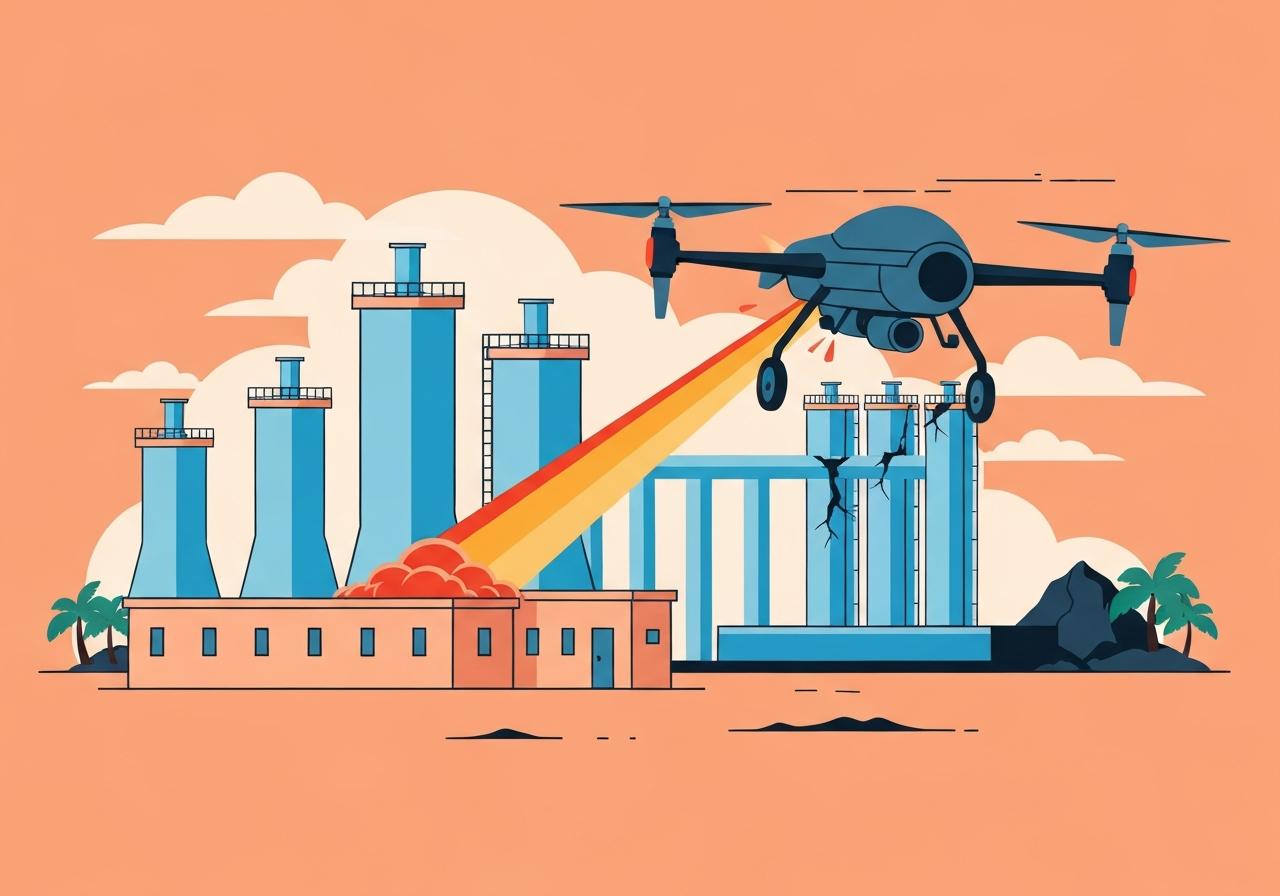
Bahrain accused Iran on Sunday of striking a desalination plant with a drone, marking a worrying escalation in a nine-day-old regional war that has already spread across the Gulf and Levant. The incident came as Iran’s president vowed broader attacks in response to intense U.S. and Israeli airstrikes, and as overnight Israeli strikes sent smoke over Tehran. Officials say the wider conflict, which began after joint U.S.-Israeli strikes on Feb. 28, has produced heavy military and civilian losses across multiple countries.
Key Takeaways
- Bahrain reported an Iranian drone strike damaged one of its desalination plants; officials did not confirm whether water supplies were fully cut.
- The war began on Feb. 28 after joint U.S.-Israeli strikes on Iran and, as of reporting, has killed at least 1,230 people in Iran, more than 300 in Lebanon and about a dozen in Israel.
- Six U.S. service members have died in the conflict, and strikes have hit hotels, ports and residential towers in the Gulf region.
- Iran’s government said a U.S. airstrike earlier damaged a desalination plant on Qeshm Island, reducing water to roughly 30 villages, a claim made by Iran’s foreign minister.
- Israel renewed strikes in Lebanon and ordered large evacuations as its campaign aims to disrupt Iran-backed forces; Lebanon’s death toll rose above 300 after fresh strikes.
- Tehran reported Israeli strikes on oil storage and transfer facilities that killed four people and raised air pollution concerns in the capital.
Background
The current conflict began on Feb. 28 after coordinated U.S.-Israeli strikes on Iranian territory. That opening salvo was followed by a rapid escalation of missile, drone and air attacks involving Iranian forces, Israeli forces, Lebanese militias aligned with Iran, and U.S. troops operating in the region. Over nine days the fighting spread from the Persian Gulf to Lebanon and Israel, drawing in multiple state actors and prompting evacuation orders in parts of Lebanon.
Civilian infrastructure has been repeatedly touched by the fighting: ports, hotels and residential buildings in Gulf states have reported strikes, and both Iran and its neighbors have accused the other of attacking water and energy facilities. Iran’s leadership has also shifted rhetorically; conciliatory comments toward Gulf neighbors were followed within days by hard-line warnings to expand attacks, reflecting internal political dynamics in Tehran after the early-war death of Supreme Leader Ayatollah Ali Khamenei.
Main Event
Bahrain—home to the U.S. Navy’s Fifth Fleet—publicly blamed Iran for a Sunday drone strike that damaged one of its desalination plants. Bahraini authorities described the attack as indiscriminate and noted prior drone and missile strikes had struck hotels, ports and residential towers, causing civilian casualties including at least one confirmed death.
Iran’s president Masoud Pezeshkian issued a defiant message the same day, saying Iran would respond powerfully to attacks and would not bow to “bullying, oppression or aggression.” His comments followed an earlier, more conciliatory statement asking neighboring states not to join U.S. and Israeli operations; hard-line officials quickly contradicted that softer tone.
Iran also reported overnight that Israeli strikes hit multiple oil storage tankers and a petroleum transfer terminal, killing four people and producing dense smoke over northern Tehran. Iran’s state-linked officials said the country has sufficient fuel stocks despite the strikes, while Israeli authorities said targeted depots were being used by Iranian forces.
Separately, Iran accused a U.S. airstrike of damaging a desalination plant on Qeshm Island in the Strait of Hormuz, asserting that water for roughly 30 villages was affected. U.S. Central Command and Israel’s military did not immediately provide comments on the Bahrain plant allegation.
Analysis & Implications
The reported strike on a desalination plant marks a potentially significant escalation because it targets civilian water infrastructure that many Gulf populations rely on. In an arid region where desalination supplies critical municipal and agricultural water, damage to such facilities risks immediate humanitarian stress and could draw international attention and legal scrutiny over attacks on civilian utilities.
Strategically, strikes on desalination and oil infrastructure signal a widening of target sets away from strictly military objectives. That shift increases the risk of reciprocal attacks on civilian services and logistic networks, complicating de-escalation and raising the prospects of spillover into commercial shipping, insurance rates and global energy markets already jittery from disrupted flows.
Politically, Tehran’s oscillation between conciliatory language and hard-line vows suggests internal contestation over how to manage the crisis after the early removal of the supreme leader. For neighboring Gulf states and Western actors, that ambiguity makes it harder to predict whether Iran will prioritize deterrence through asymmetric strikes or seek limited disengagement to avoid further strategic costs.
Comparison & Data
| Location | Reported Deaths | Notable impact |
|---|---|---|
| Iran | At least 1,230 | Hundreds of airstrikes; oil depots hit |
| Lebanon | More than 300 | Evacuations ordered; heavy strikes vs Hezbollah areas |
| Israel | About a dozen | Limited ground/air casualties; continued rocket fire |
| U.S. forces | 6 killed | Operational losses among deployed troops |
The table above consolidates official and media-reported casualty counts cited by regional authorities and news organizations as of the report. These figures reflect immediate war mortality and do not capture wounded, displaced civilians or longer-term infrastructure damage. The spread of attacks across civilian utilities and energy sites is a core driver of projected humanitarian and economic impacts.
Reactions & Quotes
Iranian leadership framed responses in national-security terms, stressing retaliation after attacks.
“When we are attacked, we have no choice but to respond. The more pressure they impose on us, the stronger our response will naturally be.”
President Masoud Pezeshkian
That statement followed a brief earlier appeal to neighbors and was immediately undercut by hard-line officials, illustrating factional pressures in Tehran about the scope of retaliation.
“The geography of some countries in the region … is in the hands of the enemy, and those points are used against our country in acts of aggression. Intense attacks on these targets will continue.”
Judiciary Chief Gholam Hossein Mohseni-Ejei
Mohseni-Ejei’s commentary signaled a commitment among Iran’s hard-line elements to continue strikes, complicating diplomatic openings. On the U.S. side, senior leaders reiterated their intention to press the campaign.
“We’re not looking to settle.”
U.S. President Donald Trump
That blunt remark from President Trump underscored U.S. resolve as reported by officials, and was echoed in public statements with allied leaders, increasing the risk of prolonged operations absent negotiated de-escalation.
Unconfirmed
- Whether the Bahrain desalination plant’s water distribution was fully taken offline following the reported strike; Bahraini officials described damage but did not confirm outages.
- The precise attribution chain for some overnight strikes—for example which units conducted the oil-tanker and depot strikes—remains partly unverified by independent observers.
- Claims that a U.S. strike on Qeshm Island definitively cut water to 30 villages come from Iranian officials and have not been substantively corroborated by independent, on-the-ground verification.
Bottom Line
The reported drone strike on a Bahraini desalination plant marks a dangerous widening of the conflict’s apparent target set toward civilian infrastructure. In a region dependent on desalination and oil logistics, such damage multiplies humanitarian risk and increases economic fallout, raising the stakes for rapid international diplomacy and protective measures for critical services.
Absent credible channels for de-escalation, reciprocal attacks on civilian utilities and energy facilities could prolong the conflict and widen its regional and global repercussions. Monitoring independent verification of infrastructure damage and providing emergency assistance where needed will be essential priorities for humanitarian and diplomatic actors in the coming days.
Sources
- Associated Press — (news)
- IRNA (Islamic Republic News Agency) — (state media)
- U.S. Central Command — (official military)