
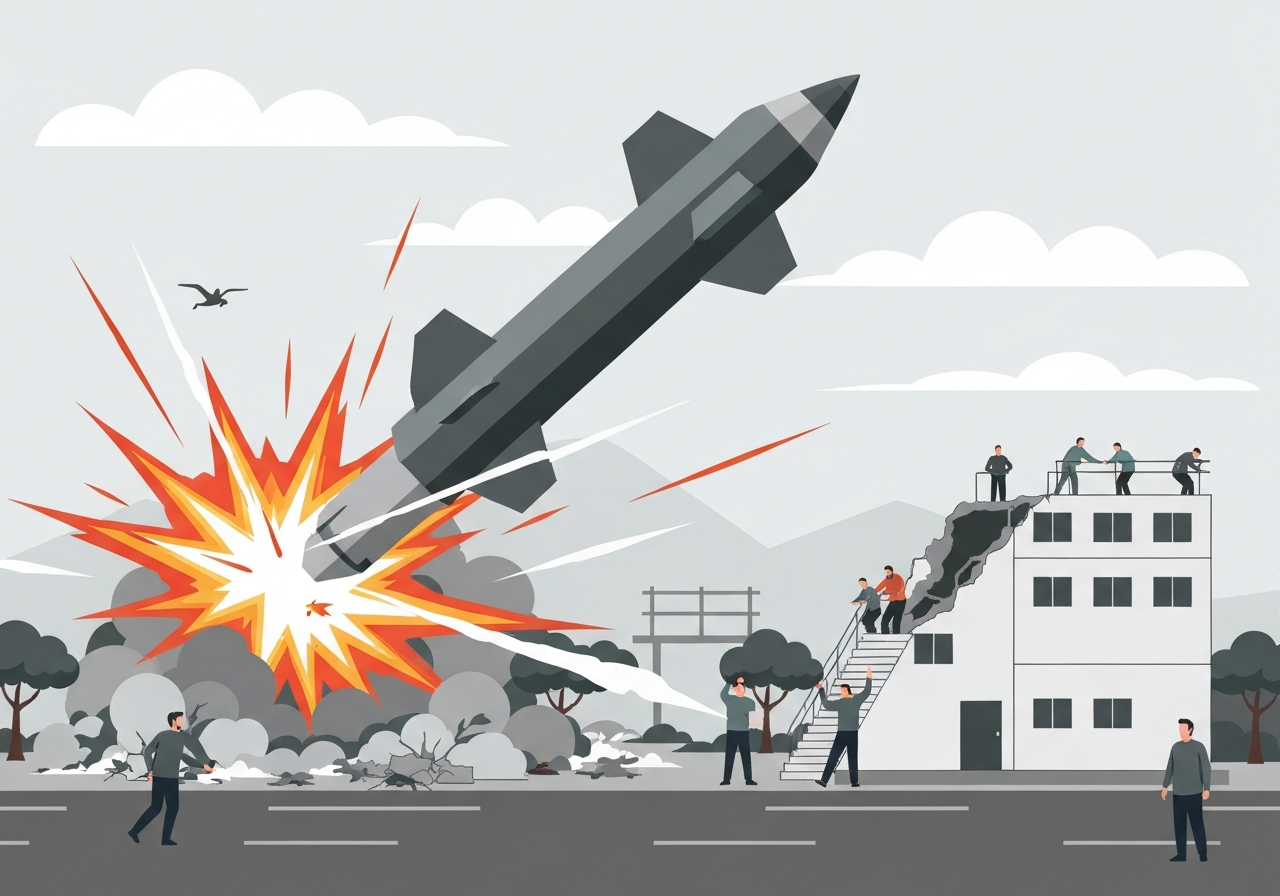
On 1 March 2026 an Iranian ballistic missile struck the central Israeli city of Beit Shemesh, killing nine people and injuring 28 others, the Magen David Adom emergency service reported. Search-and-rescue teams and a military helicopter worked at the scene as authorities examined how the missile impact occurred. The strike came amid a wider round of hostilities after US-Israeli strikes on Iran on Saturday killed Supreme Leader Ayatollah Ali Khamenei and other senior figures. Iran announced a 40-day mourning period and vowed that its response options remain unrestricted.
Key Takeaways
- Fatalities and injuries: Magen David Adom reported nine dead and 28 wounded from the Beit Shemesh impact, with two in serious condition.
- Timing and context: The strike occurred on 1 March 2026, one day after US-Israeli operations in Iran that killed Ayatollah Ali Khamenei.
- Emergency response: Israeli army search-and-rescue teams and an evacuation helicopter were deployed to the Beit Shemesh scene.
- Civilian risk: Al Jazeera reporting from Ramallah said this is the highest single-day civilian toll since the round of strikes began on Saturday.
- Public concern: Residents and reporters raised questions about siren activation and the possibility of more victims trapped under rubble.
- Iranian stance: Tehran declared a 40-day mourning period and officials warned the confrontation could become more complex and dangerous.
- Military review: The Israeli army stated that the circumstances of the ballistic missile impact are under review.
Background
The incident must be read against an abrupt escalation that began on Saturday when US and Israeli forces struck targets inside Iran, killing Supreme Leader Ayatollah Ali Khamenei and other senior officials. Those strikes prompted immediate and sustained retaliatory launches by Tehran, including ballistic missiles aimed at Israeli territory. Beit Shemesh, a city roughly 30 kilometres west of Jerusalem, is within range of such long‑range projectiles and has previously been threatened in cross-border exchanges.
Israel has public civil‑defence systems designed to warn residents of incoming fire, and ambulance and rescue services maintain protocols for mass‑casualty incidents. In this episode, questions about warning times and interception efforts have already been raised publicly, intensifying scrutiny of both defence preparedness and command decisions as the confrontation widens. Regional actors and international mediators are watching for whether exchanges will remain limited or evolve into broader, sustained conflict.
Main Event
According to Magen David Adom, emergency teams arrived rapidly at the Beit Shemesh impact site after the strike, treating dozens and evacuating the wounded by ground and air. The service confirmed nine fatalities and 28 injured, including two in serious condition. The Israeli military said its search-and-rescue units were operating alongside medical teams and that a helicopter had been used to evacuate casualties.
Local reporting described rescue workers extracting people from under rubble, raising concerns that the official toll could rise as crews continue to search collapsed structures. Observers and residents questioned why sirens did not sound in Beit Shemesh before the impact, a point authorities said they would investigate. The army also announced it was reviewing the trajectory and circumstances of the ballistic missile that caused the damage.
The strike followed a day of intense exchanges after the US-Israeli operation inside Iran. Tehran framed its launches as reprisal for Saturday’s strikes that killed Khamenei, while Israeli officials portrayed their actions as defensive measures to deter further Iranian attacks. Civilian locations such as Beit Shemesh have been put at increased risk as both sides attempt to strike military or strategic targets while operating in congested airspace.
Analysis & Implications
The death of Iran’s supreme leader has sharply raised the stakes of this confrontation. Iran’s announcement of a 40-day mourning period and statements by senior officials that there are no limits to self‑defence signal a political environment likely to favour sustained retaliation rather than de-escalation. That posture complicates diplomatic openings and increases the chance of further strikes affecting civilian areas.
For Israel, a direct ballistic hit on a central city underscores the limits of missile defence and early-warning systems when strikes occur quickly or at unexpected trajectories. Questions about siren activation and interceptor performance will drive operational reviews and could influence decisions on mobilization, civil defence measures, and possible evacuation or shelter policies in exposed towns.
Regionally, neighbours and international powers face a dilemma: condemnations and calls for restraint are likely to be matched by intensified security postures and hurried contingency planning. Economically, protracted exchanges could disrupt energy markets and shipping if maritime or infrastructure targets become part of the campaign. Humanitarian concerns will grow if cross‑border attacks continue to strike populated areas, increasing displacement and medical needs.
Reactions & Quotes
Reporters and officials offered immediate reactions that capture both on‑the‑ground fears and Tehran’s broader political messaging. One field correspondent highlighted local anxiety about rescue operations and warning systems.
Residents fear the casualty count may rise and are asking why sirens did not alert Beit Shemesh before the strike.
Nour Odeh, Al Jazeera (reporter in Ramallah)
Iranian officials framed the strikes as part of a national response to the killing of their leader, emphasizing an open posture on defensive measures.
We have no restrictions or limits in defending ourselves, and our options are not constrained by the attackers’ objectives.
Abbas Araghchi, Iran Foreign Ministry (official statement)
Tehran’s new president signalled continuity with the late supreme leader’s stance while addressing the Iranian public.
Despite this loss, the nation will continue along Khamenei’s path and leave adversaries without hope.
President Masoud Pezeshkian (televised address)
Unconfirmed
- Precise cause of siren failure: Official investigations are pending; it is not yet confirmed whether a technical fault, human error or detection lag caused any missed alerts.
- Targeting intent: There is no confirmed evidence publicly available that the missile deliberately aimed at a civilian structure; investigations into trajectory and intended target remain ongoing.
- Further casualty updates: Rescue teams are still working at the scene, so final casualty figures could change as searches continue.
Bottom Line
The Beit Shemesh strike on 1 March 2026, which killed nine and wounded 28, marks a significant and tragic escalation in the Iran–Israel exchanges following the death of Ayatollah Khamenei. It highlights both the human cost of rapid military retaliation and operational vulnerabilities in warning and interception systems when long‑range projectiles reach populated areas. The incident is likely to harden political positions in Tehran and Jerusalem, reduce space for diplomatic de‑escalation, and increase the risk of further strikes affecting civilians.
Immediate priorities are completing an impartial investigation into the impact, ensuring adequate medical and sheltering support for affected residents, and pressing for channels that can prevent further strikes on populated areas. International actors and humanitarian organisations will need to monitor developments closely and prepare contingency assistance as the situation evolves.