
Lead
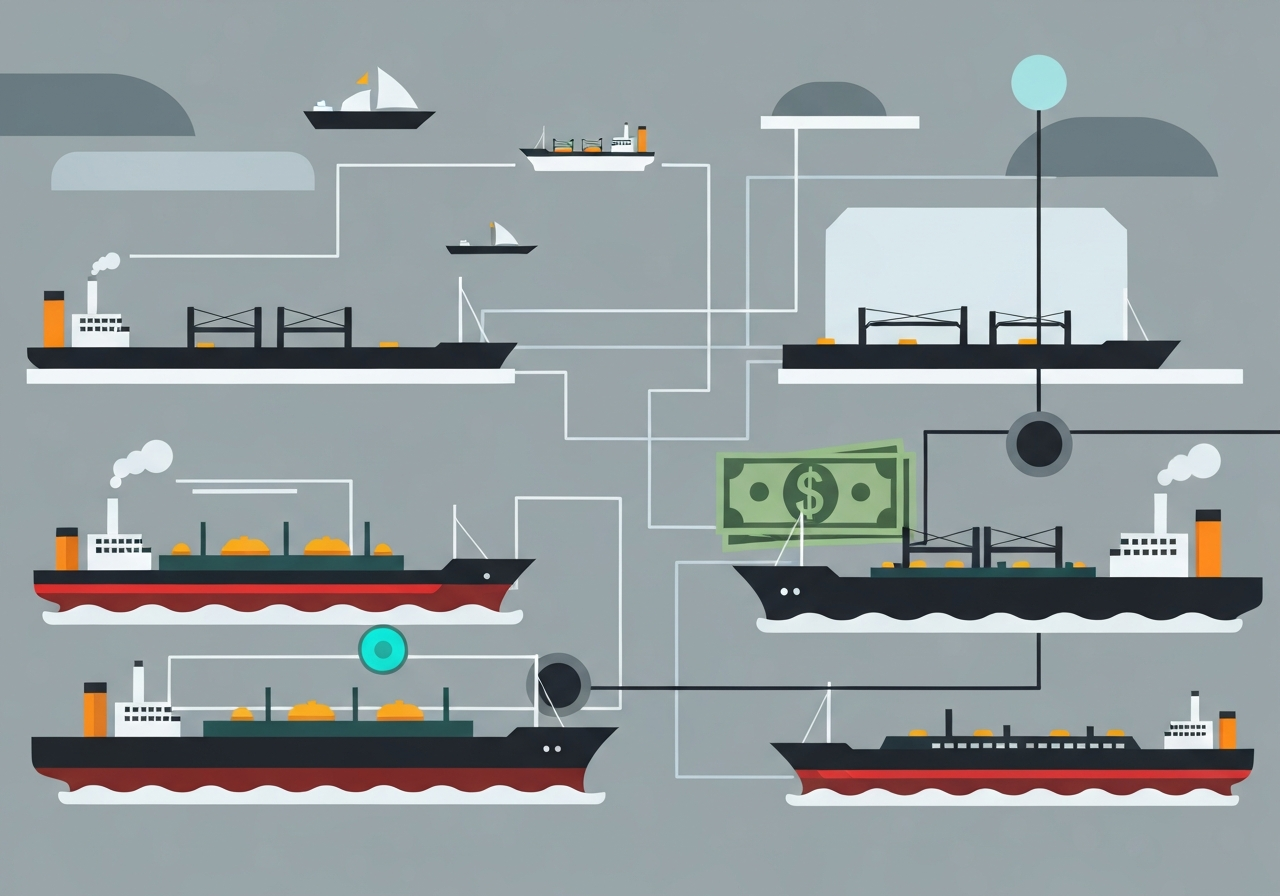
In February 2026, the U.S. Department of State issued a public notice—titled in web metadata as an action against illicit traders of Iranian oil and the so‑called “shadow fleet”—announcing sanctions measures. When this piece was prepared, the State Department release page returned a server error and could not be retrieved. The announcement signals renewed U.S. pressure on networks that facilitate sanctioned Iranian oil transfers and the maritime operators that obscure shipments.
Key Takeaways
- The State Department posted a release in February 2026 addressing sanctions on illicit traders and the “shadow fleet,” but the release page was inaccessible at time of checking.
- Subject: the measures target entities and practices involved in facilitating Iranian oil exports that evade sanctions, a focus consistent with prior U.S. actions.
- Enforcement is typically coordinated across State, Treasury/OFAC and Commerce; the notice likely signals designations and restrictions on shipping-related actors (unconfirmed in specifics).
- Past U.S. campaigns have targeted shipowners, managers, brokers and insurers who enable cloaking tactics such as reflagging and ship‑to‑ship transfers.
- Economic impacts commonly include frozen assets for designated parties, restrictions on insurance and finance for implicated vessels, and heightened scrutiny of maritime insurance markets.
- Operational impact for global shipping can include rerouting, increased compliance costs, and disruptions in tanker scheduling—effects that often take weeks to materialize.
Background
For years, U.S. sanctions policy toward Iran has aimed to limit Tehran’s access to oil revenue by targeting export channels and the intermediaries that make evasion possible. Since the late 2010s, a so‑called “shadow fleet” of tankers and associated service providers has adopted techniques—reflagging, falsified AIS transponders, opaque ownership structures and ship‑to‑ship transfers—to mask the origin and destination of cargoes.
U.S. sanctions tools have evolved to address those tactics: designations of front companies, secondary sanctions that deter third‑country service providers, and coordinated steps to cut off maritime insurance and financing. Enforcement relies on a mix of diplomatic pressure, financial restrictions, and maritime domain awareness driven by commercial and government tracking data.
Main Event
The February 2026 State Department notice (URL metadata) signals another enforcement push against actors that facilitate illicit Iranian oil trade. Although the notice content could not be retrieved due to a site error, the headline metadata indicates focus on both traders—brokers, traders, firms handling contracts—and the maritime network of vessels known as the “shadow fleet.”
Based on typical U.S. practice, measures announced in such notices often include naming specific legal authorities used for designations, a list of entities and vessels subject to U.S. sanctions, and a description of how the measures will be enforced (e.g., asset freezes, travel restrictions, secondary sanctions). At time of writing these details remain unverified for this specific release.
Implementation of these measures usually involves follow‑on actions by the U.S. Department of the Treasury’s Office of Foreign Assets Control (OFAC) and may include coordination with allied states to widen the impact. Industry advisories and guidance to financial institutions and maritime insurers often accompany such announcements to clarify compliance expectations.
Analysis & Implications
Renewed sanctions messaging against the “shadow fleet” aims to raise the cost of maritime concealment tactics and shrink the set of service providers willing to work with risky shipments. If enforcement is robust, affected vessels can face denied access to ports, flagged registries, insurance markets and bunkering services—hitting operational viability.
Secondary effects may include realignment of tanker routes, temporary congestion at compliant ports, and short‑term spikes in freight and insurance premia for certain trades. Companies in the energy and shipping sectors will likely reassess counterparty due diligence, increasing compliance resource allocation.
Diplomatically, the action reinforces U.S. policy to isolate networks that generate revenue for sanctioned entities. It may prompt partner governments to strengthen their own controls, but it can also provoke pushback from states that host or economically benefit from maritime services tied to those trades.
Comparison & Data
| Era | Primary Targets | Typical Measures |
|---|---|---|
| 2018–2021 | Shipowners, brokers, commodity traders | Designations, asset freezes, secondary sanctions |
| 2022–2025 | Shadow fleet operators, ship managers, deceptive transfers | Enhanced tracking, industry advisories, insurance pressure |
| Feb 2026 (this release) | Illicit traders & shadow fleet (per headline) | Not publicly retrievable at time of check; likely designations and coordination |
The table places the February 2026 action in context: the tactics and policy tools evolve, but the goal—disrupting revenue streams and logistical networks—remains constant. Quantitative measures (numbers of designations, estimated volumes affected) could not be confirmed from the inaccessible release.
Reactions & Quotes
“We’re sorry, this site is currently experiencing technical difficulties. Please try again in a few moments. Exception: forbidden”
U.S. Department of State website (error message observed)
Paraphrase: The State Department announced sanctions aimed at illicit traders of Iranian oil and operators of the ‘shadow fleet’.
U.S. Department of State (headline/paraphrase; official release page currently inaccessible)
Paraphrase: Sanctions enforcement specialists commonly say that cutting off maritime services and insurance is the most effective near‑term lever to deter evasive shipping practices.
Sanctions practice (general expert consensus, paraphrased)
Unconfirmed
- Exact list of entities, vessels, individuals designated in the February 2026 notice is not verifiable because the State Department page returned an error.
- Specific legal authorities (statutes, executive orders) cited in this particular release have not been confirmed.
- Any numeric claims about the number of targets, volumes of oil affected, or estimated revenue impact are not confirmed and should not be treated as final.
Bottom Line
The State Department headline metadata indicates a coordinated U.S. move in February 2026 to renew pressure on illicit traders of Iranian oil and the maritime networks that obscure shipments. While the release page could not be retrieved for detail verification, the topic fits a sustained U.S. policy trajectory: choke service providers that make sanctions evasion feasible.
Watch for follow‑up from OFAC, Department of Commerce and partner governments for the concrete list of designations, legal authorities, and industry guidance. Those documents will determine the practical reach of the measures: whether they produce rapid operational disruption for specific vessels and companies, or whether effects are incremental as enforcement and allied cooperation ramp up.
Sources
- U.S. Department of State — Official release page (February 2026; page observed inaccessible at time of checking).
- U.S. Department of the Treasury, OFAC — Official (sanctions program overview; background on prior authorities and practice).