
Lead
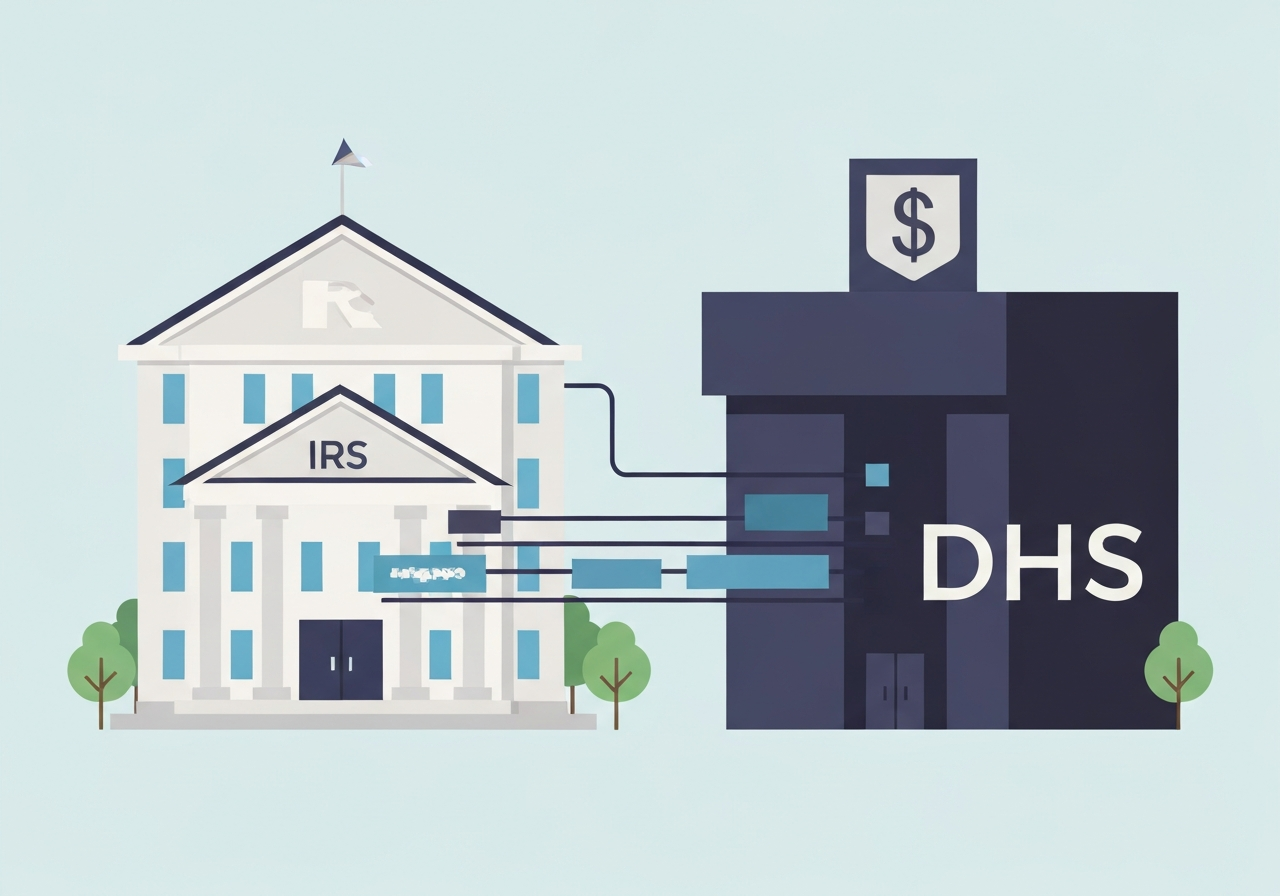
Federal officials disclosed in a court filing that the Internal Revenue Service inadvertently passed taxpayer information for thousands of people to the Department of Homeland Security under a contentious data‑sharing pact. The agreement, signed last April by Treasury Secretary Scott Bessent and Homeland Security Secretary Kristi Noem, let U.S. Immigration and Customs Enforcement (ICE) submit names and addresses of people believed to be in the U.S. unlawfully for cross‑checks against tax records. The IRS said it could verify roughly 47,000 of the 1.28 million names ICE sent, and that it provided additional address details for fewer than 5% of those verified records. Treasury notified DHS in January and asked for help disposing of any improperly shared information consistent with federal law.
Key takeaways
- ICE submitted 1.28 million names and addresses to the IRS for cross‑verification as part of an April data‑sharing agreement.
- The IRS was able to verify about 47,000 of those 1.28 million names against tax records.
- For fewer than 5% of the 47,000 verified records (under 2,350 records), the IRS provided ICE additional address information.
- Treasury informed DHS in January and requested prompt remediation and appropriate disposal of any improperly shared data.
- Advocacy groups, including Public Citizen, had already sued to block or limit the agreement; courts have previously restricted/address sharing in related rulings.
- Advocates warn that disclosure of confidential tax records could endanger individuals and trigger legal and criminal penalties for improper handling.
Background
The data exchange is rooted in an information‑sharing agreement signed in April by Treasury Secretary Scott Bessent and Homeland Security Secretary Kristi Noem. That memorandum allowed ICE to supply lists of names and addresses of noncitizens suspected of being in the United States unlawfully for cross‑checks against IRS records. The purpose, as framed by proponents, was to identify people who may be evading immigration enforcement; critics warned it blurred longstanding legal protections around taxpayer confidentiality.
Once the agreement became public, it prompted immediate legal and political pushback. Public Citizen filed suit against the Treasury and Homeland Security secretaries on behalf of immigrant‑rights groups, arguing the arrangement violated statutory privacy safeguards. In recent months, federal judges have limited or blocked parts of the information sharing, including orders that curtailed IRS transmission of residential addresses to ICE.
Main event
A declaration filed Wednesday by Dottie Romo, the IRS’s Chief Risk and Control Officer, disclosed that an IRS review found the agency could only match roughly 47,000 of the 1.28 million names ICE had submitted. Romo’s filing said the IRS provided additional address details for fewer than 5% of those matched records, a level the agency characterized as potentially inconsistent with taxpayer privacy rules.
According to the filing, Treasury alerted DHS to the issue in January and asked DHS to assist in promptly remediating any improper disclosures. That remediation request included “appropriate disposal” of data the IRS had provided to ICE based on incomplete or insufficient address information, the filing said.
The new disclosure follows prior court activity over the same agreement. A Massachusetts federal court recently ordered the IRS to stop sharing residential addresses with ICE, and a separate federal ruling last November found that the IRS had illegally disseminated tax data for some migrants during the previous summer.
Analysis & implications
The disclosure raises immediate legal and operational questions about how rigidly statutory limits on taxpayer confidentiality were observed. The IRS is governed by statutes and internal rules intended to keep tax data from being used for purposes beyond tax administration; sharing data with immigration enforcement introduces friction between agencies and the legal framework protecting taxpayer privacy.
Practically, even a small number of misshared records can have outsized consequences. Advocacy groups emphasize that when law‑enforcement bodies receive sensitive financial or address data, errors can lead to wrongful targeting, detention, or threats to personal safety for individuals and their families. The political fallout also complicates cooperation between Treasury and DHS at a sensitive policy intersection: immigration enforcement versus civil liberties protections.
Legally, the incident may strengthen plaintiffs’ arguments in ongoing litigation that the agreement violates statutory confidentiality provisions or exceeds executive authority. Courts that have already limited sharing will likely consider whether the procedural safeguards promised by agencies were sufficient and whether remedial steps taken so far are adequate.
Comparison & data
| Metric | Number |
|---|---|
| Names/addresses submitted by ICE | 1,280,000 |
| Names IRS could verify | ~47,000 |
| Verified records with additional IRS address details | <5% of 47,000 (<2,350) |
This table highlights the scale gap between the 1.28 million records ICE submitted and the far smaller set the IRS was able to verify. The disparity suggests challenges in matching immigration lists to tax records, and underscores why agencies typically rely on strict data‑handling protocols to limit misuse when matches are uncertain.
Reactions & quotes
Advocates and privacy experts reacted sharply to the court filing, reiterating concerns about the danger of mixing tax records with immigration enforcement.
“This breach of confidential information was part of the reason we filed our lawsuit in the first place. Sharing this private taxpayer data creates chaos and … can endanger lives,”
Lisa Gilbert, co‑president, Public Citizen (advocacy group)
The Center for Democracy & Technology warned about legal consequences and the systemic risk of opening tax records to enforcement agencies.
“The improper sharing of taxpayer data is unsafe, unlawful, and subject to serious criminal penalties,”
Tom Bowman, policy counsel, Center for Democracy & Technology (privacy advocacy)
Unconfirmed
- Whether any of the improperly shared records were used operationally by ICE to locate or detain individuals remains unclear from the filing.
- The full scope of records that may have been retained, copied or further disseminated by DHS or ICE has not been publicly disclosed.
- Exact counts of affected U.S. citizens versus noncitizens among the disclosed records have not been released.
Bottom line
The court filing exposes a significant privacy lapse in an already contentious cross‑agency arrangement and will likely strengthen legal challenges to the IRS‑DHS data exchange. Even though the number of additional address disclosures appears small relative to the 1.28 million records submitted, the consequences for affected individuals can be severe and irreversible.
Going forward, courts and Congress may press for stronger statutory protections, clearer interagency safeguards, or limits on the use of tax data for immigration enforcement. For the public and policymakers, the episode underscores the tradeoffs between interagency information sharing for enforcement purposes and the longstanding legal protections that govern taxpayer confidentiality.
Sources
- Associated Press (news report; primary filing summary)
- The Washington Post (news outlet; initial reporting attributed in filings)
- Public Citizen (advocacy organization)
- Center for Democracy & Technology (privacy advocacy; commentary)
- Internal Revenue Service (official agency site)