
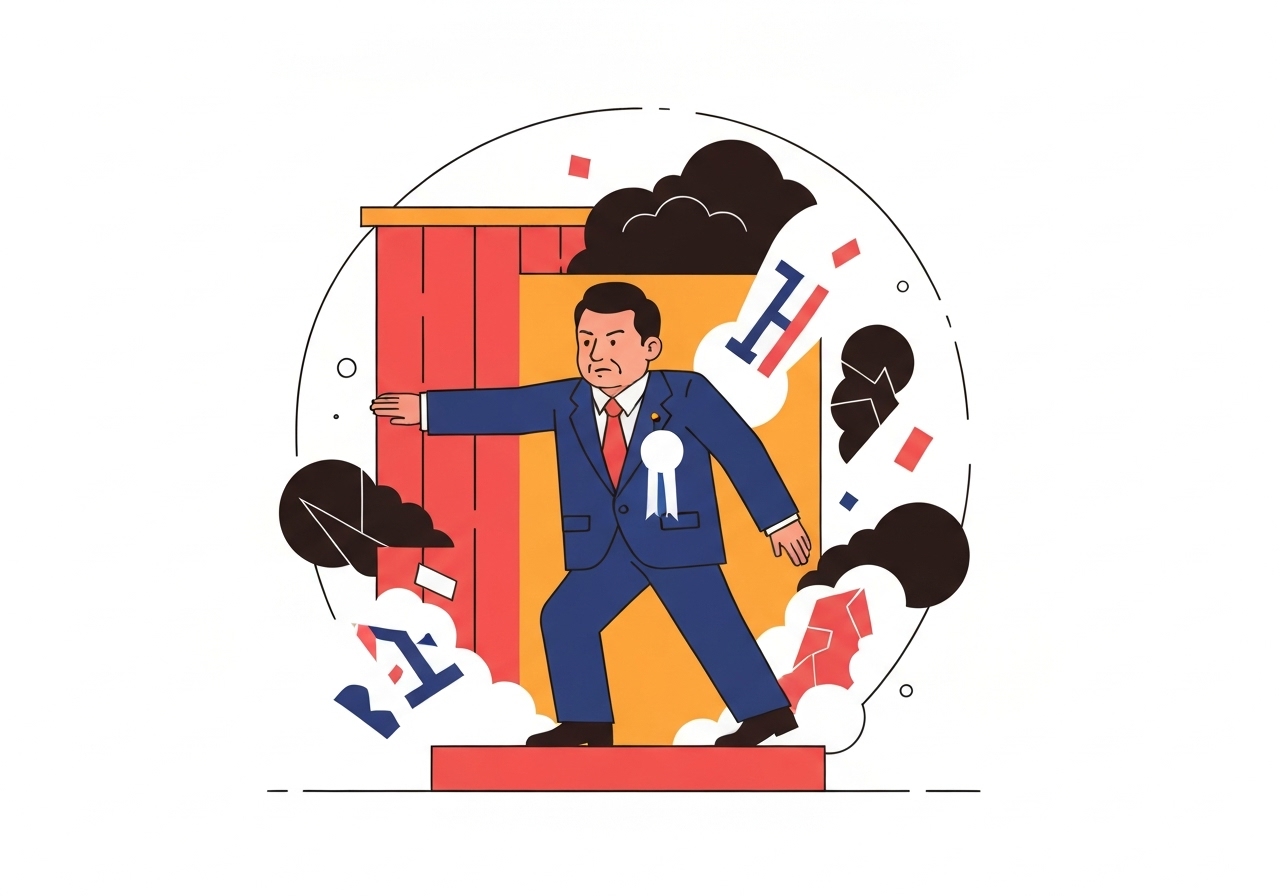
Shigeru Ishiba announced his resignation as Japan’s prime minister on Sept. 7, 2025, citing responsibility for a string of electoral defeats that have eroded his coalition’s parliamentary majorities. The 68-year-old leader, who took office less than a year ago, said he completed a major trade agreement with the United States before stepping aside and asked his Liberal Democratic Party to hold an emergency leadership contest. He will remain in office in a caretaker capacity until the party selects a successor, a move that opens a period of political and economic uncertainty for Japan. Markets reacted quickly to the news, extending recent pressure on the yen and long-dated government bonds.
Key Takeaways
- Ishiba, 68, resigned on Sept. 7, 2025, after successive election setbacks that cost the ruling coalition its parliamentary majorities.
- He finalized a U.S.-Japan trade deal that included commitments amounting to about $550 billion in investment as part of tariff-relief arrangements.
- Since taking office less than a year earlier, Ishiba oversaw losses in both houses of parliament amid voter anger over rising living costs.
- Financial markets reacted to political uncertainty: the yen weakened and Japan’s 30-year government bond yield hit a record high the prior week.
- Potential successors include Sanae Takaichi, who favors more expansionary fiscal policy, and Shinjiro Koizumi, seen as more conservative on fiscal matters.
- A Kyodo News poll showed about 55% of respondents opposed holding an early general election, reducing immediate public appetite for a snap vote.
Background
The Liberal Democratic Party (LDP) has governed Japan for most of the postwar era, but repeated electoral losses in 2025 exposed voter discontent with economic conditions, especially rising prices that have squeezed household budgets. Ishiba, a long-serving LDP figure who became leader on his fifth leadership bid last September, campaigned on tackling inflationary pressures and restoring wage growth, but those pledges failed to translate into electoral support. The upper-house gains by the far-right Sanseito party in July brought more nationalist and anti-immigration themes into mainstream debate, complicating centrist governance options. At the same time, the international environment has become more fraught: an unprecedented joint appearance by Chinese, Russian and North Korean leaders at a Beijing parade raised security concerns in Tokyo.
Economic friction with the United States has been a central issue. President Donald Trump’s tariffs had targeted key Japanese industries, notably autos, and prompted Tokyo to pursue a negotiated easing that culminated in the recent trade package. Ishiba framed the deal as a major foreign-policy achievement and said securing U.S. tariff relief was a condition for his departure. Internally, the LDP now faces a contest that could realign party factions and policy priorities, with the next leader not automatically assured of an immediate parliamentary majority given recent election results.
Main Event
In a Tokyo press briefing on Sept. 7, Ishiba said he would relinquish party leadership after arranging for an extraordinary LDP election and that he planned to hand over responsibilities once a successor is chosen. He emphasized completion of the U.S. trade agreement and the signing of corresponding executive actions as a key threshold for stepping down. The party set the machinery in motion for an emergency leadership vote, while Ishiba pledged to continue in a caretaker role to ensure continuity in executing the trade commitments.
The immediate market reaction followed prior days of volatility: the yen slid and yields on long-term government bonds rose, with the 30-year yield having reached a record high during the week before his resignation. Analysts linked the moves to heightened political risk and the prospect that a successor with different fiscal and monetary preferences could emerge. Ishiba’s resignation also prompted speculation that a new leader might call a snap general election to secure a fresh mandate, though public polling shows limited appetite for an early vote.
Prominent LDP figures are weighing leadership bids. Sanae Takaichi, who narrowly lost to Ishiba in last year’s leadership runoff, is viewed as more willing to pursue expansionary fiscal policy and to press the Bank of Japan for a more cautious approach to rate normalization. Shinjiro Koizumi, the younger, media-savvy cabinet minister who has been handling price-stabilization measures for the government, is seen as a potential consensus candidate who might limit abrupt policy shifts. Whoever prevails will inherit both the task of implementing the U.S. trade deal and the political challenge of addressing voters’ cost-of-living concerns.
Analysis & Implications
Short-term market sensitivity is likely to persist because the LDP leadership contest introduces uncertainty about fiscal and central bank policy direction. If Takaichi or another fiscal dove wins, investors may price in a higher probability of looser fiscal and monetary settings, which could put further downward pressure on the yen and upward pressure on long-term bond yields. Conversely, a moderate successor could prioritize market confidence and continuity, limiting volatility but offering less scope to address immediate cost-of-living pressures through fiscal stimulus.
The fate of the U.S.-Japan trade agreement is a central policy test for Ishiba’s successor. The trade package included assurances of roughly $550 billion in U.S. investment commitments tied to tariff reductions; timely implementation will be necessary to preserve export competitiveness and corporate planning in Japan’s key manufacturing sectors. Delays or deviations in execution could revive industry concerns about access to U.S. markets and complicate relations with Washington, particularly given the political prominence of tariffs in U.S. domestic politics.
Politically, the resignation exposes intra-party fractures within the LDP and heightens the possibility of a snap general election if the new leader seeks a clear mandate. Opposition parties remain fragmented, and gains by fringe or far-right groups have shifted the policy discourse. A leadership outcome that fails to unify factions risks a prolonged period of weak governance, while a decisive successor who can consolidate the party could stabilize the situation—but only if they manage both economic policy and public perceptions on living costs.
Comparison & Data
| Metric | Recent value / note |
|---|---|
| Prime minister | Shigeru Ishiba (resigned Sept. 7, 2025) |
| Age of Ishiba | 68 |
| U.S.-Japan trade package | Includes ~$550 billion in investment commitments |
| Public poll on early election | ~55% said no need for early election (Kyodo News) |
| 30-year JGB yield | Hit a record high the prior week (exact yield not publicly specified) |
The table above summarizes the core figures referenced in this report. While some market measures (such as the precise 30-year bond yield at peak) are reported as record highs, public reporting at the time did not publish a single, universally cited numeric value; markets should be monitored for updated yields and FX levels as the leadership contest unfolds.
Reactions & Quotes
Government and business leaders reacted quickly, stressing the need for steady execution of policy and party unity.
“With the trade agreement signed and the executive action taken, we have passed a crucial hurdle; now I will pass the baton to the next generation,” Ishiba said at his resignation briefing, framing his decision as responsible stewardship.
Shigeru Ishiba, outgoing prime minister
International reaction included surprise and guarded commentary about ongoing diplomacy.
“I’m a little bit surprised by the move,” President Donald Trump told reporters, noting planned travel to the region later in the year and leaving open the timing of visits.
U.S. President (media briefing)
Business leaders urged speed and unity to limit economic fallout.
“There is no time to lose,” said Yoshinobu Tsutsui of Keidanren, calling for rapid consolidation and policy implementation to address both domestic and external challenges.
Yoshinobu Tsutsui, Keidanren chairman (business lobby)
Unconfirmed
- Whether the next LDP president will automatically become prime minister given the coalition’s loss of majority; this depends on post-vote coalitions and Diet arithmetic.
- Whether the new party leader will call a snap general election; opinion polling suggests limited public support but the decision rests with the new leader.
- The precise long-term market response if a fiscal-dove leadership emerges—timing and magnitude of FX and bond moves remain uncertain.
Bottom Line
Ishiba’s resignation ends a brief, turbulent premiership and inaugurates a period of political recalibration in Tokyo. The immediate priority for Japan’s next leader will be to secure party unity, ensure smooth implementation of the U.S.-Japan trade commitments, and address voters’ concerns about living costs to restore confidence.
Markets will watch the LDP leadership contest for signs of fiscal and monetary direction; a successor perceived as favoring expansionary policy could amplify pressure on the yen and long-dated yields, while a candidate promising continuity may contain volatility. For voters and businesses alike, the critical questions are whether the new leadership can convert trade gains into tangible domestic relief and whether it can stabilize Japan’s strategic and economic footing in an increasingly uncertain regional environment.
Sources
- Reuters (international news agency; primary reporting on resignation and market reaction)
- Kyodo News (Japanese news agency; public-opinion polling referenced)
- Keidanren (business lobby; quoted statement from chairman)
- Meiji Yasuda Research Institute (economic research institute; expert commentary on market implications)