
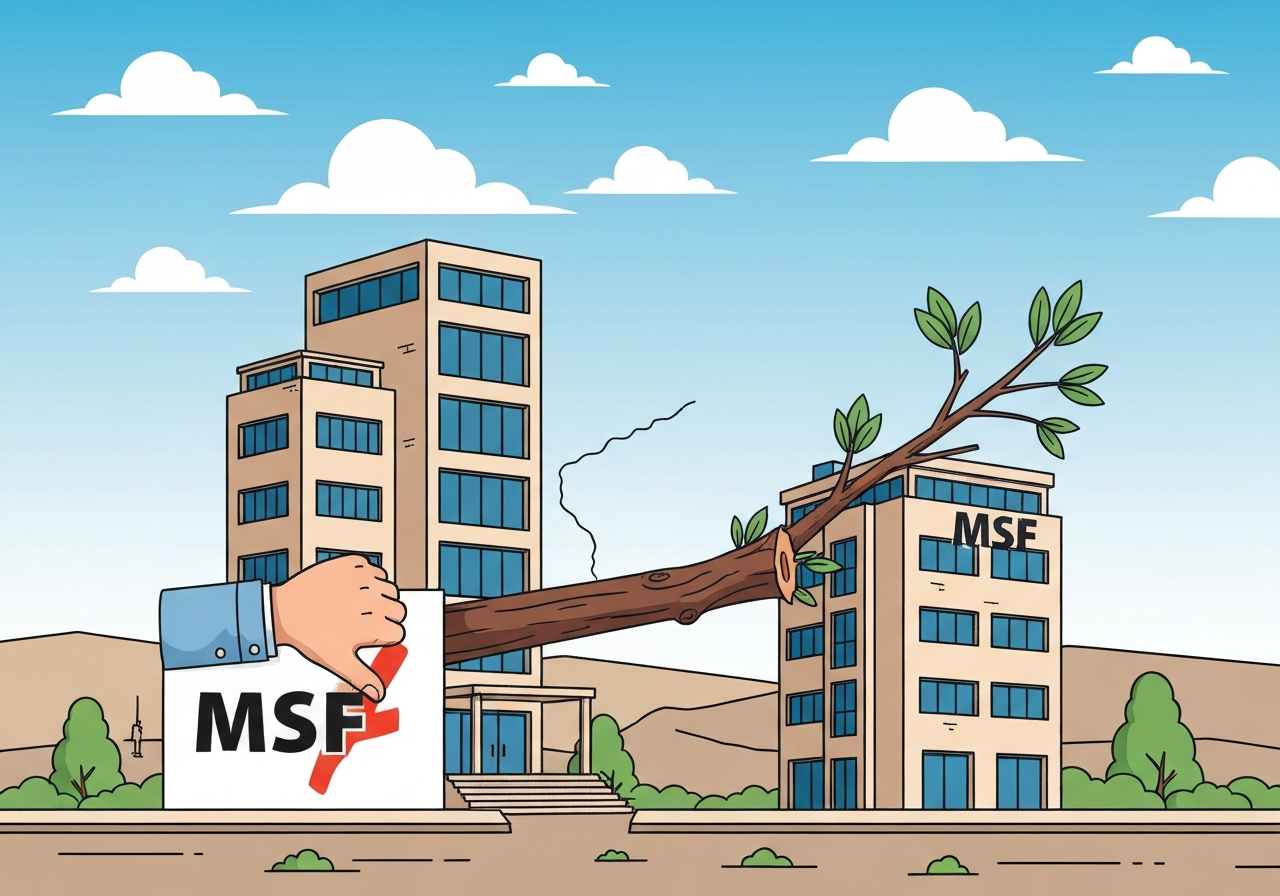
Israel has moved to bar Médecins Sans Frontières (MSF) from operating in Gaza after the medical charity declined to provide a roster of Palestinian and international staff, citing safety concerns. The decision follows a 30 December order that 37 NGOs submit details of their local and international workers; Israel says the step is to prevent infiltration by militants. MSF says it offered to share names under strict, safety-focused conditions but could not obtain concrete assurances from Israeli authorities. The dispute comes amid a wartime humanitarian crisis in Gaza, where MSF delivers a large share of hospital care.
Key Takeaways
- Israel ordered 37 organisations to submit staff lists and on 30 December announced it would revoke licences for groups that did not comply within 60 days.
- MSF refused to hand over its Palestinian and international staff list without clear guarantees for their safety and later said it could not secure assurances from Israeli authorities.
- Israel said it is “moving to terminate the activities” of MSF in Gaza, citing a ministry requirement that applies to all humanitarian groups operating in the area.
- MSF reports it provides at least 20% of Gaza hospital beds, runs about 20 health centres, carried out more than 800,000 consultations last year and facilitated over 10,000 infant deliveries.
- Since the start of the current conflict after 7 October 2023, around 71,660 people have been killed in Gaza (Hamas-run health ministry figure); 1,700 healthcare personnel have been killed, including 15 MSF staff, the charity says.
- The move to restrict NGOs was condemned by 10 countries, including the UK, France and Canada, warning of severe impacts on access to essential services.
Background
The immediate trigger is an Israeli government order requiring international and local NGOs to register staff information; on 30 December authorities said licences for 37 organisations working in Gaza and the occupied West Bank would be revoked if the groups failed to meet the new requirements within 60 days. Israeli officials framed the policy as a security measure to stop potential “infiltration of terrorist operatives into humanitarian structures.” The list named groups including MSF, ActionAid and the Norwegian Refugee Council.
Humanitarian organisations and several foreign governments pushed back, saying the requirement undermines aid delivery during an acute crisis. Ten countries publicly criticised the policy, arguing it would curtail access to food, water and medical care for civilians in Gaza. MSF and other NGOs say they operate under strict neutral medical mandates and that sharing detailed staff records without firm safeguards could expose personnel to risk.
Main Event
MSF announced it would not provide a full staff list to Israeli authorities because it had not obtained guarantees to protect staff safety. The charity said it had proposed sharing names as an “exceptional measure” but only under clear conditions that would ensure data were used solely for administrative purposes and would not endanger colleagues. After repeated attempts to seek engagement, MSF said it concluded such assurances could not be secured and therefore withheld the list.
In response, Israel’s Ministry of Diaspora Affairs and Combating Antisemitism stated MSF’s failure to submit staff lists justified ending the charity’s activities in Gaza, describing the requirement as applicable to all humanitarian organisations. Officials argued these steps are necessary to prevent exploitation of aid structures by armed groups. The ministry used the phrase that it was “moving to terminate the activities” of MSF in Gaza.
The dispute has immediate operational consequences: UN and aid officials warn that excluding MSF would shrink hospital capacity and limit primary care. Sam Rose, UNRWA’s director for Gaza affairs, told the BBC that the decision will have “major negative consequences on the ability of international organisations to provide healthcare inside Gaza,” noting losses among health workers in the conflict. MSF currently says it accounts for a significant share of hospital beds and community services in the territory.
Analysis & Implications
Removing a major medical NGO like MSF from Gaza would create material gaps in an already strained health system. MSF reports providing roughly one in five hospital beds and running about 20 health centres; losing that capacity would increase pressure on remaining hospitals, delay surgeries and reduce maternal and neonatal care coverage at a time of mass displacement and infrastructure damage.
The Israeli move reflects a broader tension between state security prerogatives and humanitarian principles of neutrality and staff protection. Authorities say the registration regime is a security necessity; NGOs argue that mandatory disclosure of personnel without ironclad, enforceable protections undermines patient care and risks staff safety. The impasse highlights weak trust between parties and the operational fragility of aid work in wartime environments.
Politically, the decision will reverberate internationally. Ten countries have already condemned the rule change, and further diplomatic pressure could follow if organisations begin to withdraw or if services decline sharply. Domestically, Israeli policymakers may defend the step as part of a preventative security posture, while critics will frame it as an impediment to humanitarian relief during a protracted emergency.
Comparison & Data
| Metric | Value |
|---|---|
| NGOs ordered to register | 37 organisations |
| MSF share of hospital beds | At least 20% |
| MSF health centres | About 20 |
| MSF consultations (last year) | Over 800,000 |
| Infant deliveries by MSF (last year) | More than 10,000 |
| Healthcare workers killed in conflict | 1,700 (total) |
| MSF staff killed | 15 |
| Reported Gaza fatalities since Oct 7, 2023 | 71,660 (Hamas-run health ministry) |
The table aggregates operational and casualty figures cited by MSF and the Hamas-run health ministry as reported publicly. These numbers illustrate both the scale of humanitarian activity provided by MSF and the heavy toll the conflict has taken on health personnel and civilians alike. Loss of a major provider would immediately reduce bed capacity and outreach services at a time when needs remain extremely high.
Reactions & Quotes
MSF emphasised safety concerns and the need for legally binding assurances on how staff data would be handled, framing the refusal as a protection imperative rather than defiance.
“We were unable to build engagement with Israeli authorities on the concrete assurances required.”
MSF (humanitarian NGO)
The Israeli ministry framed the requirement as a general rule for all humanitarian entities and justified the action as a security measure intended to prevent misuse of aid networks.
“Moving to terminate the activities” of organisations that do not submit required lists.
Israeli Ministry of Diaspora Affairs and Combating Antisemitism (official statement)
UNRWA and other aid actors warned the move threatens patient care and humanitarian access, citing prior attacks that have killed health workers and the cumulative operational impact of losing service providers.
“This will have major negative consequences on the ability of international organisations to provide healthcare inside Gaza.”
Sam Rose, UNRWA director for Gaza affairs (UN agency)
Unconfirmed
- Claims by Israeli authorities that specific MSF staff have links to Hamas or Islamic Jihad have not been presented publicly with corroborating evidence in the reporting available.
- How any submitted staff information would be used operationally by Israeli authorities — beyond stated administrative screening — has not been independently verified.
- The longer-term timeline for enforcement, withdrawals by NGOs or reciprocal diplomatic actions remains uncertain and depends on further government and international responses.
Bottom Line
The standoff over staff lists pits Israeli security priorities against humanitarian agencies’ duty to protect staff and preserve impartial care. MSF’s refusal, rooted in safety concerns and a lack of binding assurances, risks depriving Gaza of substantial medical capacity at a critical time. International pushback from governments and UN agencies underscores the geopolitical sensitivities and the potential for lasting damage to aid delivery if a mediated solution is not found.
Practical resolution would require transparent, enforceable protections governing any personnel data sharing and quick diplomatic engagement to prevent immediate service disruptions. Observers should watch for further statements from MSF, Israeli authorities and international mediators, and for any concrete interim measures aimed at safeguarding staff while addressing legitimate security questions.
Sources
- BBC News — international news outlet reporting on the Israeli decision and MSF response.
- Médecins Sans Frontières (MSF) — humanitarian NGO official website for statements and operational data.
- UNRWA — United Nations agency for Palestinian refugees, source for commentary on humanitarian impact.