
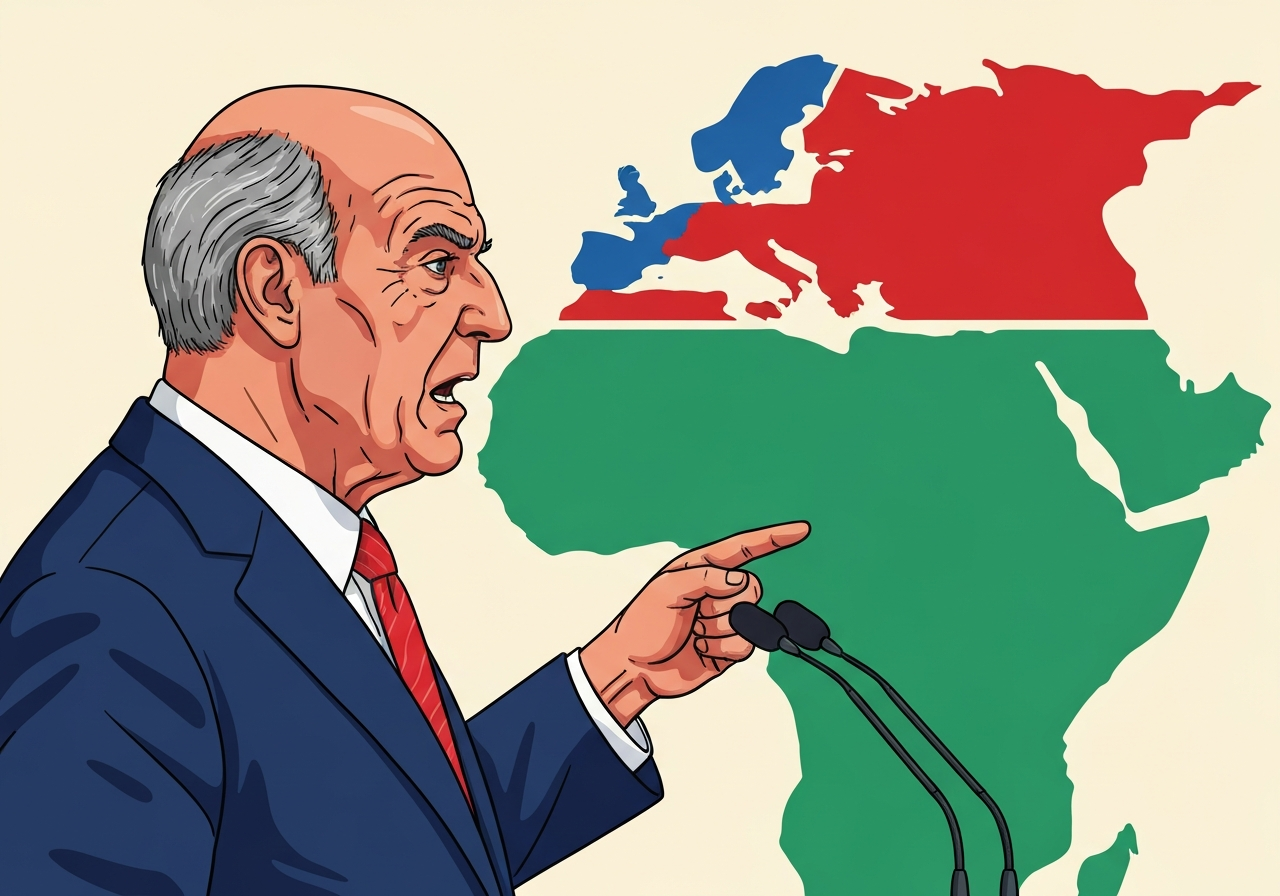
On March 4, 2026, Israeli President Isaac Herzog told CBS Evening News that Israel and the United States felt compelled to strike Iran amid fears the country was accelerating a nuclear weapons program and expanding long-range missile capabilities. Herzog said joint U.S.-Israeli airstrikes had entered a fifth day and that Israel was not calling for a ground invasion. He cited intelligence — which neither Israel nor the U.S. has publicly released — alleging Iran seeks to expand its long-range missile inventory from about 2,000 to 20,000 and that negotiators previously claimed enough uranium for 11 bombs. Iran continues to say its program is peaceful.
Key Takeaways
- Isaac Herzog, in a March 4, 2026 interview on CBS, defended U.S.-Israeli strikes as necessary to halt Iran’s alleged nuclear progress and missile expansion.
- Herzog said Israel and the U.S. believed Iran had “another new secret plan” to rush toward a nuclear weapon; neither country has published evidence to substantiate that claim.
- Israeli intelligence, according to Herzog, assessed Iran intends to grow long-range missiles from roughly 2,000 to 20,000 — a figure presented as an intelligence estimate, not an independently verified count.
- White House special envoy Steve Witkoff reportedly said Iranian negotiators previously asserted they possessed enough uranium for 11 nuclear bombs; that assertion has not been publicly documented by either government with primary evidence.
- Herzog stated Israel is not seeking a ground invasion and described regime change as “not necessarily” the war’s stated objective, though he added that regime change would be welcome if it resulted from weakening Iran.
- A CBS News poll released the Tuesday before the interview found 62% of Americans believed the White House had not clearly explained the campaign’s goals.
- Herzog described U.S.-Israel coordination as “superbly close,” while declining to provide operational details or comment on long-term U.S. commitment if domestic support wanes.
Background
Tensions between Israel and Iran have been driven for years by Iran’s nuclear program, its support for proxy groups across the region, and repeated covert and overt clashes. Tehran has supported Gaza-based Hamas, Lebanon-based Hezbollah and Yemen-based Houthis; Israel and the U.S. have long argued that those relationships enable Iran to project influence and destabilize neighbors. International efforts to constrain Iran’s nuclear activities produced agreements, inspections and intermittent diplomacy, but mutual mistrust and accusations of clandestine work persisted.
In recent months, Israeli and U.S. officials said intelligence showed renewed Iranian efforts to expand both nuclear and missile capacities. That environment, officials say, changed the strategic calculus and led to coordinated strikes. Iran, for its part, has repeatedly maintained its nuclear activities are for peaceful purposes and has denied plans to build weapons; external verification of either side’s assertions remains limited in the public domain.
Main Event
In the CBS interview, Herzog framed the strikes as a response to a perceived existential threat: a rush toward a nuclear capability and a dramatic expansion of long-range missile stockpiles. He told anchor Tony Dokoupil that when a country invests national resources to foment regional instability and there is intelligence of an accelerated weapons program, action becomes necessary. Herzog emphasized the strikes were carried out in close coordination with the United States, though he refused to detail operational specifics.
Herzog also rejected calls for ground forces, saying explicitly he was not asking for “any boots on the ground” from Israel, the U.S. or other partners. On the question of who ultimately authorized the strikes, Herzog maintained Israel did not dictate U.S. policy and stressed that President Trump’s decision followed a professional process; he described Israel as a contributing ally, not the decider. The president said regime change was not the declared objective, but acknowledged that removing or weakening Iran’s leadership would be a consequential outcome.
The U.S. account, as relayed by White House special envoy Steve Witkoff, included an assertion that Iranian negotiators had claimed enough uranium for 11 bombs prior to the strikes. Both Washington and Jerusalem have so far not released the primary intelligence underlying that calculation. Meanwhile, the strikes have continued into a fifth day with no publicly announced endgame and concern in international capitals about escalation and wider regional spillover.
Analysis & Implications
The claims by Israeli and U.S. officials, if accurate, describe a qualitatively larger Iranian long-range strike capability and an accelerated nuclear timeline — changes that would alter strategic calculations throughout the Middle East. A jump from an estimated 2,000 to 20,000 long-range missiles (as alleged by Israeli intelligence) would substantially increase stand-off options and the scale of potential attacks on regional and global targets. However, those numbers are presented as intelligence assessments and remain publicly unverified.
Diplomatically, the strikes place Gulf states and other U.S. partners in a difficult position: governments that have normalized ties with Israel in recent years are wary of direct military involvement yet may face pressure to take clearer stances on Iran. Herzog said Israel was not seeking Gulf combatants for the campaign, signaling an effort to limit the conflict’s geographic footprint while relying on U.S. military and intelligence backing.
Domestically in the United States, the operation tests political support for a new, potentially protracted campaign. The CBS poll finding that 62% of Americans think the White House has not clearly explained its objectives suggests limited public understanding and potential vulnerability for policymakers if casualties rise or costs mount. For Iran, sustained strikes could accelerate internal consolidation of hardline leadership or, conversely, create fractures depending on the economic and political fallout.
Economically and strategically, prolonged hostilities could disrupt regional trade routes and energy markets, raising oil prices and increasing insurance and shipping costs through the Gulf. Longer-term outcomes hinge on whether strikes succeed in degrading the specific capabilities cited by officials, whether Iran retaliates in asymmetric ways via proxies, and whether new diplomatic channels emerge to reduce the risk of further escalation.
Comparison & Data
| Claimed indicator | Reported figure / source |
|---|---|
| Long-range missiles (current) | ~2,000 (Israeli intelligence, as cited by Herzog) |
| Long-range missiles (alleged expansion) | 20,000 (Israeli intelligence claim) |
| Uranium equivalent | Enough for 11 bombs (asserted by White House special envoy Steve Witkoff) |
The table summarizes claims made publicly by Israeli and U.S. officials during the March 4, 2026 remarks and related statements. These figures are presented by officials as intelligence assessments and have not been published with supporting primary documentation; independent verification is not available in the public record at this time.
Reactions & Quotes
Herzog framed the campaign as a defensive necessity and a message to Tehran that regional behavior must change. The following excerpts capture the central lines from officials and prominent figures involved or referenced in the coverage.
“It’s about time that everybody tells Iran, ‘Guys, we’re fed up, this has to change.'”
Isaac Herzog, President of Israel (CBS interview, March 4, 2026)
Herzog used the line to signal both frustration and an attempt to justify the strikes as aimed at constraining Iran’s capabilities rather than an explicit demand for regime removal.
“They claimed they had enough uranium to make 11 nuclear bombs.”
Steve Witkoff, White House special envoy (as reported)
The White House envoy’s statement was cited by officials to explain urgency; the underlying data supporting the 11-bomb assertion has not been released publicly for independent review.
“Yes, I think so. There are some good candidates.”
Donald Trump (on whether there were preferred successors in Iran, as quoted to CBS News)
Former President Trump made the remark when asked whether he would prefer alternative Iranian leadership after the reported killing of Supreme Leader Ayatollah Ali Khamenei; Herzog, by contrast, said Israel does not make lists of who should lead Iran and called that decision outside Israel’s remit.
Unconfirmed
- Publicly released primary intelligence corroborating claims that Iran intends to expand long-range missiles from 2,000 to 20,000 has not been provided by either Israel or the U.S.
- The White House claim that Iranian negotiators possessed enough uranium for 11 bombs has not been accompanied by declassified evidence for independent verification.
- Reports referenced in interviews about the killing of Supreme Leader Ayatollah Ali Khamenei are part of the contemporaneous dialogue in press interviews and require separate confirmation from independent official sources.
Bottom Line
The March 4, 2026 interview underscores that Israeli and U.S. leaders view Iran’s prospective military trajectory as a severe challenge warranting direct strikes, but many of the central factual claims remain intelligence assessments not released for public scrutiny. That gap between government assertions and available evidence is creating political friction at home and uncertainty among international partners.
Key items to watch are whether Washington or Jerusalem will publish corroborating intelligence, how regional governments respond diplomatically, and whether the campaign achieves measurable reductions in the capabilities officials cited. Absent transparent verification, public support and international legitimacy for sustained operations may be difficult to sustain.
Sources
- CBS News — news media report of March 4, 2026 including the Herzog interview, White House envoy comments and cited CBS poll (media).