
Lead
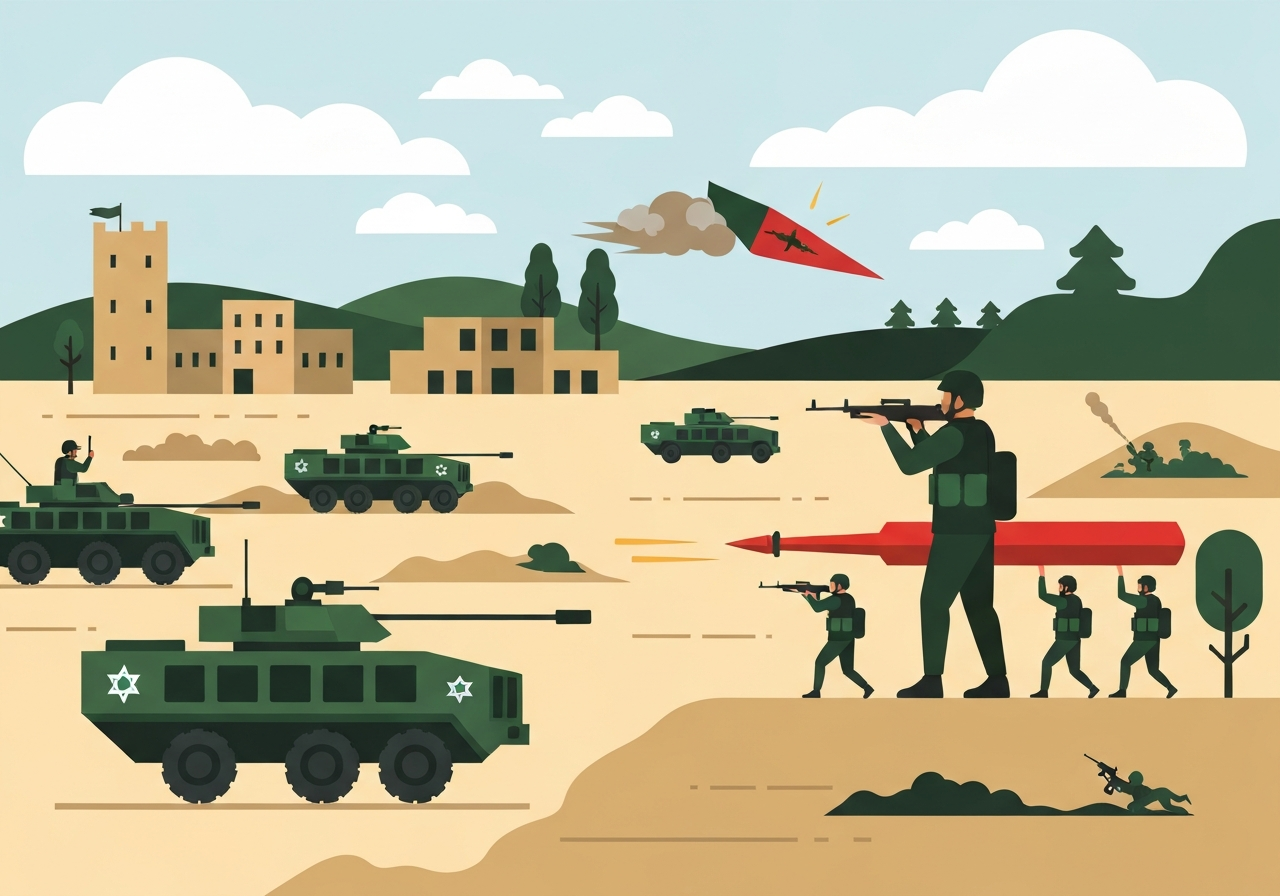
On 18 March 2026 Israeli forces pushed deeper into southern Lebanon and met intense resistance from Hezbollah fighters in at least three strategic sectors, according to local residents and a Lebanese security source. Clashes have been concentrated around the hilltop city of Khiam and border villages such as Aita al-Chaab and Kafr Shouba, as Israel conducts air, artillery and limited ground operations. The Israeli military said it launched a “limited ground operation” after massing forces—including four brigades and columns of tanks—near the frontier. The confrontation has left both sides contesting key high ground and supply lines, with civilians and infrastructure caught in the fighting.
Key Takeaways
- Clashes are active in at least three southern Lebanese sectors—Khiam, central and western border towns—where Hezbollah and Israeli troops are engaged in ground combat and cross-border bombardment.
- Israel has deployed four brigades and tank columns to the border region and describes its action as a “limited ground operation” alongside intensified air and artillery strikes.
- Khiam is a tactical focal point: its high plateau overlooks the Hula Valley and routes leading west to the Israeli border, shaping supply and movement for both sides.
- Hezbollah reports “heightened clashes” on Khiam’s eastern and northern outskirts and is using anti-tank guided munitions, drones and artillery in frontline defence.
- Rights groups say Israeli strikes have hit bridges, major roads and some medical facilities in south Lebanon, a move described as aimed at degrading logistics and the conditions of life in the region.
- The conflict traces to Hezbollah rocket fire on 2 March 2026 and follows a November 2024 ceasefire; Israel states its objective is to push Hezbollah away from the border and create a buffer zone.
- Former IDF officers and analysts warn a buffer zone would likely require prolonged occupation, risking renewed local support for Hezbollah and broader instability in Lebanon.
Background
The current escalation began after Hezbollah launched rockets at Israel on 2 March 2026, ending months of relative quiet that followed a November 2024 ceasefire. Israel responded with a cross-border military campaign intended to degrade Hezbollah’s military capabilities and reduce the threat to northern Israeli towns. Over recent months Israel stepped up strikes on suspected fighters and weapons caches across southern Lebanon, and both sides have accused the other of violating the ceasefire terms.
Hezbollah frames its actions as defensive, arguing it is protecting Lebanon from near-daily Israeli airstrikes since the 2024 truce. Outside the movement’s constituency, many Lebanese object to being drawn back into open war; political and social divisions inside Lebanon have deepened as the fighting returns to populated areas. International actors have voiced concern about escalation and the humanitarian toll on south Lebanese civilians, who live amid constrained access and damaged infrastructure.
Main Event
Ground fighting has been particularly fierce around Khiam, a hilltop city that overlooks the Hula Valley and controls routes toward the border. Residents and a Lebanese security source described heavy exchanges after days of clashes, with the Israel Defense Forces (IDF) conducting air and artillery strikes against Hezbollah positions embedded in the town. Analysts say control of Khiam would disrupt Hezbollah’s connectivity with the Bekaa valley and its southern positions.
Simultaneously, Israeli troops attempted incursions into border villages in the central and western sectors of south Lebanon. A resident of Aita al-Chaab reported intense fighting between Israeli soldiers and Hezbollah fighters in the village; another resident in Kafr Shouba described an IDF raid on multiple homes and the temporary detention of one neighbor for questioning. Lebanese sources say Israeli forces are using elevated positions on the Israeli side to shell Lebanese-held hilltops while attempting to encircle fighters.
Israel has also targeted transport infrastructure—bridges over the Litani River and major roads to the south—to limit Hezbollah’s resupply routes, a tactic rights groups say compounds civilian hardship. On the Lebanese side, Hezbollah fighters have engaged the advancing troops with a mix of anti-tank guided munitions, artillery and unmanned systems, placing Israeli ground units under sustained pressure in contested villages.
Analysis & Implications
The operational aim stated by Israeli officials appears twofold: seize territory south of the Litani River and establish a surveillance- and force-dominated buffer north of the border to prevent direct attacks on northern Israeli communities. Tactical control of hilltops such as Khiam would sever internal lines and make it harder for Hezbollah groups in the south to reinforce or resupply from the Bekaa valley.
However, experts caution that pushing Hezbollah back will likely demand a long-term presence. Past occupations of southern Lebanon demonstrate that extended military footprints can catalyse local resistance and rehabilitate militant support—an outcome Israeli strategists hope to avoid. The pattern of seizing territory while depopulating or policing villages raises questions about Israel’s exit strategy and the civil-military requirements for stabilization.
For Hezbollah, the immediate priority is to maintain a defensive posture that inflicts costs on advancing forces while preserving its inland firepower located north of the Litani. The group’s use of dispersed weapons caches and embedded fighters in populated areas complicates purely kinetic attempts to remove its presence without major collateral damage, increasing humanitarian risk and international scrutiny.
Comparison & Data
| Item | Detail |
|---|---|
| Trigger | Hezbollah rocket fire — 2 March 2026 |
| Ceasefire prior | November 2024 |
| IDF forces amassed | Four brigades plus tank columns (reported) |
| Key terrain | Khiam, Litani River, Hula Valley, Bekaa Valley |
The table summarizes core factual points shaping the campaign. Control of high ground such as Khiam changes line-of-sight and logistics across the Hula and Bekaa corridors; cutting bridges over the Litani degrades lateral movement and supply. Historical episodes in southern Lebanon indicate that temporary tactical gains can be difficult to convert into enduring strategic security without parallel political and stabilization efforts.
Reactions & Quotes
Officials, local leaders and analysts have framed developments in operational and political terms, underscoring both immediate battlefield dynamics and longer-term risks.
“Khiam sits on a high plateau overlooking the Hula Valley and along key routes leading west towards the Israeli border,”
Ahmad Beydoun, TU Delft researcher
This contextualises why both sides contest the town: controlling it shapes movement and supply across central southern Lebanon.
“Every town in the south has at least a couple hundred fighters armed with anti-tank missiles. This won’t be an easy walk for Israel,”
Imad Salameh, mayor of Khiam
Local officials warn that embedded local fighters and distributed weapons caches could make occupation costly and prolonged, reinforcing Hezbollah’s defensive advantages in populated terrain.
“A buffer zone will likely require long-term presence and could revive local support for Hezbollah,”
Miri Eisin / Prof Yagil Levy, former IDF and academic analysts
Security commentators note that the political consequences of long occupations can undercut objectives by hardening local opposition and complicating Israeli withdrawal plans.
Unconfirmed
- Precise casualty figures for combatants and civilians in the latest clashes remain unverified by independent monitors; numbers reported locally have not been corroborated.
- Claims that Israeli strikes deliberately targeted medical centres and emergency workers are reported by rights groups but remain under investigation and not independently confirmed in all instances.
- The full scale and disposition of Hezbollah forces south of the Litani—particularly numbers of fighters in each town—has not been publicly verified by neutral sources.
Bottom Line
The fighting in southern Lebanon has entered a contested phase where Israel is using combined arms—air, artillery and limited ground forces—to seize terrain and cut supply routes, while Hezbollah relies on dispersed guerrilla tactics and local knowledge to blunt advances. Control of hilltops such as Khiam is pivotal: whoever secures that terrain will shape operational mobility and supply in the central sector south of the Litani.
Strategically, a short-term Israeli tactical gain risks becoming a long-term political and security burden if it requires prolonged occupation to keep Hezbollah at bay. For Lebanon’s civilians, the immediate concern is access to medical care, safe movement and basic services as infrastructure comes under strain. The international community’s response and the capacity of neutral monitors to verify claims on the ground will shape diplomatic pressure and prospects for de-escalation.