
Lead: Israeli forces said they carried out strikes in Tehran overnight that killed two senior Iranian officials — Ali Larijani, head of Iran’s Supreme National Security Council, and Gholamreza Soleimani, commander of the Basij paramilitary force. The Israeli military then reported a wider wave of attacks across Tehran on Tuesday morning. At the same time, U.S. efforts to rally partners to reopen shipping through the Strait of Hormuz have so far failed, with European and other allies refusing to send forces into the high-risk corridor.
Key Takeaways
- Israel says two senior Iranian figures — Ali Larijani and Basij commander Gholamreza Soleimani — were killed in overnight strikes in Tehran.
- The Israel Defense Forces reported a “broad wave of attacks” across Tehran after the assassinations, citing targeted strikes on regime infrastructure.
- The United Arab Emirates reported intercepting 10 ballistic missiles and 45 UAVs on Tuesday; UAE totals since the conflict began are 314 ballistic missiles, 15 cruise missiles and 1,672 UAVs engaged, with eight confirmed deaths and at least 157 wounded.
- Since Feb. 28, the UK Maritime Trade Operations agency (UKMTO) recorded 21 maritime incidents in the Arabian Gulf, Strait of Hormuz and Gulf of Oman — 17 described as attacks and 4 as suspicious activity.
- European leaders, including EU foreign policy chief Kaja Kallas, declined U.S. calls to place personnel in harm’s way in the Strait of Hormuz and urged diplomatic measures to keep the waterway open.
- Iraq is in talks with Iran to arrange safe passage for some of its oil tankers through the Strait of Hormuz and is exploring alternate export routes to reduce disruption.
- Humanitarian bodies report civilians in Iran and neighboring states are suffering heavy disruption to daily life, with damaged schools and hospitals documented in Tehran.
Background
The strikes come amid an expanding war between the U.S. and Israel on one side and Iran on the other, a conflict that escalated after coordinated U.S.-Israeli operations targeting Iranian facilities. Tehran has responded with missile and drone attacks across the Gulf that have hit military and civilian targets in Gulf states and disrupted commercial shipping through the Strait of Hormuz, a choke point that normally sees roughly one-fifth of global crude traffic.
Iran’s internal security architecture has multiple overlapping bodies: the Islamic Revolutionary Guard Corps (IRGC) and auxiliary forces such as the Basij, as well as state security councils. Ali Larijani served as head of Iran’s Supreme National Security Council for more than five years and had become a prominent regime figure during the war. Gholamreza Soleimani led the Basij, which Iranian and international observers say has been used to suppress domestic protests.
International responses have been mixed. The U.S. and Israel have framed their campaign as necessary to degrade Iran’s capacity to threaten the region; many European and other allies have expressed alarm at the wider humanitarian and economic fallout and resisted military deployments to the Strait of Hormuz, citing the risk to personnel and the need for diplomatic solutions.
Main Event
Early Tuesday, Israeli military statements named two senior Iranian leaders as targets and reported that strikes had eliminated them. Israel’s defense minister confirmed the deaths and said the government had ordered continued operations against what it described as the regime’s security leadership. Israeli officials posted images of Prime Minister Benjamin Netanyahu in phone consultations and offered terse public statements endorsing the eliminations.
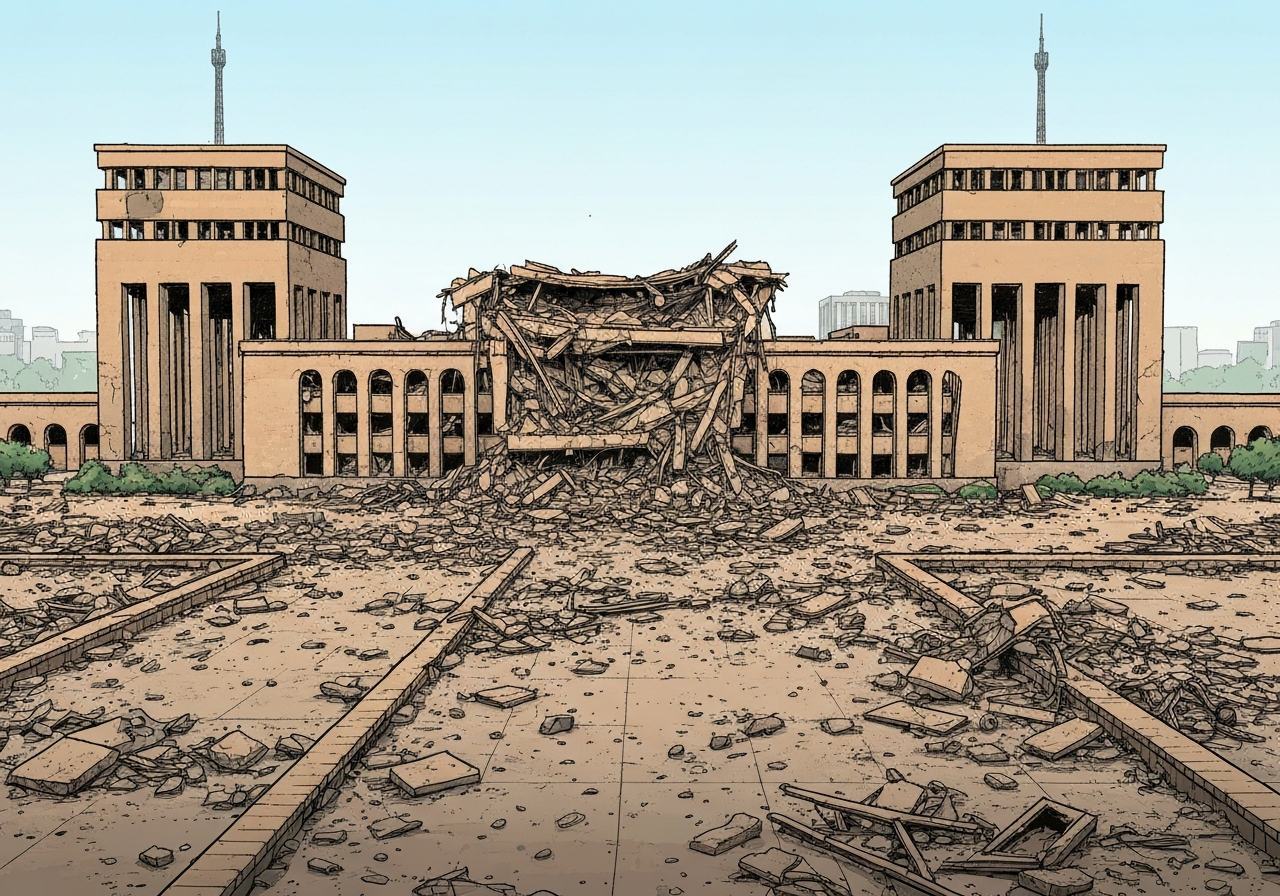
The IDF’s morning communiqués said the Israeli Air Force struck positions in Tehran and targeted command-and-control nodes. Iranian authorities reported explosions and disruptions in the capital and began investigations into infrastructure damage. The strikes followed a period of escalating exchanges that included Iranian missile and drone salvos against Gulf states and U.S. assets.
Across the Gulf, the UAE reported intercepting multiple ballistic missiles and drones on Tuesday; falling interceptor debris killed at least one person in Abu Dhabi, bringing the UAE death toll since the campaign began to eight. Authorities in Fujairah reported damage to oil-handling facilities and temporary suspension of some operations after attacks on the country’s east coast.
At sea, commercial vessels continued to report incidents. The UKMTO said one tanker was struck by an “unknown projectile” while anchored 23 nautical miles east of Fujairah; the vessel had minor structural damage and no crew injuries. Overall maritime incident reporting has left large parts of the Arabian Gulf and adjacent seas effectively paralyzed for many commercial shippers.
Analysis & Implications
Strategically, the targeted killings remove senior figures from Iran’s security leadership, which Israel and Washington argue will degrade the regime’s operational command. Removing leaders can create short-term disruption, but it also risks accelerating retaliatory cycles and complicating command continuity within Tehran’s security apparatus.
Regionally, Gulf states are absorbing much of the kinetic fallout. The UAE’s reported engagement numbers — hundreds of missiles and drones engaged since the conflict began — show the scale of strikes funneled into Gulf air defenses. Damage to oil terminals and repeated maritime incidents are driving up global energy prices and adding volatility to markets already sensitive to supply disruptions.
Diplomatically, allied reluctance to place forces in the Strait of Hormuz signals limits to U.S. leverage. European statements emphasize avoiding direct deployments that put personnel at risk, favoring diplomatic and de-confliction mechanisms. That stance constrains options for rapidly reopening shipping lanes and heightens pressure on regional diplomatic channels, including Iraq’s contacts with Iran.
Humanitarian effects are mounting. Red Cross reports and local accounts indicate civilian casualties, damaged hospitals and disrupted schooling. If hostilities continue or broaden, displacement, supply-chain interruptions for food and fertilizer, and longer-term infrastructure damage could deepen the humanitarian crisis across multiple states.
Comparison & Data
| Item | Reported Figure | Source |
|---|---|---|
| UAE air-defense engagements (cumulative) | 314 ballistic missiles, 15 cruise missiles, 1,672 UAVs | UAE Defense Ministry |
| UAE deaths reported since start of campaign | 8 dead, 157 wounded | UAE media office |
| Maritime incidents since Feb. 28 | 21 reports (17 attacks, 4 suspicious) | UKMTO |
| Tanker struck near Fujairah | 23 nautical miles east; minor structural damage | UKMTO |
These figures illustrate how kinetic exchanges have produced both immediate human costs and sustained threats to commercial activity. The maritime incident count and the UAE’s tallies of intercepts indicate persistent pressure on defenses and logistics across the Gulf.
Reactions & Quotes
“This morning, we eliminated Ali Larijani. Ali Larijani was the boss of the Revolutionary Guards… the gang of gangsters that effectively runs Iran.”
Prime Minister Benjamin Netanyahu (statement)
Netanyahu framed the strikes as part of a campaign to weaken Iran’s hold on power and to create space for internal political change.
“Nobody is ready to put their people in harm’s way in the Strait of Hormuz.”
Kaja Kallas, EU foreign policy chief (Reuters interview)
Kallas’ comment encapsulated European hesitancy to accept U.S. proposals for direct military protection of commercial shipping in the high-risk corridor.
“The heavy loss of life is alarming. Daily life in Tehran has been profoundly disrupted.”
Vincent Cassard, Head of Red Cross Delegation in Iran (IFRC)
The Red Cross highlighted civilian disruption and damage to health and education infrastructure amid sustained strikes and counterstrikes.
Unconfirmed
- Attribution for every maritime strike: While many incidents are consistent with Iranian-origin weapons, not all ship attacks have independent, publicly confirmed attribution.
- Details of chain-of-command decisions inside Iran following the killings: the regime’s internal deliberations and next leadership moves remain opaque.
- Full extent of damage to Iranian infrastructure in the reported “broad wave” of attacks: official Iranian damage assessments were not fully available at the time of reporting.
Bottom Line
The killings of two senior Iranian officials represent a significant escalation that degrades elements of Iran’s security leadership but also increases the risk of broader, unpredictable retaliation. Gulf states and maritime operators continue to face immediate threats, and global energy markets are reacting to sustained disruption in the Strait of Hormuz.
Diplomatically, allied reluctance to intervene directly in the strait constrains rapid remedial military options and places a premium on regional negotiations and protective measures that avoid further escalation. Humanitarian and economic consequences are likely to persist unless diplomatic channels reduce the tempo of strikes and secure maritime routes.
Watch for confirmations from independent investigators on maritime strikes, official Iranian responses detailing command continuity, and any collective diplomatic initiative that might restore safer passage through the Strait of Hormuz.