
Lead
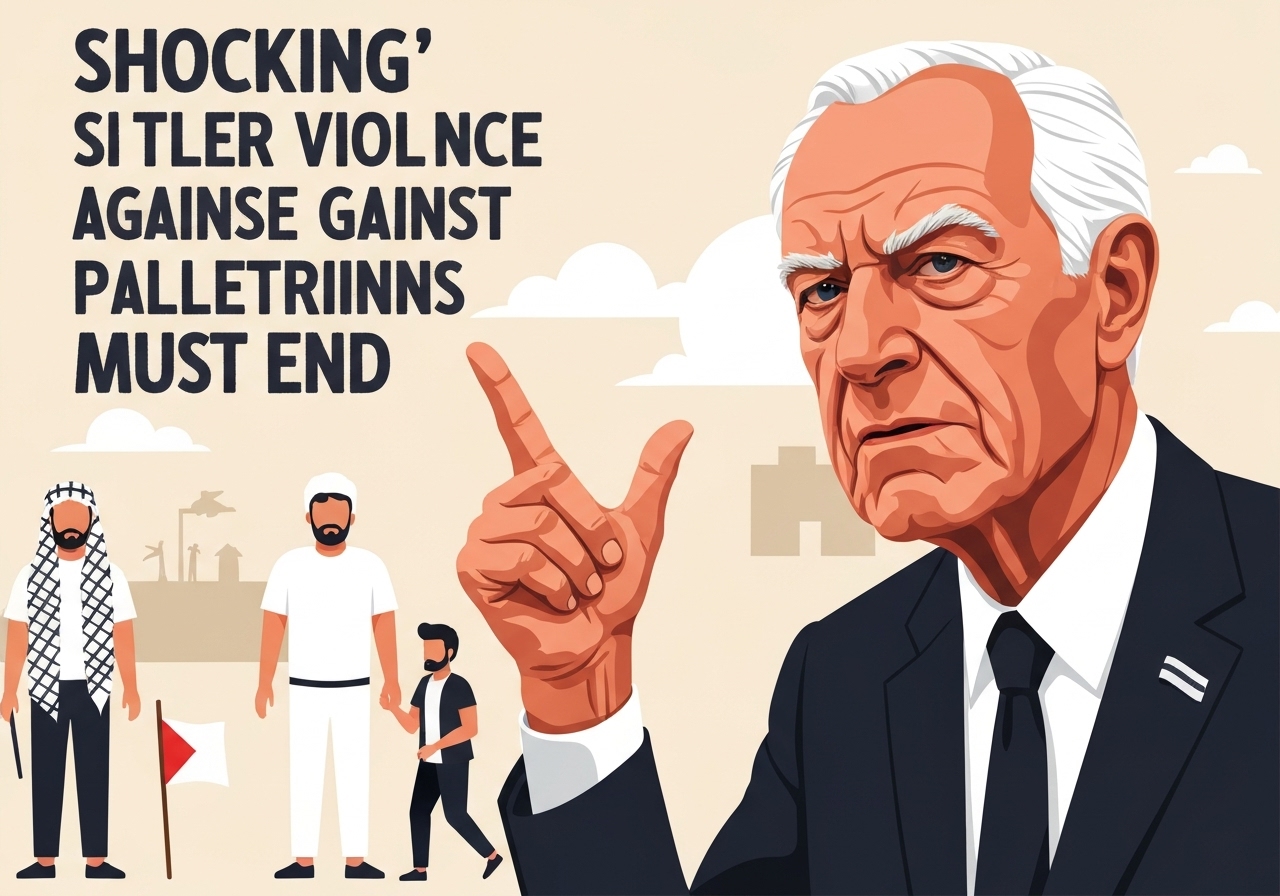
President Isaac Herzog on Wednesday publicly denounced a “shocking and serious” attack by Jewish settlers on Palestinian villages in the West Bank, urging decisive action from state authorities. The incidents took place Tuesday in the villages of Beit Lid and Deir Sharaf, where masked settlers burned vehicles and property before clashing with Israeli soldiers. The army said four Palestinians were wounded and a military vehicle was damaged; police reported four Israelis arrested. Herzog framed his remarks as a moral warning that a “handful” of perpetrators had crossed a red line and must be stopped.
Key Takeaways
- Dozens of masked Israeli settlers attacked Beit Lid and Deir Sharaf in the West Bank on Tuesday, setting fire to vehicles and property before clashes with soldiers.
- The Israeli military reported four Palestinians wounded and said settlers damaged a military vehicle while fleeing to a nearby industrial zone.
- Police arrested four Israelis after the incident; three were later released and one minor remains in custody for six additional days pending investigation.
- President Isaac Herzog called the assault “shocking and serious,” saying a “handful” of perpetrators had “crossed a red line” and urging state authorities to act decisively.
- Chief of Staff Eyal Zamir warned the military will not tolerate criminal elements that tarnish the public, while Central Command Maj. Gen. Avi Bluth said the response diverts resources from core security tasks.
- U.N. humanitarian reporting noted more Israeli settler attacks on Palestinians in October than any other month since monitoring began in 2006, recording over 260 incidents.
- Human rights groups and Palestinian officials allege a pattern of impunity, saying settler violence has surged since the Gaza war began two years ago and peaks during the olive harvest season.
Background
Settler violence in the West Bank has been a recurring flashpoint for years, but observers say incidents have increased markedly since the Gaza war erupted two years ago. The phenomenon involves small groups of young settlers carrying out arson, property damage and physical assaults against Palestinian farmers, communities and infrastructure. Humanitarian monitors track an uptick in attacks during the annual olive-harvest period, when agricultural movements and rural vulnerability create frequent points of contact and tension.
Domestic politics amplify the debate: Israel’s governing coalition includes prominent far-right figures who support settlement expansion, while security institutions—army and police—face criticism for uneven enforcement. Palestinian officials and rights groups allege that some settlers operate with effective impunity, a charge rejected by many Israeli officials who point to arrests and occasional military intervention. The result is a charged environment in which legal, political and security questions overlap.
Main Event
According to Israeli security statements and Palestinian accounts, the attack on Tuesday unfolded when dozens of masked settlers entered Beit Lid and Deir Sharaf, burning vehicles and agricultural equipment. Witnesses described organized tactics: individuals carrying gasoline cans, others forcing entry with tools and a coordinated effort to ignite fuel. Local residents reported that four dairy trucks, farmland structures and Bedouin tents were set ablaze during the raid.
Soldiers deployed to the scene clashed with the assailants as the settlers moved toward a nearby industrial zone, where the military said some attackers engaged responders and damaged a vehicle. Medical and military sources reported four Palestinians wounded in the confrontations. Police moved to make arrests; they said four Israelis were detained initially, then released three suspects while holding one minor for further questioning and detention for six more days.
Authorities characterized the perpetrators as a small but dangerous minority. President Herzog described the episode as crossing a “red line” and demanded that all state authorities act to eradicate the phenomenon. The military leadership echoed that posture while warning that addressing the unrest consumes resources that would otherwise support counterterrorism and broader security missions.
Analysis & Implications
The public condemnations from Israel’s president and top military officers are notable because they convey a rare unified rebuke from figures who typically avoid direct intervention in politically sensitive settler issues. Herzog’s largely ceremonial office is intended to provide moral guidance, and his intervention signals alarm at the political and operational costs of unchecked settler violence. For the center and left in Israel, these statements can be leveraged to press for firmer law enforcement; for the right, they risk deepening a narrative of external pressure on settler constituencies.
Operationally, the army’s complaints about resource diversion are significant. Central Command leadership says responding to an “anarchist fringe” requires manpower and logistics that would otherwise be allocated to counterterrorism and patrol duties, potentially weakening broader West Bank security posture. If such attacks continue, commanders may have to reassign units, change patrol patterns, or increase checkpoints, all of which carry political and humanitarian costs for Palestinian civilians.
Internationally, the incidents add fuel to long-standing criticisms from the U.N., human rights organizations and Palestinian authorities about impunity and state responsibility. A sharp rise in settler attacks—highlighted by the U.N.’s report of more than 260 incidents in October—may prompt stronger international scrutiny, conditional aid debates, or diplomatic pressure aimed at enforcement and accountability measures. Conversely, durable policy change depends on political will within the Israeli coalition that currently includes influential pro-settlement ministers.
Comparison & Data
| Metric | Reported Figure |
|---|---|
| Settler attacks in latest October (U.N. report) | Over 260 incidents (highest monthly total since 2006) |
| Arrests after the Beit Lid/Deir Sharaf attack | 4 Israelis detained; 3 released, 1 minor held |
Numbers from monitoring groups show a recent spike, but comparing months is challenging because reporting practices, definitions of “attack,” and access to sites vary. The U.N. figure underscores a concerning trend, yet detailed breakdowns by incident type and geographic spread are essential for precise operational planning and policymaking.
Reactions & Quotes
Officials and residents responded with a mix of official condemnation and personal alarm, highlighting political friction and daily human cost.
“This crosses a red line. All state authorities must act decisively to eradicate the phenomenon.”
Isaac Herzog, President of Israel
Herzog framed the episode as a moral and civic boundary that authorities must enforce, stressing the need for decisive institutional response rather than partisan silence.
“We will not tolerate the phenomena of a minority of criminals who tarnish a law‑abiding public.”
Eyal Zamir, Israeli army chief of staff
Chief of Staff Zamir emphasized the military’s refusal to accept criminal behavior among civilians, while also noting the operational burden of such incidents on security forces.
“This can’t go on. It can’t be that we keep living our whole lives in a state of fear and danger.”
Mahmoud Edeis, Beit Lid resident
Local residents described fear for families and livelihoods, saying repeated attacks undermine everyday safety and agricultural work during harvest season.
Unconfirmed
- Claims that the attack is part of a centrally organized campaign to force Palestinians off specific lands are asserted by Palestinian officials but lack independent, verifiable documentation in public sources.
- Allegations that senior government ministers directly ordered or authorized the assault remain uncorroborated by publicly available evidence.
- The precise chain of coordination among the assailants and any long-range planners has not been independently confirmed beyond eyewitness descriptions of organized tactics.
Bottom Line
The president’s rare, forceful condemnation and parallel military statements highlight both the political sensitivity and security consequences of settler attacks in the West Bank. The episode exposed immediate human costs—burned property, wounded civilians and heightened fear—while underscoring broader operational strains on Israel’s military and police.
Whether Herzog’s appeal and security chiefs’ warnings translate into sustained enforcement will depend on decisions by police, prosecutors and political leaders, plus pressure from international monitors. Observers should watch further arrests, judicial follow‑through, any changes in military deployment, and whether the government adopts policies that reduce impunity and protect civilians during vulnerable periods such as the olive harvest.
Sources
- Associated Press (news agency) — original reporting on the Beit Lid and Deir Sharaf attacks, statements by Isaac Herzog and Israeli military officials.