
Lead
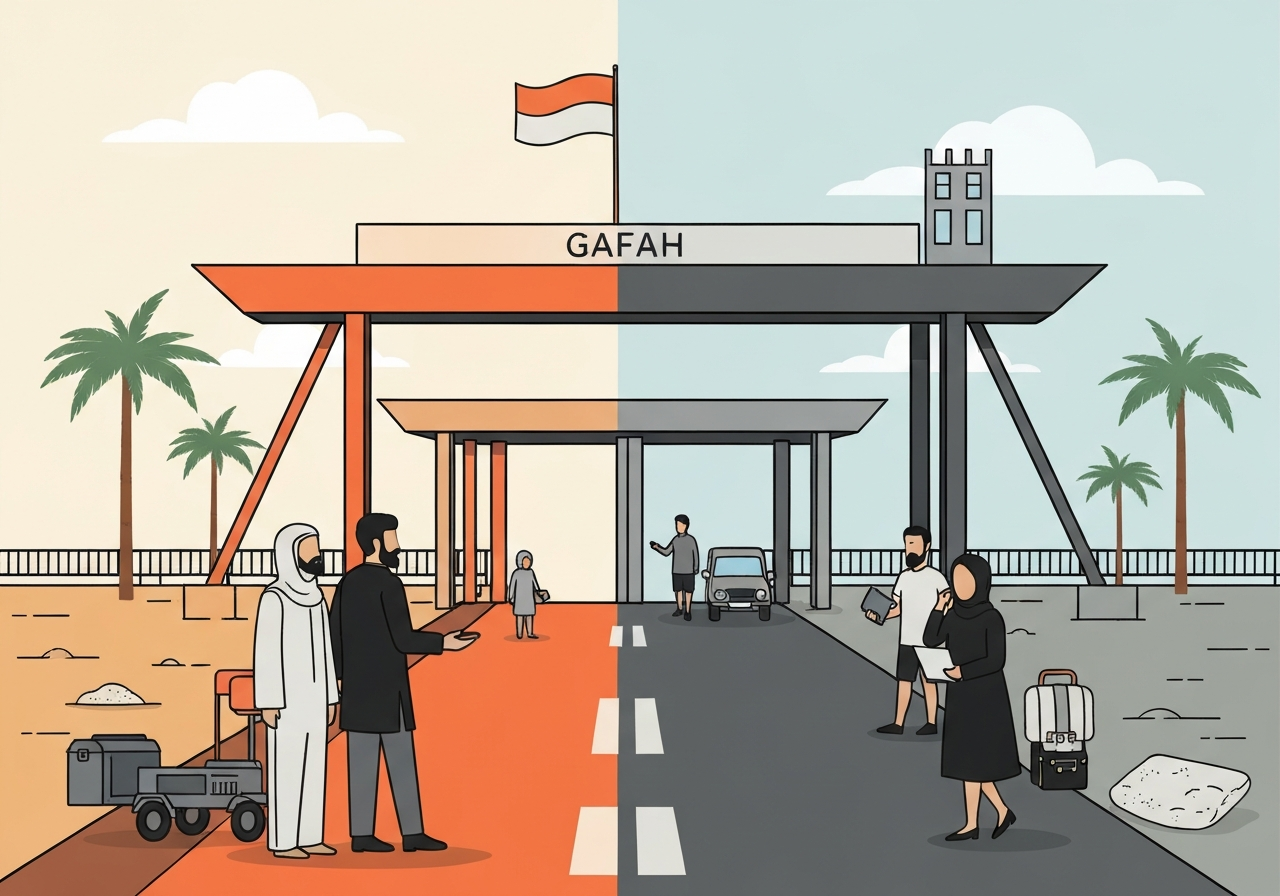
Israel reopened the Rafah crossing with Egypt on Monday, allowing sick and wounded Palestinians to travel out of Gaza after the Gazan side had been largely closed since May 2024. The move follows the return of the last Israeli hostage and the arrival of supervisors from the European Union Border Assistance Mission, and comes under the first phase of the US ceasefire plan that began in October. Only limited numbers of people, and no commercial goods, will pass initially, prompting relief among some families and frustration among aid agencies. Egyptian hospitals and ambulances stood ready on the Egyptian side as transfers began.
Key Takeaways
- Rafah crossing reopened on Monday for movement of people after being largely closed since May 2024, following capture of the Gazan side by Israeli forces.
- Israel will allow an initial quota of 50 patients to exit per day, each accompanied by one or two relatives, plus 50 former Gaza residents to return.
- About 20,000 sick and wounded Palestinians are estimated to be waiting for evacuation by local hospitals and the World Health Organization.
- Supervision will be provided by the European Union Border Assistance Mission with local Palestinian staff; Israel will conduct remote security checks.
- More than 30,000 Gazans have registered with the Palestinian embassy in Cairo seeking permission to return to Gaza.
- The reopening was linked by Israel to the return of the body of the last Israeli hostage, Master Sgt Ran Gvili, recovered last week.
- Humanitarian groups and some governments welcomed the step but stressed that aid flows and access for relief workers must still be expanded.
Background
The Rafah crossing has been Gaza’s principal exit to Egypt and a major route for people and humanitarian access before being largely closed in May 2024 when Israeli forces captured the Gazan side. Under the ceasefire arrangements that began in October, reopening Rafah in both directions was a key element of the US 20-point plan put forward for phased normalisation of movement. For months, movement remained tightly restricted with most aid routed via Israel’s Kerem Shalom crossing rather than directly from Egypt.
Negotiations over operational details became politically sensitive. Israel conditioned the opening on the return of the body of the last Israeli hostage, a demand met last week with the retrieval of Master Sgt Ran Gvili. Egypt has insisted on bidirectional movement as a prerequisite for opening, while local Palestinian authorities and international actors pressed for broader humanitarian access and the ability for carers and accompanying family members to travel with patients.
Main Event
On Monday morning, teams from the European Union Border Assistance Mission arrived to supervise operations and local Palestinian staff were deployed on the Egyptian side. An Israeli security official confirmed that Rafah had opened to residents for entry and exit after the EUBAM teams were in place. Egyptian state-linked broadcasters reported ambulances transferring patients into Egypt and health officials said arriving patients were screened to determine hospital destinations.
Initial operations are tightly controlled. Israeli reports say the daily exit allowance is 50 patients accompanied by one or two relatives, with a separate group of 50 people permitted to return to Gaza. Disagreement over whether carers could return to Gaza with former patients contributed to delays in starting operations, according to sources familiar with the arrangements.
The World Health Organization will coordinate transfers from areas under Hamas control by moving patients by bus to the crossing along the so called Yellow Line for handover. Egyptian medical capacity reported ready to receive patients, with state sources saying roughly 150 hospitals and 300 ambulances are available in Egypt for incoming cases.
Analysis & Implications
The limited reopening reconciles competing political and security priorities but leaves substantial humanitarian gaps. Allowing only 50 patients per day will not address the needs of the roughly 20,000 people identified by hospitals and the WHO as needing evacuation for treatment, creating a long backlog and urgent triage decisions. For families, even a small flow is immediate relief, yet the scale is far below demand and raises moral and operational questions about prioritisation criteria.
Politically, Israel framing the opening as contingent on the return of an Israeli service member underscores the leverage states have exercised in ties between security demands and humanitarian access. For Egypt and the EU, supervising the crossing signals a role in stabilising civilian movement and a diplomatic effort to demonstrate impartiality, but it also exposes them to criticism if the flow is judged insufficient.
Economically and logistically, the continued ban on commercial goods through Rafah means that most large-scale humanitarian supplies will remain routed through Kerem Shalom and other crossings, prolonging bottlenecks inside Gaza. The limited passenger flow also constrains the ability of universities, businesses and civil services to resume normal activity, deepening the long-term social and economic disruption.
Comparison & Data
| Metric | Reported Figure |
|---|---|
| People waiting for medical evacuation | 20,000 |
| Daily patients allowed to exit (initial) | 50 |
| People allowed to return per initial quota | 50 |
| Gazans registered to return via Cairo | 30,000+ |
| Palestinian fatalities reported by Gaza health ministry | 71,800+ |
| Israeli casualties on 7 October 2023 attack | ~1,200 |
| People abducted on 7 October 2023 | 251 |
The table contrasts urgent medical demand against the narrow initial throughput. Even if the crossing sustained the 50 patients per day rate, it would take many months to clear reported waiting lists, assuming no new evacuations are required and that daily capacity remains stable. Reported casualty figures come from Gaza health authorities and verified military statements about the October 7 attack and subsequent operations; these remain central reference points for understanding the scale of humanitarian need.
Reactions & Quotes
The opening of the Rafah crossing marks a concrete and positive step in the peace plan.
Kaja Kallas, EU foreign policy chief
Kallas framed the move as progress under the ceasefire framework, while emphasising the need for continued implementation of the plan’s phases.
Much more still needs to be done. Aid must flow in, restrictions on essential supplies must ease, and aid workers must be allowed to operate.
Yvette Cooper, UK Foreign Secretary
Cooper welcomed the opening but highlighted that a single crossing reopening does not resolve supply chain and access problems within Gaza.
We hope they will speed up our referral so that we can travel quickly, because she is getting exhausted.
Sabrine al-Da’ma, mother of a 16 year old patient
Personal accounts like this underline the urgency for medical evacuations and the human consequences of constrained movement.
Unconfirmed
- Whether carers will be formally allowed to return to Gaza with former patients as part of daily quotas remains unresolved and could change operational capacity.
- Future expansion to allow goods through Rafah is not confirmed and may depend on additional political negotiations.
- Daily throughput numbers and processing speed could shift depending on security assessments or logistical bottlenecks at the crossing.
Bottom Line
The Rafah reopening is an important but limited step: it creates a humanitarian corridor for a small number of patients and some movement after months of closure, and it carries symbolic political weight tied to recent exchanges around hostages. Yet the scale of human need in Gaza far outstrips the initial capacity, leaving thousands of patients and families waiting and humanitarian agencies warning that a single crossing opening will not resolve supply chain or medical system collapse.
Close monitoring and transparent reporting will be essential in the coming weeks to see whether the opening is sustained and scaled, whether carers and essential staff can move as needed, and whether broader aid flows and civilian services can be restored. For now, the step provides hope to some families while underscoring how much further the humanitarian and political process must go.
Sources
- BBC News (news reporting, original article)
- World Health Organization (international health agency referenced by reporting)
- European Union Border Assistance Mission (EU mission, supervisory body)