
Israeli air strikes in eastern Lebanon’s Bekaa Valley on Friday night killed at least 10 people, Lebanese officials said, even as a ceasefire reached in November 2024 remains in place. Israel’s military said it targeted Hezbollah command sites and missile-related positions; Hezbollah confirmed at least eight of the dead were its fighters, including a senior field commander. The strikes were among the most lethal inside Lebanon since the 13-month war between Israel and Hezbollah ended with a ceasefire in November 2024. Lebanese authorities have condemned the strikes and urged international pressure to halt what they call ongoing violations of the agreement.
Key Takeaways
- At least 10 people were killed in Israeli air strikes in the Bekaa Valley on Friday night, according to Lebanese officials.
- Hezbollah acknowledged that at least eight of the fatalities were its members, including a senior field commander.
- Israel said it struck Hezbollah command centres and missile-array-related targets, describing the sites as linked to preparations against Israel.
- The attacks are among the deadliest inside Lebanon since the ceasefire that ended the November 2024 war after 13 months of fighting.
- Hezbollah maintains the ceasefire applies only to southern Lebanon between the Litani River and the Blue Line and has refused broader disarmament talks.
- Earlier the same day, an Israeli strike hit Ain al-Helweh refugee camp near Sidon; Israel said it targeted a Hamas command centre and reported two Hamas members killed.
- Lebanese Prime Minister Nawaf Salam described the situation as a “one-sided war of attrition,” and Beirut has called for international intervention.
Background
Fighting between Israel and Hezbollah last year lasted roughly 13 months and concluded with a ceasefire in November 2024. That agreement sought to halt cross-border exchanges of fire and lower hostilities, but it left unresolved questions about weapons holdings and deployments outside southern Lebanon. Hezbollah, a Shia political movement with an armed wing, has a significant presence across Lebanon, including the Bekaa Valley, an area long identified by Israel as hosting parts of the group’s arsenal. Lebanon’s government has sought to advance a phased disarmament plan focused on areas north of the Litani River, but Hezbollah has resisted broader restrictions on its weapons.
The ceasefire’s geographic scope is contested. Lebanese officials and some international mediators view the deal as covering the border area between the Litani River and the Blue Line, while Israel interprets violations more broadly when it says threats to its territory originate from elsewhere. Iran’s backing of Hezbollah and reported military links raise regional stakes, with the United States warning it could take forceful action if confrontations with Iran escalate. These regional dynamics have kept tensions high and periodic strikes frequent despite the formal ceasefire.
Main Event
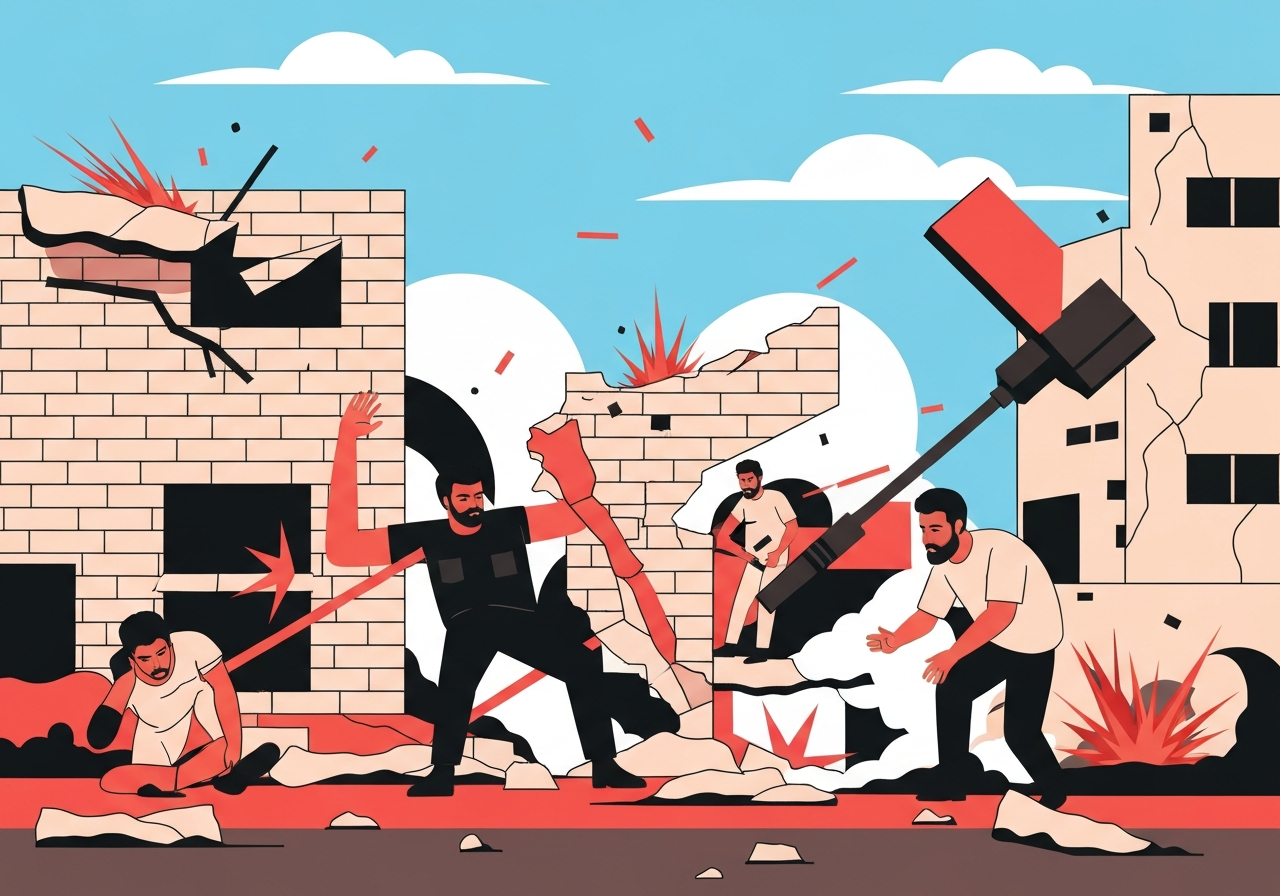
Late on Friday, multiple air strikes struck locations in eastern Lebanon’s Bekaa Valley, producing heavy damage to what local imagery and officials described as a residential neighbourhood. Lebanese authorities reported at least 10 dead; Hezbollah’s public statements confirmed eight members killed and identified one as a senior field commander. The Israeli military released statements saying the targets were Hezbollah command centres and facilities linked to the group’s missile readiness and force buildup.
In a subsequent advisory the Israeli military said it had “eliminated several terrorists of Hezbollah’s missile array in three different command centres” that were recently identified as accelerating the group’s readiness. The military accused Hezbollah of embedding military assets among civilians, a claim Israel uses to justify strikes in populated areas. Local responders described chaotic scenes after the strikes, with heavy structural damage visible in shared images from the strike locations.
Earlier on the same day, an Israeli strike hit Ain al-Helweh, the large Palestinian refugee camp near Sidon in southern Lebanon. The Israeli military said it struck a site it described as a Hamas command centre; Palestinian groups reported two members were killed. Lebanese officials framed that strike and the Bekaa attacks as part of a continuing pattern of Israeli operations they consider violations of the ceasefire understandings.
Analysis & Implications
The strikes underline the fragility of the November 2024 ceasefire: despite a formal deal, both sides retain incentives to act when they perceive threats. For Israel, strikes outside the immediate border zone are framed as pre-emptive measures to disrupt command-and-control or missile-preparation activities. For Lebanon and Hezbollah, such operations are seen as breaches that erode the ceasefire’s credibility and risk renewed escalation.
Hezbollah’s confirmed combatant losses, including a senior commander, could prompt the organization to reassess its posture. That reassessment has several possible trajectories: restrained public replies to avoid full-scale re-escalation, targeted retaliatory strikes, or increased cross-border tensions that complicate Lebanese state efforts to assert control. Domestic pressure in Lebanon, particularly from the government and communities affected by strikes, adds another layer of complexity to how Beirut will respond diplomatically.
Regionally, the strikes occur against a backdrop of heightened US–Iran tensions, and there are widespread concerns that a direct confrontation involving Iran could compel allied groups to take part in reprisals. Even without direct Iranian action, the perception that Tehran could push its proxies into a broader response increases the risk premium for all actors in the region and complicates diplomatic efforts to stabilize the situation. Economically and humanitarianly, repeated strikes in populated areas worsen civilian suffering and strain Lebanon’s already fragile infrastructure and services.
Comparison & Data
| Event | Location | Reported Fatalities |
|---|---|---|
| Friday Bekaa Valley strikes | Bekaa Valley, eastern Lebanon | At least 10 |
| Hezbollah-confirmed combatant deaths | Bekaa Valley | At least 8 (incl. senior commander) |
The table above summarizes the confirmed counts tied to this incident. While the ceasefire following the November 2024 end to 13 months of conflict reduced large-scale hostilities, it has not halted lower-intensity strikes and countermeasures. Comparisons of fatality totals since the ceasefire show episodic spikes tied to targeted strikes and localized flare-ups rather than sustained front-line battles.
Reactions & Quotes
Lebanese government officials condemned the strikes and called on the international community to intervene to prevent further violations of the ceasefire. Prime Minister Nawaf Salam has described the cumulative effect of cross-border actions as creating a “one-sided war of attrition,” pressing for diplomatic remedies to stop ongoing strikes.
“We struck Hezbollah command and missile-related sites that threatened Israel,”
Israel Defense Forces (official statement)
The Israeli military framed the raids as targeted operations against facilities it said were being used to plan or prepare attacks on Israeli territory. Israel has repeatedly argued that Hezbollah positions outside the southern buffer constitute a security threat that justifies action.
“At least eight of our fighters were killed, including a senior field commander,”
Hezbollah (political/military statement)
Hezbollah confirmed combatant losses and emphasized that the ceasefire, it says, applies only to southern Lebanon between the Litani River and the Blue Line. The group has resisted government calls to discuss disarmament beyond that southern zone.
“The situation has become a one-sided war of attrition,”
Nawaf Salam, Lebanese Prime Minister
Lebanese leaders urged diplomatic pressure on Israel and warned that continued strikes risk undermining national stability and increasing civilian harm. International actors have been asked to press for restraint and compliance with the ceasefire’s terms.
Unconfirmed
- Precise civilian casualty breakdown in the Bekaa strikes remains unclear; Lebanese officials gave an overall toll but did not publicly separate combatant and civilian counts beyond Hezbollah’s statement.
- Claims that all targeted facilities were exclusively military sites have not been independently verified through open-source imagery and third-party investigations.
- Whether Iran would compel Hezbollah into a broader confrontation following these strikes is speculative and lacks public confirmation from Iranian officials.
Bottom Line
The Friday strikes in the Bekaa Valley show the limits of the November 2024 ceasefire: formal agreements have reduced large-scale conflict but have not eliminated targeted cross-border operations. The confirmed deaths, including senior Hezbollah personnel, raise the risk of calibrated retaliation or further Israeli action, and they deepen political pressure inside Lebanon for protection and accountability.
Diplomatically, the incident increases urgency for international mediation to clarify the ceasefire’s boundaries and to create mechanisms that prevent escalation. Absent a durable framework addressing weapons outside the southern buffer and clearer verification, episodic strikes and retaliatory moves are likely to continue, perpetuating instability in Lebanon and the wider region.