
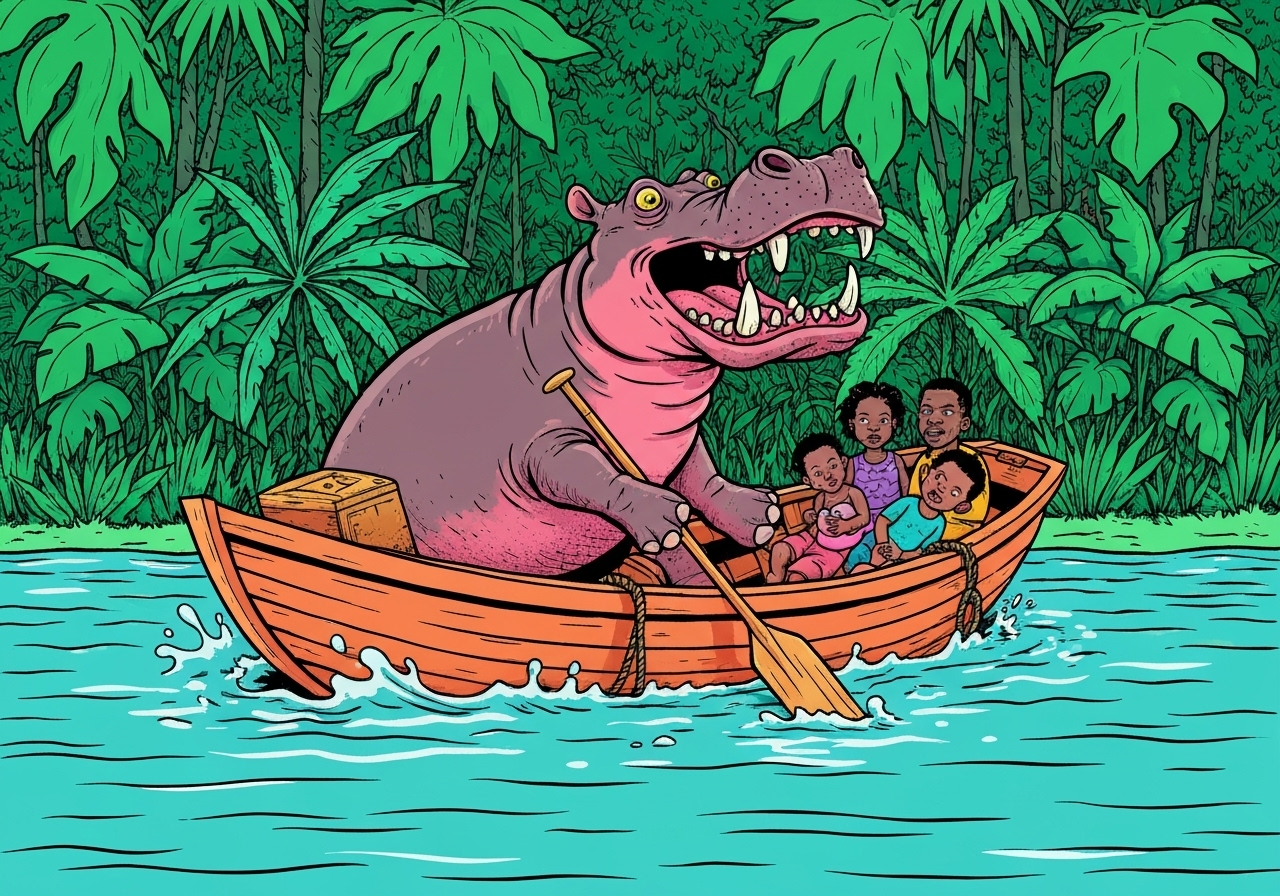
— A hippopotamus overturned a narrow, canoe-like boat on the Sassandra River near Buyo in southwestern Ivory Coast on Friday, leaving 11 people—among them women, young children and an infant—missing while three others were rescued, officials said.
Key Takeaways
- Incident occurred on the Sassandra River near Buyo on Friday; 11 people are missing and three survivors were rescued.
- Ivory Coast minister Myss Belmonde Dogo announced the missing included women, little girls and a baby.
- Local researchers have identified hippos as the species most often implicated in harmful human interactions in Ivory Coast.
- About 500 hippos are estimated to inhabit southern Ivorian rivers, mainly the Sassandra and Bandama systems.
- Boat capsizes are common in the country because narrow, handcrafted longboats are frequently overloaded.
- Similar fatal hippo encounters have been reported across Africa in recent years, underscoring ongoing human-wildlife risk.
Verified Facts
Ivory Coast’s minister for national cohesion and solidarity, Myss Belmonde Dogo, posted details of the incident on her official Facebook page, saying the animal tipped the small motorized craft while it was moving along the Sassandra River near the town of Buyo. Authorities confirmed three passengers were pulled from the water and taken to safety.
Rescue teams continued searching the river on Saturday for the 11 missing people. Local emergency services and community volunteers are involved in the efforts. No confirmed fatalities had been announced at the time of the latest official update.
| Item | Detail |
|---|---|
| Date | September 5–6, 2025 (reported Sept. 6) |
| Location | Sassandra River near Buyo, southwestern Ivory Coast |
| Missing | 11 people (including children and an infant) |
| Rescued | 3 survivors |
A 2022 study by researchers at an Ivorian university found hippopotamuses were the species most frequently mentioned in recorded human interactions that caused death or injury in the country. Current wildlife surveys estimate roughly 500 hippos live in Ivory Coast, concentrated in southern river systems such as the Sassandra and the Bandama.
Context & Impact
Small, handcrafted longboats are a common means of transport between riverside communities in Ivory Coast. These craft are often heavily loaded with passengers and goods, increasing the risk that a sudden wave, collision or animal strike can capsize them.
Past incidents in Ivory Coast and elsewhere in Africa illustrate the danger hippos present when human activity moves into or near their waterways. In April 2025, about a dozen children and adolescents drowned when a small boat capsized in a lagoon near Abidjan; that tragedy highlighted the recurring hazards of overloaded local craft.
Beyond Ivory Coast, records show hippo attacks have resulted in fatalities across the continent in recent years: a U.S. tourist was killed during a Zambia safari in June 2024; Malawi reported seven deaths in 2023 when a hippo charged a canoe; and Kenya recorded multiple fatal incidents in 2018. Annual global estimates of deaths involving hippos start at roughly 500, though figures vary by source.
The government has urged calm and said search operations are ongoing as authorities work with local communities to locate the missing.
Myss Belmonde Dogo, Minister for National Cohesion and Solidarity (Facebook post)
Unconfirmed
- No official death toll has been confirmed publicly; searches were still underway at the time of the latest reports.
- Details about the boat’s capacity, exact passenger manifest and whether the craft was overloaded have not been independently verified.
Bottom Line
The capsizing on the Sassandra River is a stark reminder of the combined risks of small-boat travel and proximity to large wildlife in parts of West Africa. Ongoing searches aim to recover the missing people; authorities and local communities face the longer-term challenge of reducing collisions between people and hippos through safer boat practices and targeted wildlife management.